WGU C483 Study Guide Questions and Answers (2025/2026)
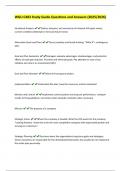
Situational Analysis Gather, interpret, and summarize all relevant info (past events,
current conditions) Attempts to forecast future trends
Alternative Goals and Plans Stress creativity and broad thinking. "What If"= contingency
plan.
Goal and Plan Evaluation Managers evaluate advantages, disadvantages, and potential
effects of each goal and plan. Prioritize and eliminate goals. Pay attention to cost of any
initiative and return on investments (ROI).
Goal and Plan Selection Select the best goal and plan.
Implementation Understand the plan, have the resources, and be motivated.
Monitor and Control Implement control systems and measure performance- compare
results to the goals/plans. Corrective action towards resolution when necessary.
Mission The purpose of a company.
Strategic Vision Where the company is headed. What the CEO wants for the company
"Looking forward, I want this to be the most competitive company with exponential growth and
serving our customers."
Strategic Planning Decisions about the organizations long-term goals and strategies.
Senior executives are responsible for the development/execution, but usually do not implement
the entire plan personally.
,Strategic Goals Major targets or results that relate to the long-term survival, value, and
growth of the organization. Effectiveness + Efficiency
Strategy Pattern of actions and resource allocations designed to achieve the goal of the
organization.
Tactical Planning Translates broad, strategic goals into specific goals and plans relevant to
a particular unit in the organization- often a functional area like customer service or Human
Resources. Major actions a unit must take to fulfill its part of the strategic plan.
Operational Planning Specific procedures and processes required at lower levels of the
organization.
Strategic Management Involves managers from all parts of the organization in the
formulation and implementation of strategic goals and strategies.
Strategic Management Process Establishing mission, vision, and goals. External
opportunities/ threats. Internal strengths/ weaknesses. SWOT analysis. Strategy
implementation. Strategic control.
S.W.O.T. (Internal) Strengths, Weaknesses, (External) Opportunities, & Threats.
External Opportunities & Threats Environmental Competitor Political Social issues (social
interest groups) HR- labor issues Macroeconomic conditions Technological factors
Internal Strengths & Weaknesses Financial analysis Marketing audit Operations analysis
HR Other internal resource analysis
, Core Capability Competence. Something a company does especially well relative to its
competitors.
Benchmarking Assessing how well one company's basic functions and skills compare with
those of another company/ companies.
NIH (Not Invented Here Syndrome) A negative attitude toward knowledge derived from
an external source.
Competitors Complete through innovation, quality, service, and cost.
New Entrants Compete with established companies.
Substitutes Potential threats. Alternatives.
Complements Potential Opportunities.
Suppliers Provide resources needed for production (people, raw materials, information,
financial capital, etc.)
Customers Wholesalers and retailers or financial end users
Intermediate Customers But raw materials or wholesale products then sell to final
customers. Make more purchases than final customers.
Concentration Strategy Focuses on a single business competing in a single industry.
Situational Analysis Gather, interpret, and summarize all relevant info (past events,
current conditions) Attempts to forecast future trends
Alternative Goals and Plans Stress creativity and broad thinking. "What If"= contingency
plan.
Goal and Plan Evaluation Managers evaluate advantages, disadvantages, and potential
effects of each goal and plan. Prioritize and eliminate goals. Pay attention to cost of any
initiative and return on investments (ROI).
Goal and Plan Selection Select the best goal and plan.
Implementation Understand the plan, have the resources, and be motivated.
Monitor and Control Implement control systems and measure performance- compare
results to the goals/plans. Corrective action towards resolution when necessary.
Mission The purpose of a company.
Strategic Vision Where the company is headed. What the CEO wants for the company
"Looking forward, I want this to be the most competitive company with exponential growth and
serving our customers."
Strategic Planning Decisions about the organizations long-term goals and strategies.
Senior executives are responsible for the development/execution, but usually do not implement
the entire plan personally.
,Strategic Goals Major targets or results that relate to the long-term survival, value, and
growth of the organization. Effectiveness + Efficiency
Strategy Pattern of actions and resource allocations designed to achieve the goal of the
organization.
Tactical Planning Translates broad, strategic goals into specific goals and plans relevant to
a particular unit in the organization- often a functional area like customer service or Human
Resources. Major actions a unit must take to fulfill its part of the strategic plan.
Operational Planning Specific procedures and processes required at lower levels of the
organization.
Strategic Management Involves managers from all parts of the organization in the
formulation and implementation of strategic goals and strategies.
Strategic Management Process Establishing mission, vision, and goals. External
opportunities/ threats. Internal strengths/ weaknesses. SWOT analysis. Strategy
implementation. Strategic control.
S.W.O.T. (Internal) Strengths, Weaknesses, (External) Opportunities, & Threats.
External Opportunities & Threats Environmental Competitor Political Social issues (social
interest groups) HR- labor issues Macroeconomic conditions Technological factors
Internal Strengths & Weaknesses Financial analysis Marketing audit Operations analysis
HR Other internal resource analysis
, Core Capability Competence. Something a company does especially well relative to its
competitors.
Benchmarking Assessing how well one company's basic functions and skills compare with
those of another company/ companies.
NIH (Not Invented Here Syndrome) A negative attitude toward knowledge derived from
an external source.
Competitors Complete through innovation, quality, service, and cost.
New Entrants Compete with established companies.
Substitutes Potential threats. Alternatives.
Complements Potential Opportunities.
Suppliers Provide resources needed for production (people, raw materials, information,
financial capital, etc.)
Customers Wholesalers and retailers or financial end users
Intermediate Customers But raw materials or wholesale products then sell to final
customers. Make more purchases than final customers.
Concentration Strategy Focuses on a single business competing in a single industry.