,Week 1: Introduction
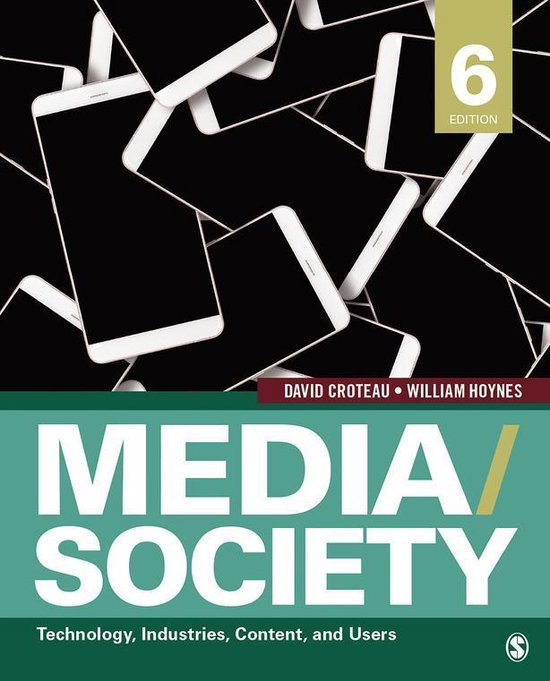
C&H Chapter 1: Media/Society in a Digital World
Modern media environment is dense and saturated consumers are both audience and
creators
o BUT it is unremarkable, comfortable, taken for granted
o Current book aims to ask important questions about current media environment,
about how the media work and why this matters (complicated dynamics)
The importance of media
As users embrace new technology landscape of media equipment changes (eg- smartphone
explosion = decline of landlines; cable TV replaced by streaming services)
All these devices indicate how much time Americans spend consuming various forms of
media (often, while multitasking).
Vast exposure to media at all ages argument that the media are dominant social
institution in contemporary society, supplanting the influence of older institutions (schools,
religion and sometimes even the family)
Pervasive presence of media in our lives = a fusion of media and society.
o If media disappeared everything would be different:
World would become
, smaller because we would know little beyond our direct experience
slower because the pace of information reaching us would be greatly
decreased
different self-perceptions no social media posts, TV characters and
advertising images to compare ourselves against
no entertainment perhaps replaced by musical instruments or games; take
up new hobbies or learn new skills to pass the time
less boundaryless social connection Face-to-face interactions would
become the norm. More intense local relationships based on physical
proximity.
differently understanding of politics and the world (“smaller and slower”)
would perhaps attend meetings or lectures to discuss/learn about politics and
current events
self-perceptions would alter through lack of social comparisons, etc
beyond our lives: behaviours of politicians and business leaders would
change, no advertising, differences in education, religion and every other
social institution
overall, media are so central to society and fused to daily life that we cannot imagine them
being separated.
What are the media? Models of communication media
Interpersonal media, medium (Latin: medius – meaning middle)
and “mass” communication media: different technological processes that facilitate communication
communication between (and are in the middle of) the sender of a message and the receiver – eg- print,
telephony. Radio, TV etc)
interpersonal communication:
o one-to-one message,
o contact between likely known persons (eg- phone call to a friend)
o likely interactive, back and forth; you are both producer and receiver
mass communication:
o many-to-one message,
o message sent to unknown and potentially mass audience (eg- radio broadcast).
o Audience is unknown to creators, while creators are known to the audience (eg- film
actors, book authors)
o Limited, if any, interaction (eg- call-in radio broadcasts); clear distinction between
producers (often professional industry members) and receivers of media content
Variable The above distinctions are clear, but today they have been eroded/blurred with the
, boundaries and development of the internet
active users o Users can choose to play different sorts of roles. Sending an email is one-to-one but
posting a public YouTube video may reach a mass audience
o The internet is both interpersonal and mass media because it compasses nearly all
forms of communication (the variable boundaries between private interpersonal and
public mass communication were an important change that produced number of
issues still grappled with today)
Internet has also enabled people to become more active, compared with traditional media
people can be users of media, rather than mere receivers or audience members.
o Choosing what media content they will access, from a ever-widening range of
choices
o Deciding when they will use media, rather than relying on scheduled broadcasts
o Sharing, promoting and distribution media content (eg- retweeting)
o Responding to and commenting on media content (eg- comments sections)
o Creating their own media content (eg- social media posts, uploaded photos etc)
With this level of user activity, traditional mass communication models (ie- receivers only)
fail to capture the dynamic interplay that potentially exists between media industry and
nonprofessional media users
Communication today: A first look
Four primary elements of the model have changed (when compared to traditional models):
1. “Industry” replaces “sender”: flags the professional and usually commercial nature of
media organizations responsible for most media content
2. “Content” replaces “messages” reflects wide range of media subjects as experienced
by users
3. “Technology” replaces “medium” to isolate the material elements of media
4. “Users” replace “receivers” reflecting both active consumption of content produced
by industry professionals and active creation of own content
The entire model is embedded within a vital new element – the social world – which includes
a variety of social forces and non-media actors that affect the communication process (eg-
cultural norms and government regulation)
All arrows are bi-directional, reflecting potentially interactive nature of media
Model is circular rather than linear: this reflects the endless feedback loops that occur
among these components, due to users being more active than in the past
Media world described in model includes both “traditional” mass media (old) and internet-
based communication (new media)
o However old-new distinction is blurred together in many ways the internet is
actually similar in many ways to older media
A sociology of media
The Encourages observation and understanding of relationships between individuals and broader
sociological social context in which they live
perspective o Collectively, people have created the social world, BUT they are also influenced by it
o E.g, students make “individual” decisions about attending college’ however society
features an
economy (in which higher edu required for a job)
a dominant culture (where formal education highly valued)
C&H Chapter 1: Media/Society in a Digital World
Modern media environment is dense and saturated consumers are both audience and
creators
o BUT it is unremarkable, comfortable, taken for granted
o Current book aims to ask important questions about current media environment,
about how the media work and why this matters (complicated dynamics)
The importance of media
As users embrace new technology landscape of media equipment changes (eg- smartphone
explosion = decline of landlines; cable TV replaced by streaming services)
All these devices indicate how much time Americans spend consuming various forms of
media (often, while multitasking).
Vast exposure to media at all ages argument that the media are dominant social
institution in contemporary society, supplanting the influence of older institutions (schools,
religion and sometimes even the family)
Pervasive presence of media in our lives = a fusion of media and society.
o If media disappeared everything would be different:
World would become
, smaller because we would know little beyond our direct experience
slower because the pace of information reaching us would be greatly
decreased
different self-perceptions no social media posts, TV characters and
advertising images to compare ourselves against
no entertainment perhaps replaced by musical instruments or games; take
up new hobbies or learn new skills to pass the time
less boundaryless social connection Face-to-face interactions would
become the norm. More intense local relationships based on physical
proximity.
differently understanding of politics and the world (“smaller and slower”)
would perhaps attend meetings or lectures to discuss/learn about politics and
current events
self-perceptions would alter through lack of social comparisons, etc
beyond our lives: behaviours of politicians and business leaders would
change, no advertising, differences in education, religion and every other
social institution
overall, media are so central to society and fused to daily life that we cannot imagine them
being separated.
What are the media? Models of communication media
Interpersonal media, medium (Latin: medius – meaning middle)
and “mass” communication media: different technological processes that facilitate communication
communication between (and are in the middle of) the sender of a message and the receiver – eg- print,
telephony. Radio, TV etc)
interpersonal communication:
o one-to-one message,
o contact between likely known persons (eg- phone call to a friend)
o likely interactive, back and forth; you are both producer and receiver
mass communication:
o many-to-one message,
o message sent to unknown and potentially mass audience (eg- radio broadcast).
o Audience is unknown to creators, while creators are known to the audience (eg- film
actors, book authors)
o Limited, if any, interaction (eg- call-in radio broadcasts); clear distinction between
producers (often professional industry members) and receivers of media content
Variable The above distinctions are clear, but today they have been eroded/blurred with the
, boundaries and development of the internet
active users o Users can choose to play different sorts of roles. Sending an email is one-to-one but
posting a public YouTube video may reach a mass audience
o The internet is both interpersonal and mass media because it compasses nearly all
forms of communication (the variable boundaries between private interpersonal and
public mass communication were an important change that produced number of
issues still grappled with today)
Internet has also enabled people to become more active, compared with traditional media
people can be users of media, rather than mere receivers or audience members.
o Choosing what media content they will access, from a ever-widening range of
choices
o Deciding when they will use media, rather than relying on scheduled broadcasts
o Sharing, promoting and distribution media content (eg- retweeting)
o Responding to and commenting on media content (eg- comments sections)
o Creating their own media content (eg- social media posts, uploaded photos etc)
With this level of user activity, traditional mass communication models (ie- receivers only)
fail to capture the dynamic interplay that potentially exists between media industry and
nonprofessional media users
Communication today: A first look
Four primary elements of the model have changed (when compared to traditional models):
1. “Industry” replaces “sender”: flags the professional and usually commercial nature of
media organizations responsible for most media content
2. “Content” replaces “messages” reflects wide range of media subjects as experienced
by users
3. “Technology” replaces “medium” to isolate the material elements of media
4. “Users” replace “receivers” reflecting both active consumption of content produced
by industry professionals and active creation of own content
The entire model is embedded within a vital new element – the social world – which includes
a variety of social forces and non-media actors that affect the communication process (eg-
cultural norms and government regulation)
All arrows are bi-directional, reflecting potentially interactive nature of media
Model is circular rather than linear: this reflects the endless feedback loops that occur
among these components, due to users being more active than in the past
Media world described in model includes both “traditional” mass media (old) and internet-
based communication (new media)
o However old-new distinction is blurred together in many ways the internet is
actually similar in many ways to older media
A sociology of media
The Encourages observation and understanding of relationships between individuals and broader
sociological social context in which they live
perspective o Collectively, people have created the social world, BUT they are also influenced by it
o E.g, students make “individual” decisions about attending college’ however society
features an
economy (in which higher edu required for a job)
a dominant culture (where formal education highly valued)