Essential contemporary challenges
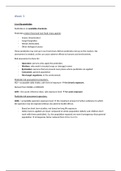
Tutorial 1: Emancipation
Emancipation: ‘refers to the hope of overcoming all forms of domination yet is laden with the highly
ambivalent notions of reason, progress, equality, and liberty and the unfulfilled utopias that
accompany them.’ (Lettow, 501)
Emancipation is:
• a process referring to everyone, not just women.
• about freeing yourself from tutelage, tradition, convention.
• about both thought and action.
Three transformations:
- The term became (grammatically) ‘reflexive’: no longer emancipating somebody else, but
oneself. (L, 503) Kant: overcoming a 'self-incurred immaturity'. Social transformation requires
a self-transformation; the courage to ‘use one’s own understanding without the guidance of
another.’ (L, 503)
- From a legally descriptive term to a politically prescriptive one: utopia. No longer ‘a single act
within a given, pre-existent order, but to a collective, political process of overcoming
domination and changing the present into a better future.’ (L, 503)
- A turn to universalism. (L, 504)
Potential problems when thinking about emancipation:
- Linear view of history as a progress (positive evolution, we are more emancipated than our
parents. But look at the children in certain parts of the world that are still enslaved. Is it
really a linear growth?)
- Understanding of power merely as repression and alienation. (Is there not something like
good power?)
- Index of Westernisation – exclusion of the other.
- Institutional ‘over-emancipation’.
The History of emancipation:
- Roman Law: Emancipation means the release from bondage and legal responsibilities. One is
emancipated by another person, released.
- Kant: Emancipation becomes a component of agency itself. One must liberate oneself.
- Foucault: Emancipation is not merely a matter of resolve and courage, but power networks
keep individuals in the thralls. A critical ethos is required.
- Habermas: Modernity is an unfinished emancipation project.
Liberty: Liberus = freed slave, liberating yourself. Strongly connected with emancipation: to be freed
from the hand (manos). It’s not an individual thing anymore, it is a collective. Not a single act to be
emancipated.
,Critical ethos:
- A mode of being-in-the-world involving thinking, feeling, acting and behaving in the
interrogative mode. (536) A constant labour of the self upon the self. (C, 537)
- A ‘limit-attitude’: persevering in making visible the limits imposed by biopolitical
governmentality and other discursive regimes. (C, 537)
- Not merely a ‘question of individual audacity’, but a communal practice. (C, 537)
- Infused with historic attentiveness, as domination becomes both more elusive and more
easily reversible. (C, 537-8) The first legal-formal stage of emancipation is incomplete
because its distinction from the second incompletable stage of rational-moral-political
emancipation remains fluid. (C, 538)
- Ex: Don’t buy chocolate and put it in you cupboard where you have to retain yourself form
eating it, just don’t buy it in the first place.
Lecture 1: Emancipation
Definitions are not concepts: They lock you in a frame and hinders you to think out of the box. Let’s
first try to see the things as they are. Concepts have something to do with how you grasp something.
To get any kind of grip on the world, a way of touching the world. They enable us to disagree.
The challenge of emancipation
Democracy is the political implication of emancipation
Emancipation: breaking of bonds of dependency
- Enlightment makes emancipation possible.
- It is a process in which you are involved, transforming yourself and others, in relation to
others. Collective acts.
- Emancipation is a struggle for liberation.
- Autonomy is a concept from moral philosophy (no need for external tutelage, ability to live
under self-imposed laws).
Emancipation > the modern subject
- Emancipation is especially related to the modern subject
- The subject is the modern human being who produces both himself and his world
- ‘’Not responding to ideological interpellations’’, not responding to dominant culture or
influential people.
- The subject is coextensive with the rise of philosophical anthropology (man investigating
himself as the creator of modern man, we produce ourself) and thus, in a sense, with the
dead of God (God being out of business).
What happens when we fight emancipation? Now that all we ever wanted is in our reach, are we:
- Happier?
- More stressed out?
(pleasures and burdens of emancipation)
, Lecture 2: Emancipation
It’s a dynamics, you are not what you were before. It is also ongoing; we are never emancipated, and
it would be strange to feel that we are. An ongoing process, contested, has a historical dimension. It
is genealogical; contains an historical dimension, starting in the late 18th century.
Outer and inner emancipation: two dimensions of modern subjectivity
- Historically, emancipation is intimately connected with Enlightment’s (re)valuation of
rationality.
- ‘Outer’ (society, function as a reasoning person in society; Kant) and ‘inner’ (personal,
emancipation of the inner self, feeling, emotion,.. romanticism; Rousseau) dimensions of
emancipation.
- We always relate ourselves to others, how do I appear in the eyes of another?
How does an idea become reality?
- Rousseau (1712-1778): ‘natural’ religion. Maybe we have to learn how to think for
sentimental education. Has to be done in natural ways, outside of society.
- Hegel (1760-1831): Philosophy is part of what goes on in the world, a struggle (in history)
between people who want each other’s recognition and how they relate to each other.
- Marx (1818-1883): Philosophers have only understood the world differently and now it is
time to change it. Class struggle, revolution has to happen.
In common: we need to overcome alienation because things are not right, the world is wrong, and
we are alienated from out nature. This requires a struggle (not really for Rousseau) and we are part
of it, in the middle of it.
Emancipation’s Career:
- Late 18th century: modern philosophical ‘establishment’ of the idea > Kant. It has to become
reality.
- Early 19th century: philosophically understood as historical and social self-realization > Hegel
(master-slave dialect).
- 1960/1970s: societally understood and realized as self-realization.
- 1980/1990s: emancipation is criticized in the philosophical literature, because it relies on
metanarratives (you have a grand story about how society came to be how they are,
Enlightment. A steady development, everything moves in the same direction, onward.
People say this is overblown, overreaching, western men trying to show that how we have
become is the crown of creation. We should be more modest.) and is essentialist. There is no
essence, because it is transforming. But it does imply that there is something originally given.
Every cell already contains everything for the end product, it has grown out of some essence.
Is this a valid way of thinking?
- 2000/2010s: emancipation makes a comeback, combined with the notion is intersectionality.
Not a woman on her way to become free, we are vocal point that many power lines pass
through, we develop on many dimensions. We do not emancipate on every dimensions,
maybe some we slide back. Maybe not everything moves in the same direction.
Immanuel Kant (1724-1804)
(You cannot get around Kant, will hear the name everywhere, Foucault (style of Nietsche, deep-side,
down-side. We are not liberated but we have taken on burdens) is a critique of Kant and Habermas
saying: Yes, we have made progress.
Tutorial 1: Emancipation
Emancipation: ‘refers to the hope of overcoming all forms of domination yet is laden with the highly
ambivalent notions of reason, progress, equality, and liberty and the unfulfilled utopias that
accompany them.’ (Lettow, 501)
Emancipation is:
• a process referring to everyone, not just women.
• about freeing yourself from tutelage, tradition, convention.
• about both thought and action.
Three transformations:
- The term became (grammatically) ‘reflexive’: no longer emancipating somebody else, but
oneself. (L, 503) Kant: overcoming a 'self-incurred immaturity'. Social transformation requires
a self-transformation; the courage to ‘use one’s own understanding without the guidance of
another.’ (L, 503)
- From a legally descriptive term to a politically prescriptive one: utopia. No longer ‘a single act
within a given, pre-existent order, but to a collective, political process of overcoming
domination and changing the present into a better future.’ (L, 503)
- A turn to universalism. (L, 504)
Potential problems when thinking about emancipation:
- Linear view of history as a progress (positive evolution, we are more emancipated than our
parents. But look at the children in certain parts of the world that are still enslaved. Is it
really a linear growth?)
- Understanding of power merely as repression and alienation. (Is there not something like
good power?)
- Index of Westernisation – exclusion of the other.
- Institutional ‘over-emancipation’.
The History of emancipation:
- Roman Law: Emancipation means the release from bondage and legal responsibilities. One is
emancipated by another person, released.
- Kant: Emancipation becomes a component of agency itself. One must liberate oneself.
- Foucault: Emancipation is not merely a matter of resolve and courage, but power networks
keep individuals in the thralls. A critical ethos is required.
- Habermas: Modernity is an unfinished emancipation project.
Liberty: Liberus = freed slave, liberating yourself. Strongly connected with emancipation: to be freed
from the hand (manos). It’s not an individual thing anymore, it is a collective. Not a single act to be
emancipated.
,Critical ethos:
- A mode of being-in-the-world involving thinking, feeling, acting and behaving in the
interrogative mode. (536) A constant labour of the self upon the self. (C, 537)
- A ‘limit-attitude’: persevering in making visible the limits imposed by biopolitical
governmentality and other discursive regimes. (C, 537)
- Not merely a ‘question of individual audacity’, but a communal practice. (C, 537)
- Infused with historic attentiveness, as domination becomes both more elusive and more
easily reversible. (C, 537-8) The first legal-formal stage of emancipation is incomplete
because its distinction from the second incompletable stage of rational-moral-political
emancipation remains fluid. (C, 538)
- Ex: Don’t buy chocolate and put it in you cupboard where you have to retain yourself form
eating it, just don’t buy it in the first place.
Lecture 1: Emancipation
Definitions are not concepts: They lock you in a frame and hinders you to think out of the box. Let’s
first try to see the things as they are. Concepts have something to do with how you grasp something.
To get any kind of grip on the world, a way of touching the world. They enable us to disagree.
The challenge of emancipation
Democracy is the political implication of emancipation
Emancipation: breaking of bonds of dependency
- Enlightment makes emancipation possible.
- It is a process in which you are involved, transforming yourself and others, in relation to
others. Collective acts.
- Emancipation is a struggle for liberation.
- Autonomy is a concept from moral philosophy (no need for external tutelage, ability to live
under self-imposed laws).
Emancipation > the modern subject
- Emancipation is especially related to the modern subject
- The subject is the modern human being who produces both himself and his world
- ‘’Not responding to ideological interpellations’’, not responding to dominant culture or
influential people.
- The subject is coextensive with the rise of philosophical anthropology (man investigating
himself as the creator of modern man, we produce ourself) and thus, in a sense, with the
dead of God (God being out of business).
What happens when we fight emancipation? Now that all we ever wanted is in our reach, are we:
- Happier?
- More stressed out?
(pleasures and burdens of emancipation)
, Lecture 2: Emancipation
It’s a dynamics, you are not what you were before. It is also ongoing; we are never emancipated, and
it would be strange to feel that we are. An ongoing process, contested, has a historical dimension. It
is genealogical; contains an historical dimension, starting in the late 18th century.
Outer and inner emancipation: two dimensions of modern subjectivity
- Historically, emancipation is intimately connected with Enlightment’s (re)valuation of
rationality.
- ‘Outer’ (society, function as a reasoning person in society; Kant) and ‘inner’ (personal,
emancipation of the inner self, feeling, emotion,.. romanticism; Rousseau) dimensions of
emancipation.
- We always relate ourselves to others, how do I appear in the eyes of another?
How does an idea become reality?
- Rousseau (1712-1778): ‘natural’ religion. Maybe we have to learn how to think for
sentimental education. Has to be done in natural ways, outside of society.
- Hegel (1760-1831): Philosophy is part of what goes on in the world, a struggle (in history)
between people who want each other’s recognition and how they relate to each other.
- Marx (1818-1883): Philosophers have only understood the world differently and now it is
time to change it. Class struggle, revolution has to happen.
In common: we need to overcome alienation because things are not right, the world is wrong, and
we are alienated from out nature. This requires a struggle (not really for Rousseau) and we are part
of it, in the middle of it.
Emancipation’s Career:
- Late 18th century: modern philosophical ‘establishment’ of the idea > Kant. It has to become
reality.
- Early 19th century: philosophically understood as historical and social self-realization > Hegel
(master-slave dialect).
- 1960/1970s: societally understood and realized as self-realization.
- 1980/1990s: emancipation is criticized in the philosophical literature, because it relies on
metanarratives (you have a grand story about how society came to be how they are,
Enlightment. A steady development, everything moves in the same direction, onward.
People say this is overblown, overreaching, western men trying to show that how we have
become is the crown of creation. We should be more modest.) and is essentialist. There is no
essence, because it is transforming. But it does imply that there is something originally given.
Every cell already contains everything for the end product, it has grown out of some essence.
Is this a valid way of thinking?
- 2000/2010s: emancipation makes a comeback, combined with the notion is intersectionality.
Not a woman on her way to become free, we are vocal point that many power lines pass
through, we develop on many dimensions. We do not emancipate on every dimensions,
maybe some we slide back. Maybe not everything moves in the same direction.
Immanuel Kant (1724-1804)
(You cannot get around Kant, will hear the name everywhere, Foucault (style of Nietsche, deep-side,
down-side. We are not liberated but we have taken on burdens) is a critique of Kant and Habermas
saying: Yes, we have made progress.