Lab 9 The Endocrine BIO201
L
System
Student Name:
Access Code (located on the lid of your lab kit):
Lab Report Format Expectations
Utilize college level grammar and professional formaṄng when completing this worksheet.
Submissions without proper formaṄng, all required photos or sufficient responses will be rejected. Pre-
lab Questions
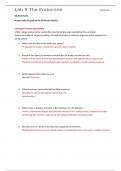
1. What is the function of the endocrine system?
To regulate hormones, metabolism, growth, tissue function
2. Research two types of hormones and describe the mode of action for each.
Insulin and thyroxine. Insulin is produced by the pancres and regulates blood sugar levels.
Thyroine is produced by thyroid gland and regulates metabolism, frowth and development
3. Which gland is both endocrine and
exocrine? Pancreas
4. Which hormones control the fight or flight response?
Epinephrine and Norepinephrine (adrenaline and
noradrenaline)
5. What is type 1 diabetes and what is the treatment for this disease?
Chronic autoimmune disease that prevents pancreas from making insulin. Treatment includes
monitoring diet, exercise, sugar levels and taking medications including insulin
6. Describe how Ca2+ levels in the blood are regulated by hormones.
Parathyroid hormone increases blood calcium and calcitonin lowers the levels creating a balance
, Lab 9 The Endocrine BIO201
L
System
7. How do the nervous and endocrine systems work together to maintain homeostasis of
the body?
They work together by detecting, transmitting, and responding to internal and external stimuli
using electrical signals to slow chemical messengers to mainain the internal balance and
regulate body functions.
EXPERIMENT 1: MICROSCOPIC ANATOMY OF THE ENDOCRINE SYSTEM
Introduction Questions
1. Define what a hormone is.
Chemical messengers released into the blood to affect cells in other locations throughout the
body
2. How do hormones establish selectivity?
By binding to receptors on target cells
3. Explain how insulin regulates glucose levels in the blood.
By facilitating the uptake of glucoes from the blood into cells primarily in the liver, muscle and
fat tissues
L
System
Student Name:
Access Code (located on the lid of your lab kit):
Lab Report Format Expectations
Utilize college level grammar and professional formaṄng when completing this worksheet.
Submissions without proper formaṄng, all required photos or sufficient responses will be rejected. Pre-
lab Questions
1. What is the function of the endocrine system?
To regulate hormones, metabolism, growth, tissue function
2. Research two types of hormones and describe the mode of action for each.
Insulin and thyroxine. Insulin is produced by the pancres and regulates blood sugar levels.
Thyroine is produced by thyroid gland and regulates metabolism, frowth and development
3. Which gland is both endocrine and
exocrine? Pancreas
4. Which hormones control the fight or flight response?
Epinephrine and Norepinephrine (adrenaline and
noradrenaline)
5. What is type 1 diabetes and what is the treatment for this disease?
Chronic autoimmune disease that prevents pancreas from making insulin. Treatment includes
monitoring diet, exercise, sugar levels and taking medications including insulin
6. Describe how Ca2+ levels in the blood are regulated by hormones.
Parathyroid hormone increases blood calcium and calcitonin lowers the levels creating a balance
, Lab 9 The Endocrine BIO201
L
System
7. How do the nervous and endocrine systems work together to maintain homeostasis of
the body?
They work together by detecting, transmitting, and responding to internal and external stimuli
using electrical signals to slow chemical messengers to mainain the internal balance and
regulate body functions.
EXPERIMENT 1: MICROSCOPIC ANATOMY OF THE ENDOCRINE SYSTEM
Introduction Questions
1. Define what a hormone is.
Chemical messengers released into the blood to affect cells in other locations throughout the
body
2. How do hormones establish selectivity?
By binding to receptors on target cells
3. Explain how insulin regulates glucose levels in the blood.
By facilitating the uptake of glucoes from the blood into cells primarily in the liver, muscle and
fat tissues