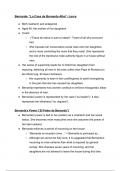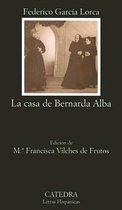
Bernarda- “La Casa de Bernarda Alba”- Lorca
● Both matriarch and antagonist
● Aged 60, the mother of five daughters
● Tyrant
○ (“Tirana de todos lo que la rodean”- Tyrant of all who surround
her).
○ She imposes her conservative social rules onto her daughters,
and is more controlling the more that they resist. She represents
the role of the repressive male authority figure in a house without
men.
● Her sense of superiority leads her to forbid her daughters from
marrying, believing all men in the town (other than Pepe el Romano) to
be inferior (eg. Enrique Humanes).
○ Her superiority is seen in her unwillingness to admit wrongdoing
in the pain that she has caused her daughters.
● Bernarda represents how women continue to enforce misogynistic ideas
in the absence of men.
● Bernarda’s power is represented by her cane (“su bastón”). It also
represents her blindness (“su ceguera”).
Bernarda’s Power (“El Poder de Bernarda”)
● Bernarda’s power is tied to her position as a matriarch and her social
status. She becomes more masculine once she assumes the power of
her late husband.
● Bernarda enforces a period of mourning on the house.
○ “Bernarda se muestra como…” = Bernarda is portrayed as…
○ Although we cannot be fully sure, it is suggested that Bernarda’s
mourning is more extreme than what is required by general
society. She imposes seven years of mourning, and her
daughters are not allowed to leave the house during this time.
● Both matriarch and antagonist
● Aged 60, the mother of five daughters
● Tyrant
○ (“Tirana de todos lo que la rodean”- Tyrant of all who surround
her).
○ She imposes her conservative social rules onto her daughters,
and is more controlling the more that they resist. She represents
the role of the repressive male authority figure in a house without
men.
● Her sense of superiority leads her to forbid her daughters from
marrying, believing all men in the town (other than Pepe el Romano) to
be inferior (eg. Enrique Humanes).
○ Her superiority is seen in her unwillingness to admit wrongdoing
in the pain that she has caused her daughters.
● Bernarda represents how women continue to enforce misogynistic ideas
in the absence of men.
● Bernarda’s power is represented by her cane (“su bastón”). It also
represents her blindness (“su ceguera”).
Bernarda’s Power (“El Poder de Bernarda”)
● Bernarda’s power is tied to her position as a matriarch and her social
status. She becomes more masculine once she assumes the power of
her late husband.
● Bernarda enforces a period of mourning on the house.
○ “Bernarda se muestra como…” = Bernarda is portrayed as…
○ Although we cannot be fully sure, it is suggested that Bernarda’s
mourning is more extreme than what is required by general
society. She imposes seven years of mourning, and her
daughters are not allowed to leave the house during this time.