Learning objectives for week 1
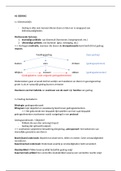
- There will be few questions about brain areas on the exam, for example about
the order of brain maturation.
● Chapter 1 - Childhood Neuropsychology
○ Know the foundations of child neuropsychology and the two seminal
models (by Rourke and by Dennis)
- Rourke: non-verbal learning disability (NVLD)
Emphasizes nonverbal learning disabilities and the role of right-hemisphere
dysfunction in children. It focuses on how deficits in visual-spatial, tactile, and holistic
processing affect academic and social development.
characteristics include:
I. bilateral tactile-perceptual deficits, more marked on the left side of the body
II. impaired visual recognition and discrimination of visuospatial organisational
deficiencies
III. bilateral psychomotor coordination problems, more marked on the left side of
the body
IV. difficulties managing novel information
range of intact skills, primarily auditory/verbal domain:
I. simple motor skills
II. auditory perception
III. rote learning
IV. selective and sustained attention for auditory-verbal information
V. basic expressive and receptive language
VI. word reading and spelling
- Dennis: multidimensional age at insult
Focuses primarily on age/developmental stage at the time of the insult and
progression in cognitive skills with time since the insult.
Levels of skill development:
I. emerging: there is an ability in the early stages if acquisition, but not yet
functional
II. developing: there is a capacity that is partially acquired but not yet functional
III. established: abilities are fully matured
Children might grow into certain deficits, even though they do not really experience
major issues right after insult
, ○ Understand the current multidimensional models of child
neuropsychology
- The cognitive reverse model (Dennis, Yeates, Taylor, Fletcher)
consists of brain reserve capacity (BRC) and cognitive reverse capacity (CRC).
When BRC is depleted below threshold levels, functional deficits emerge, which
might include physical, cognitive and so4cio-emotional symptoms. CRC consists of
both intrinsic and extrinsic factors, which impede or facilitate various functional
outcomes.
- Recovery continuum model (Anderson, Spencer-Smith, Wood)
Neither early plasticity nor early vulnerability theories in isolation are sufficient to
explain the myriad of outcomes that occur following early brain insult. This model
incorporates factors such as:
I. nature (global/diffuse) and severity (mild/severe/presence of complications) of
insult
II. developmental stage of the child (infant, child, adolescence) and timing of
assessment
III. pre-injury child characteristic
IV. environmental context (distal and proximal factors) and access to
interventions and social supports
○ Explain the biopsychosocial view of child neuropsychology
● the leading model in this field
● 3 dimensions of the developing child (maturation and function of the brain)
○ “bio”/”neuro”: neurodevelopment of the brain
○ hierarchical brain development
○ three views on brain development:
■ early maturation
■ interactive specialisation
■ skill learning
○ brain-wise children are not little adults
■ irreversible consequences
■ more diffuse and generalized disturbances
■ ‘growing into deficits’
○ “psycho”: cognitive and socio-emotional development
○ stage-like development
○ in line with hierarchical brain development
○ psychological development is an iterative process
■ neural maturation
■ cognitive skills
■ interaction with environment
○ “social”: environmental influences → familial and extrafamilial
○ family unit
■ language
■ cognitive skills
■ social behavior
, ■ rules
○ Extrafamilial contexts
■ academic skills (school)
■ motoric skills (sports, games)
■ identity development (peers)
● Chapter 3 - Cognitive and Social Development
○ Understand that there is large variability in reaching developmental
stages in childhood, which is increased with brain pathology
Chapter 3 supports the idea that children with brain pathology show more
unpredictable and delayed cognitive development, which adds to the natural
variability already present in child development.
○ Explain the difference between domain-specific and domain-general
models of cognitive development
- domain specific: suggest that cognitive development progresses as a
unified system, where broad, underlying processes (like processing speed or
executive function) influence many types of tasks and skills across domains.
- Piaget’s theory
- domain general: in contrast, propose that different cognitive abilities
develop independently, such as language, memory, or visual-spatial skills,
each following its own trajectory.
- evidence suggests differences per domain
○ Identify the common domains of childhood neuropsychological
assessment: attention, memory, speed of processing, executive
function, socio-emotional skills
○ Recognize theoretical models supporting these neuropsychological
domains
○ Know the general developmental course of these neuropsychological
domains
1. Attention
Identification
● A foundational domain in child neuropsychology.
● Early skills such as joint attention are critical for learning and socio-emotional
development.
Theoretical Models
● Developmental models of attention control.
● Supported by research from Rueda, Posner, & Rothbart (2005).
Developmental Course
● Begins in infancy with joint attention.
● Gradually refines throughout childhood.
● Matures alongside executive functions.
- There will be few questions about brain areas on the exam, for example about
the order of brain maturation.
● Chapter 1 - Childhood Neuropsychology
○ Know the foundations of child neuropsychology and the two seminal
models (by Rourke and by Dennis)
- Rourke: non-verbal learning disability (NVLD)
Emphasizes nonverbal learning disabilities and the role of right-hemisphere
dysfunction in children. It focuses on how deficits in visual-spatial, tactile, and holistic
processing affect academic and social development.
characteristics include:
I. bilateral tactile-perceptual deficits, more marked on the left side of the body
II. impaired visual recognition and discrimination of visuospatial organisational
deficiencies
III. bilateral psychomotor coordination problems, more marked on the left side of
the body
IV. difficulties managing novel information
range of intact skills, primarily auditory/verbal domain:
I. simple motor skills
II. auditory perception
III. rote learning
IV. selective and sustained attention for auditory-verbal information
V. basic expressive and receptive language
VI. word reading and spelling
- Dennis: multidimensional age at insult
Focuses primarily on age/developmental stage at the time of the insult and
progression in cognitive skills with time since the insult.
Levels of skill development:
I. emerging: there is an ability in the early stages if acquisition, but not yet
functional
II. developing: there is a capacity that is partially acquired but not yet functional
III. established: abilities are fully matured
Children might grow into certain deficits, even though they do not really experience
major issues right after insult
, ○ Understand the current multidimensional models of child
neuropsychology
- The cognitive reverse model (Dennis, Yeates, Taylor, Fletcher)
consists of brain reserve capacity (BRC) and cognitive reverse capacity (CRC).
When BRC is depleted below threshold levels, functional deficits emerge, which
might include physical, cognitive and so4cio-emotional symptoms. CRC consists of
both intrinsic and extrinsic factors, which impede or facilitate various functional
outcomes.
- Recovery continuum model (Anderson, Spencer-Smith, Wood)
Neither early plasticity nor early vulnerability theories in isolation are sufficient to
explain the myriad of outcomes that occur following early brain insult. This model
incorporates factors such as:
I. nature (global/diffuse) and severity (mild/severe/presence of complications) of
insult
II. developmental stage of the child (infant, child, adolescence) and timing of
assessment
III. pre-injury child characteristic
IV. environmental context (distal and proximal factors) and access to
interventions and social supports
○ Explain the biopsychosocial view of child neuropsychology
● the leading model in this field
● 3 dimensions of the developing child (maturation and function of the brain)
○ “bio”/”neuro”: neurodevelopment of the brain
○ hierarchical brain development
○ three views on brain development:
■ early maturation
■ interactive specialisation
■ skill learning
○ brain-wise children are not little adults
■ irreversible consequences
■ more diffuse and generalized disturbances
■ ‘growing into deficits’
○ “psycho”: cognitive and socio-emotional development
○ stage-like development
○ in line with hierarchical brain development
○ psychological development is an iterative process
■ neural maturation
■ cognitive skills
■ interaction with environment
○ “social”: environmental influences → familial and extrafamilial
○ family unit
■ language
■ cognitive skills
■ social behavior
, ■ rules
○ Extrafamilial contexts
■ academic skills (school)
■ motoric skills (sports, games)
■ identity development (peers)
● Chapter 3 - Cognitive and Social Development
○ Understand that there is large variability in reaching developmental
stages in childhood, which is increased with brain pathology
Chapter 3 supports the idea that children with brain pathology show more
unpredictable and delayed cognitive development, which adds to the natural
variability already present in child development.
○ Explain the difference between domain-specific and domain-general
models of cognitive development
- domain specific: suggest that cognitive development progresses as a
unified system, where broad, underlying processes (like processing speed or
executive function) influence many types of tasks and skills across domains.
- Piaget’s theory
- domain general: in contrast, propose that different cognitive abilities
develop independently, such as language, memory, or visual-spatial skills,
each following its own trajectory.
- evidence suggests differences per domain
○ Identify the common domains of childhood neuropsychological
assessment: attention, memory, speed of processing, executive
function, socio-emotional skills
○ Recognize theoretical models supporting these neuropsychological
domains
○ Know the general developmental course of these neuropsychological
domains
1. Attention
Identification
● A foundational domain in child neuropsychology.
● Early skills such as joint attention are critical for learning and socio-emotional
development.
Theoretical Models
● Developmental models of attention control.
● Supported by research from Rueda, Posner, & Rothbart (2005).
Developmental Course
● Begins in infancy with joint attention.
● Gradually refines throughout childhood.
● Matures alongside executive functions.