Study Guide Fire Instructor 1 Exam Florida 2025
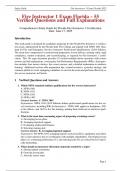
Fire Instructor 1 Exam Florida – 55
Verified Questions and Full Explanations
Comprehensive Study Guide for Florida Fire Instructor 1 Certification
Date: June 17, 2025
Introduction
This study guide is designed for candidates preparing for the Florida Fire Instructor 1 certifica-
tion exam, administered by the Florida State Fire College and aligned with NFPA 1041 Stan-
dard for Fire and Emergency Services Instructor Professional Qualifications (2019 Edition).
The exam tests competencies in instructional preparation, lesson delivery, training safety, legal
compliance, student evaluation, and record-keeping, as required for Fire Instructor 1 certifi-
cation. This 10+ page document provides 55 verified multiple-choice questions with correct
answers and full explanations, covering key Job Performance Requirements (JPRs). Each ques-
tion includes four answer choices, the correct answer, and a detailed explanation to reinforce
learning. Additional sections offer preparation tips, curated resources, a practice strategy, and
common pitfalls to avoid, equipping candidates to excel in the exam and perform effectively as
fire service instructors in Florida.
1 Verified Questions and Answers
1. Which NFPA standard outlines qualifications for fire service instructors?
A. NFPA 1001
B. NFPA 1021
C. NFPA 1041
D. NFPA 1403
Correct Answer: C. NFPA 1041
Explanation: NFPA 1041 (2019 Edition) defines professional qualifications for fire ser-
vice instructors, including JPRs for Instructor 1. NFPA 1001 applies to firefighters, 1021
to fire officers, and 1403 to live fire training, making them irrelevant to instructor quali-
fications.
2. What is the most time-consuming aspect of preparing a training course?
A. Developing lesson plans
B. Arranging logistical support
C. Evaluating student performance
D. Selecting training aids
Correct Answer: B. Arranging logistical support
Explanation: Per NFPA 1041, arranging logistics such as facilities, equipment, and sched-
ules is time-intensive due to coordination with multiple stakeholders. Developing lesson
plans (A), evaluating performance (C), and selecting aids (D) are critical but less logisti-
cally demanding.
3. When should an instructor determine materials needed for a topic?
A. During student evaluations
B. From the lesson plan
C. After the course starts
Page 1
, Study Guide Fire Instructor 1 Exam Florida 2025
D. Based on student feedback
Correct Answer: B. From the lesson plan
Explanation: The lesson plan specifies materials aligned with learning objectives, en-
suring preparedness before instruction begins. Evaluations (A), post-course adjustments
(C), and feedback (D) occur too late for effective planning.
4. Which step of lesson planning motivates learners to engage?
A. Preparation
B. Presentation
C. Application
D. Evaluation
Correct Answer: A. Preparation
Explanation: The preparation step engages students by setting clear objectives and cre-
ating interest in the topic. Presentation (B) delivers content, application (C) involves
practice, and evaluation (D) assesses performance, none of which focus on initial moti-
vation.
5. What term describes employer support under the Americans with Disabilities Act?
A. Reasonable accommodation
B. Equal opportunity
C. Affirmative action
D. Accessibility mandate
Correct Answer: A. Reasonable accommodation
Explanation: The ADA requires employers to provide reasonable accommodations (e.g.,
modified schedules or equipment) for employees with disabilities. Equal opportunity (B),
affirmative action (C), and accessibility mandate (D) are related but do not specifically
address individual support.
6. Which law prohibits religious harassment in training settings?
A. Civil Rights Act of 1964
B. Equal Employment Opportunity Act
C. Fair Labor Standards Act
D. Occupational Safety and Health Act
Correct Answer: A. Civil Rights Act of 1964
Explanation: Title VII of the Civil Rights Act of 1964 prohibits discrimination, including
religious harassment, in educational and workplace settings. Options B, C, and D address
employment rights, wages, and safety, respectively, not harassment.
7. What should instructors adapt to students’ comprehension levels?
A. Lesson objectives
B. Learning pace
C. Assessment criteria
D. Training aids
Correct Answer: B. Learning pace
Explanation: Adjusting the learning pace ensures students understand content without
overwhelming them. Lesson objectives (A) and assessment criteria (C) are fixed, and
training aids (D) support delivery but are not pace-related.
8. What do introductory components of a lesson plan typically include?
A. Evaluation rubrics
B. Learning objectives
Page 2
Fire Instructor 1 Exam Florida – 55
Verified Questions and Full Explanations
Comprehensive Study Guide for Florida Fire Instructor 1 Certification
Date: June 17, 2025
Introduction
This study guide is designed for candidates preparing for the Florida Fire Instructor 1 certifica-
tion exam, administered by the Florida State Fire College and aligned with NFPA 1041 Stan-
dard for Fire and Emergency Services Instructor Professional Qualifications (2019 Edition).
The exam tests competencies in instructional preparation, lesson delivery, training safety, legal
compliance, student evaluation, and record-keeping, as required for Fire Instructor 1 certifi-
cation. This 10+ page document provides 55 verified multiple-choice questions with correct
answers and full explanations, covering key Job Performance Requirements (JPRs). Each ques-
tion includes four answer choices, the correct answer, and a detailed explanation to reinforce
learning. Additional sections offer preparation tips, curated resources, a practice strategy, and
common pitfalls to avoid, equipping candidates to excel in the exam and perform effectively as
fire service instructors in Florida.
1 Verified Questions and Answers
1. Which NFPA standard outlines qualifications for fire service instructors?
A. NFPA 1001
B. NFPA 1021
C. NFPA 1041
D. NFPA 1403
Correct Answer: C. NFPA 1041
Explanation: NFPA 1041 (2019 Edition) defines professional qualifications for fire ser-
vice instructors, including JPRs for Instructor 1. NFPA 1001 applies to firefighters, 1021
to fire officers, and 1403 to live fire training, making them irrelevant to instructor quali-
fications.
2. What is the most time-consuming aspect of preparing a training course?
A. Developing lesson plans
B. Arranging logistical support
C. Evaluating student performance
D. Selecting training aids
Correct Answer: B. Arranging logistical support
Explanation: Per NFPA 1041, arranging logistics such as facilities, equipment, and sched-
ules is time-intensive due to coordination with multiple stakeholders. Developing lesson
plans (A), evaluating performance (C), and selecting aids (D) are critical but less logisti-
cally demanding.
3. When should an instructor determine materials needed for a topic?
A. During student evaluations
B. From the lesson plan
C. After the course starts
Page 1
, Study Guide Fire Instructor 1 Exam Florida 2025
D. Based on student feedback
Correct Answer: B. From the lesson plan
Explanation: The lesson plan specifies materials aligned with learning objectives, en-
suring preparedness before instruction begins. Evaluations (A), post-course adjustments
(C), and feedback (D) occur too late for effective planning.
4. Which step of lesson planning motivates learners to engage?
A. Preparation
B. Presentation
C. Application
D. Evaluation
Correct Answer: A. Preparation
Explanation: The preparation step engages students by setting clear objectives and cre-
ating interest in the topic. Presentation (B) delivers content, application (C) involves
practice, and evaluation (D) assesses performance, none of which focus on initial moti-
vation.
5. What term describes employer support under the Americans with Disabilities Act?
A. Reasonable accommodation
B. Equal opportunity
C. Affirmative action
D. Accessibility mandate
Correct Answer: A. Reasonable accommodation
Explanation: The ADA requires employers to provide reasonable accommodations (e.g.,
modified schedules or equipment) for employees with disabilities. Equal opportunity (B),
affirmative action (C), and accessibility mandate (D) are related but do not specifically
address individual support.
6. Which law prohibits religious harassment in training settings?
A. Civil Rights Act of 1964
B. Equal Employment Opportunity Act
C. Fair Labor Standards Act
D. Occupational Safety and Health Act
Correct Answer: A. Civil Rights Act of 1964
Explanation: Title VII of the Civil Rights Act of 1964 prohibits discrimination, including
religious harassment, in educational and workplace settings. Options B, C, and D address
employment rights, wages, and safety, respectively, not harassment.
7. What should instructors adapt to students’ comprehension levels?
A. Lesson objectives
B. Learning pace
C. Assessment criteria
D. Training aids
Correct Answer: B. Learning pace
Explanation: Adjusting the learning pace ensures students understand content without
overwhelming them. Lesson objectives (A) and assessment criteria (C) are fixed, and
training aids (D) support delivery but are not pace-related.
8. What do introductory components of a lesson plan typically include?
A. Evaluation rubrics
B. Learning objectives
Page 2