Topics and Enquiry Case Study with facts and gures Links to other
Question to which themes within
case studies go with Superpowers
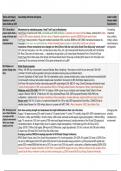
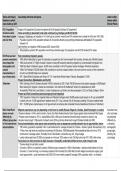
EQ1: Geopolitical Mechanisms for maintaining power: “hard”/“soft” vary in e ectiveness Contrasting
power stems from a Hard Power: US atomic bomb 1945 (+)immediate post-WWII dominance (-) Sparked arms race=Cold War, Russia—Ukraine 2022 (-)High characters:
range of human and costs(315,000 russians displaced), short-term focus (-) Negative reputation/econ. sanctions ($300B Russian assets frozen) econ, political,
physical Soft Power: Indias promotion of Yoga and meditation (practiced in180+ countries ,$60BN by 2027) |BBC international broadcast 40+ military, cultural,
characteristics languages (+) low cost, non-confrontational (-) limited immediate impact<longterm (-) lacks direct control over outcomes natural resource,
Importance of these mechanisms have changed over time (China’s ‘belt and road’ policy-South China Sea) using “smart power” demographic
2013, belt and road policy links 140+ countries (across Asia, Africa, EU, Latin America)via Silk Road Economic Belt and 21st Maritime
Silk Road. Gives loans to nance roads… = dependency through dept e.g Sri Lanka leased Hambantota Port to China for 99 year
Smart Power:China military base within Spratly and Paracel Islands (South China sea)=controlling 90% based on the “Nine-Dash Line”,
pressuring US who previously dominated | China gives development aid e.g BRI
EQ1:Patterns of British Empire (unipolar)
power change over Military: 19th BR navy=most powerful, secured Gibraltar, Malta, HongKong =“the empire on which the sun never sets”| 20th:1921
time controlled 1/4 Earths surface population (during de-colonisation kept key areas e.g Falkland Island)
Economic Exploitation & Trade Control: 19th 1st industrialised country, colonies provided cotton, rubber, tea (enforced mercantilism)|20th
Commonwealth continues trade relations despite weak mercantilism/ Involvement in IMF, World Bank shaped economy
Soft Power:19th colonies Christian missionaries spread BR values/religion| 20th: BBC 40+ lang, Oxford/Cambridge international impact
(-)Costs of being hegemon (1897 naval expenditure 22M/yr=2.7B today),vested interest at the expense of others, global dependence
Multipolar world (1919-1945) WWI,1914-18 collapse of GER= power vacuum multipolar world emerges (Failed Collective Power:
League of National 1920-39- JP:Manchuria 1931, Italy: Abyssinia/Ethiopia 1935, GER reoccupies Rhineland 1936) WWII ends
multipolarity—>bipolar world (-)Increase competition and less cooperation, complex diplomacy, regional con icts and wars common
Bipolar world (1945-91): US policy of containment (Marshall Plan-13B on aid),USSR expansionism-Soviet Bloc, COMECON (aid to
satellite states) Warsaw Pact 1955 military alliance to compete with NATO 1949 (-) Risk of escalation 1962 Cuban Missile Crisis
EQ1: Emerging power Each have evolving strength and weaknesses that might inhibit/advance their role in the future (Emerging often
vary in their in uence Russia: 11th larges economy,35% wealth in hands of 110 people (richest 1% control 71% wealth), oil/gas (50% GDP) vulnerable to price prioritise
on people and the uctuation, military spent:$100B/yr, 1M active troops, 6,000 nuclear warheads (worlds largest), Ageing demographics: 145M and falling development >
physical environment India: 7% annual econ. 20% live in poverty, 672M votes (world largest democracy), founding members of the UN and G20 grouping of environment)
which can change
industrialised nations, 4th largest military power in weapons, largest demographics (1.44B median age 28 vs 38 China, 40 EU)
rapidly over time
China: GDP:$17.5Trillion (2nd largest), BRI-exports $3.5Trillion/year, Largest population(but 12% 65+, India only 6%)-2M active militarily
& largest navy 355 boats 2023, South China Sea military bases
Emerging countries: BRICS increasingly important in UN Climate Change Conference
BRICS (Brazil, Russia, India, China, South Africa) represents 41% of world population, 25% GDP, 42% global CO2 levels =COP26 China
net zero by 2060 (largest emitter 30% global CO2) and start to lead renewable energy production e.g China produced 80% global solar
panels,2022 invested $90B/India Net zero by 2070, key user of coal (70%) but growth in solar parks e.g Rajasthan targeting 500GW 2030
However: Russia 4th largest emitter(40% of GDP, 60% of exports)COP26 pledged net zero by 2060 but criticised for lack ambition (Putin
absent) |South Africa: investment to shift coal without harming jobs e.g COP26 received $8.5B Just Energy Transition Partnership
Question to which themes within
case studies go with Superpowers
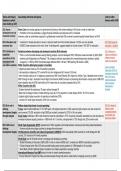
EQ1: Geopolitical Mechanisms for maintaining power: “hard”/“soft” vary in e ectiveness Contrasting
power stems from a Hard Power: US atomic bomb 1945 (+)immediate post-WWII dominance (-) Sparked arms race=Cold War, Russia—Ukraine 2022 (-)High characters:
range of human and costs(315,000 russians displaced), short-term focus (-) Negative reputation/econ. sanctions ($300B Russian assets frozen) econ, political,
physical Soft Power: Indias promotion of Yoga and meditation (practiced in180+ countries ,$60BN by 2027) |BBC international broadcast 40+ military, cultural,
characteristics languages (+) low cost, non-confrontational (-) limited immediate impact<longterm (-) lacks direct control over outcomes natural resource,
Importance of these mechanisms have changed over time (China’s ‘belt and road’ policy-South China Sea) using “smart power” demographic
2013, belt and road policy links 140+ countries (across Asia, Africa, EU, Latin America)via Silk Road Economic Belt and 21st Maritime
Silk Road. Gives loans to nance roads… = dependency through dept e.g Sri Lanka leased Hambantota Port to China for 99 year
Smart Power:China military base within Spratly and Paracel Islands (South China sea)=controlling 90% based on the “Nine-Dash Line”,
pressuring US who previously dominated | China gives development aid e.g BRI
EQ1:Patterns of British Empire (unipolar)
power change over Military: 19th BR navy=most powerful, secured Gibraltar, Malta, HongKong =“the empire on which the sun never sets”| 20th:1921
time controlled 1/4 Earths surface population (during de-colonisation kept key areas e.g Falkland Island)
Economic Exploitation & Trade Control: 19th 1st industrialised country, colonies provided cotton, rubber, tea (enforced mercantilism)|20th
Commonwealth continues trade relations despite weak mercantilism/ Involvement in IMF, World Bank shaped economy
Soft Power:19th colonies Christian missionaries spread BR values/religion| 20th: BBC 40+ lang, Oxford/Cambridge international impact
(-)Costs of being hegemon (1897 naval expenditure 22M/yr=2.7B today),vested interest at the expense of others, global dependence
Multipolar world (1919-1945) WWI,1914-18 collapse of GER= power vacuum multipolar world emerges (Failed Collective Power:
League of National 1920-39- JP:Manchuria 1931, Italy: Abyssinia/Ethiopia 1935, GER reoccupies Rhineland 1936) WWII ends
multipolarity—>bipolar world (-)Increase competition and less cooperation, complex diplomacy, regional con icts and wars common
Bipolar world (1945-91): US policy of containment (Marshall Plan-13B on aid),USSR expansionism-Soviet Bloc, COMECON (aid to
satellite states) Warsaw Pact 1955 military alliance to compete with NATO 1949 (-) Risk of escalation 1962 Cuban Missile Crisis
EQ1: Emerging power Each have evolving strength and weaknesses that might inhibit/advance their role in the future (Emerging often
vary in their in uence Russia: 11th larges economy,35% wealth in hands of 110 people (richest 1% control 71% wealth), oil/gas (50% GDP) vulnerable to price prioritise
on people and the uctuation, military spent:$100B/yr, 1M active troops, 6,000 nuclear warheads (worlds largest), Ageing demographics: 145M and falling development >
physical environment India: 7% annual econ. 20% live in poverty, 672M votes (world largest democracy), founding members of the UN and G20 grouping of environment)
which can change
industrialised nations, 4th largest military power in weapons, largest demographics (1.44B median age 28 vs 38 China, 40 EU)
rapidly over time
China: GDP:$17.5Trillion (2nd largest), BRI-exports $3.5Trillion/year, Largest population(but 12% 65+, India only 6%)-2M active militarily
& largest navy 355 boats 2023, South China Sea military bases
Emerging countries: BRICS increasingly important in UN Climate Change Conference
BRICS (Brazil, Russia, India, China, South Africa) represents 41% of world population, 25% GDP, 42% global CO2 levels =COP26 China
net zero by 2060 (largest emitter 30% global CO2) and start to lead renewable energy production e.g China produced 80% global solar
panels,2022 invested $90B/India Net zero by 2070, key user of coal (70%) but growth in solar parks e.g Rajasthan targeting 500GW 2030
However: Russia 4th largest emitter(40% of GDP, 60% of exports)COP26 pledged net zero by 2060 but criticised for lack ambition (Putin
absent) |South Africa: investment to shift coal without harming jobs e.g COP26 received $8.5B Just Energy Transition Partnership