Revenge
KEY IDEAS:
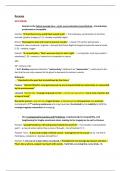
- Hamlet is the failed revenge hero – grief, procrastination/overthinking - immediately
positioned as incapable
Hamlet: ‘O that this too too solid flesh would melt’ -> first soliloquy, exclamation of emotion,
suicidal, graphic imagery [1.2] - already mentally fragile
Ghost: ‘Revenge his foul and most unnatural murder’ -> doesn’t fit iambic pentameter –
important, also unnatural / regicide – disrupts the Divine Right of Kings/corrupts the natural order
[1.5] - catalyst, trigger
Hamlet: ‘O cursed spite, / That I was ever born to set it right’ -> cursing fate, rhyming couplet =
emphasis [1.5] - resents it, knows he is incapable in nature
A05
20th century critic
-> A.C. Bradley explored Hamlet’s “melancholy” (defined it as “depression”) - partly due to the
fact that he can only respond to the ghost’s demands for action in words
Gillespie:
-> “Haunted by the past but immobilised by the future”
Foakes: “Hamlet failed to revenge because he was incapacitated by melancholy or nauseated
by his environment”
Lennard: Hamlet has “revenge imposed on him”, not his own will and is “not a man of action but
a man of mind”
Romantic period – saw him as a tragic thinker, emphasised his introspection and emotion
(compared to 17th century audiences who may have been frustrated by his inability to fulfil the
revenge tragedy convention of avenging)
- He is juxtaposed by Laertes and Fortinbras, emphasising his incapability, and
heightening his fragile emotional state, leading to his tragedy as he self-criticises
Horatio: ‘young Fortinbras / Of unimproved mettle hot and full’ -> hot-headed ‘undisciplined
spirit’ - a man of action rather than a man of thought – foil of Hamlet [1.1]
Hamlet: ‘Yet I, / A dull and muddy-mettled rascal’ ‘unpregnant of my cause’ [2.2] - the foil of
Fortinbras, condemns + berates himself for it
Hamlet: ‘I, the son of a dear father murdered, / Prompted to my revenge by heaven and hell, /
Must, like a whore, unpack my heart with words, / And fall a-cursing like a very drab, / A
, stallion!’ -> berating himself, derogatory, sexist terms used to describe himself – whore, drab,
stallion [2.2]
Hamlet: ‘this is hire and salary, not revenge’ - this is reward, not revenge [3.3]
Laertes: ‘my revenge will come’ - the foil of Hamlet [4.7]
Laertes: ‘To cut his throat i'th’ church’ - directly contrasts Hamlet who would not do this – foil
[4.7] - direct contrast/foil to Hamlet
A05
Doran, 2008: Hamlet’s procrastination is emphasised – interval when he goes to kill Claudius in
church, but doesn’t - his slipping prop crown emphasises his inability to fit to his stock role
Ryan:
-> “Shakespeare makes his purpose plain by juxtaposing Hamlet with Fortinbras and especially
Laertes, two conventional sons who are also determined to avenge their fathers, but who
don’t have the least scruple about doing so”
-> Hamlet has been “miscast” in his stock role of tragic protagonist (Shakespeare deliberately
sabotages the genre of the revenge tragedy in doing this)
- Leads him, ironically, into real madness
-> his coping strategy of “antic disposition” allows him to express his emotions, propelling
his emotional state into madness
Horatio [to Hamlet about why he should not follow the ghost]: ‘What if it tempt you toward the flood
my lord, / Or to the dreadful summit of the cliff [...] ‘might deprive your sovereignty of reason /
And draw you into madness?’ -> introduces the theme of madness and foreshadows Hamlet’s
madness (fake and real) - Horatio is a rational figure who accurately predicts this [1.4]
Hamlet: ‘You are the Queen, your husband’s brother’s / wife’ [3.4]
Hamlet: ‘rank sweat of an enseamed bed / Stewed in corruption’ [3.4]
Hamlet: ‘Do you see nothing there?’
Gertrude: ‘Nothing at all, yet all that is I see’ [3.4]
Gertrude: ‘This is the very coinage of your brain’ [3.4]
Hamlet: ‘[don’t tell Claudius this:] That I essentially am not in madness, / But mad in craft’ [3.4]
A05
Doran: Hamlet acts mad in this scene despite claiming he is not + editing reveals Gertrude cannot
see the ghost
KEY IDEAS:
- Hamlet is the failed revenge hero – grief, procrastination/overthinking - immediately
positioned as incapable
Hamlet: ‘O that this too too solid flesh would melt’ -> first soliloquy, exclamation of emotion,
suicidal, graphic imagery [1.2] - already mentally fragile
Ghost: ‘Revenge his foul and most unnatural murder’ -> doesn’t fit iambic pentameter –
important, also unnatural / regicide – disrupts the Divine Right of Kings/corrupts the natural order
[1.5] - catalyst, trigger
Hamlet: ‘O cursed spite, / That I was ever born to set it right’ -> cursing fate, rhyming couplet =
emphasis [1.5] - resents it, knows he is incapable in nature
A05
20th century critic
-> A.C. Bradley explored Hamlet’s “melancholy” (defined it as “depression”) - partly due to the
fact that he can only respond to the ghost’s demands for action in words
Gillespie:
-> “Haunted by the past but immobilised by the future”
Foakes: “Hamlet failed to revenge because he was incapacitated by melancholy or nauseated
by his environment”
Lennard: Hamlet has “revenge imposed on him”, not his own will and is “not a man of action but
a man of mind”
Romantic period – saw him as a tragic thinker, emphasised his introspection and emotion
(compared to 17th century audiences who may have been frustrated by his inability to fulfil the
revenge tragedy convention of avenging)
- He is juxtaposed by Laertes and Fortinbras, emphasising his incapability, and
heightening his fragile emotional state, leading to his tragedy as he self-criticises
Horatio: ‘young Fortinbras / Of unimproved mettle hot and full’ -> hot-headed ‘undisciplined
spirit’ - a man of action rather than a man of thought – foil of Hamlet [1.1]
Hamlet: ‘Yet I, / A dull and muddy-mettled rascal’ ‘unpregnant of my cause’ [2.2] - the foil of
Fortinbras, condemns + berates himself for it
Hamlet: ‘I, the son of a dear father murdered, / Prompted to my revenge by heaven and hell, /
Must, like a whore, unpack my heart with words, / And fall a-cursing like a very drab, / A
, stallion!’ -> berating himself, derogatory, sexist terms used to describe himself – whore, drab,
stallion [2.2]
Hamlet: ‘this is hire and salary, not revenge’ - this is reward, not revenge [3.3]
Laertes: ‘my revenge will come’ - the foil of Hamlet [4.7]
Laertes: ‘To cut his throat i'th’ church’ - directly contrasts Hamlet who would not do this – foil
[4.7] - direct contrast/foil to Hamlet
A05
Doran, 2008: Hamlet’s procrastination is emphasised – interval when he goes to kill Claudius in
church, but doesn’t - his slipping prop crown emphasises his inability to fit to his stock role
Ryan:
-> “Shakespeare makes his purpose plain by juxtaposing Hamlet with Fortinbras and especially
Laertes, two conventional sons who are also determined to avenge their fathers, but who
don’t have the least scruple about doing so”
-> Hamlet has been “miscast” in his stock role of tragic protagonist (Shakespeare deliberately
sabotages the genre of the revenge tragedy in doing this)
- Leads him, ironically, into real madness
-> his coping strategy of “antic disposition” allows him to express his emotions, propelling
his emotional state into madness
Horatio [to Hamlet about why he should not follow the ghost]: ‘What if it tempt you toward the flood
my lord, / Or to the dreadful summit of the cliff [...] ‘might deprive your sovereignty of reason /
And draw you into madness?’ -> introduces the theme of madness and foreshadows Hamlet’s
madness (fake and real) - Horatio is a rational figure who accurately predicts this [1.4]
Hamlet: ‘You are the Queen, your husband’s brother’s / wife’ [3.4]
Hamlet: ‘rank sweat of an enseamed bed / Stewed in corruption’ [3.4]
Hamlet: ‘Do you see nothing there?’
Gertrude: ‘Nothing at all, yet all that is I see’ [3.4]
Gertrude: ‘This is the very coinage of your brain’ [3.4]
Hamlet: ‘[don’t tell Claudius this:] That I essentially am not in madness, / But mad in craft’ [3.4]
A05
Doran: Hamlet acts mad in this scene despite claiming he is not + editing reveals Gertrude cannot
see the ghost