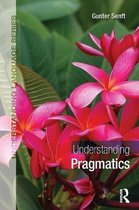
Understanding Pragmatics by Gunter Senft
Summary
,Chapter 1: Pragmatics and Philosophy
What we do when we speak and what we actually mean – speech act
theory and the theory of conversational implicature
1.1 Introduction
End 1920s/Beginning 1930s ® group of philosophers and mathematicians claimed that a
sentence is meaningless unless its truth conditions (voorwaarde) can be tested ® unless formal
logical analyses of this sentence can answer the question under what conditions it is true or
false. Sentences must be verifiable (controleerbaar) in order to be meaningful. ® this approach
to language is called logical positivism
® the most important reaction came from teachers at Oxford ® they distrusted the logical
paradigm of the formal semantics (betekenisleer) of their time, which was completely based on
logical positivism. They showed that this paradigm could not deal with phenomena like;
- anaphora = reference to something mentioned earlier in the conversation
- presuppositions = information that is taken for granted between interacting speakers
- speech acts realized in ordinary natural language
1.2 John Austin’s speech act theory
There’s a differentiation between assertions or statements (= constatives) and utterances with
which something is done (= performatives).
Austin’s classification
- locution = speech acts which have meaning
- illocution = speech acts which have a certain force
- perlocution = speech acts which achieve certain effects
Performative sentences = sentences that perform an act; they are neither true nor false
Verbs that can be used performatively are called performative verbs
e.g. “I name this ship the Queen Elizabeth.”
Constative sentences = sentences that contain something that can be true or false, often
assertions or statements
e.g. “We live in a small provincial town in the northwest of Germany.”
Although performatives cannot be true or false, performatives can go wrong ® in this situation
the performative utterance is “in general unhappy”. Thus, performatives have to meet at least
the following felicity conditions:
1. There must be a conventional (gebruikelijk) procedure having a conventional effect
1.2 The circumstances and persons must be appropriate
2. The procedure must be executed correctly and completely
1
, 3. Often the person must have requisite (vereiste) thoughts, feelings and intentions, as specified
in the procedure and if consequent conduct (gedrag) is specified, then the relevant parties must
so do.
Misfires = infelicities (ongelukken) which are such that, the act (handeling) for the performing of
which the verbal formula in question is designed, is not achieved
Abuses = infelicities where the act is achieved but insincerely (onoprecht) ® insincerity
(onoprechtheid), infractions (overtredingen) or breaches (schendingen)
Constatives can also be affected by felicity conditions, for example statements which refer to
something that doesn’t exist.
! Performatives and constatives have a common underlying structure (it’s based on sincerity,
commitment (inzet) and presupposition (vooronderstelling)) ® this means that performatives
and constatives aren’t as distinct from each other as Austin claimed them to be.
Utterances can be used on different occasions as a performative and as a constative.
Explicit performatives = performatives containing a performative verb (there’s an act in the
sentence)
e.g. I promise that I shall be there
Primary performatives = performatives which are produced without a performative verb
e.g. I shall be there.
Explicit performatives develop form the primary; every performative could be in principle put
into the form of an explicit performative ® there’s no longer a distinction between
performatives and constatives ® a general theory arises; locutionary, illocutionary and
perlocutionary
Locutionary acts = act of saying something
- phonetic act = act of uttering certain noises
- phatic act = act of uttering certain words in a certain grammatical construction
- rhetic act = act of using words with a certain meaning
Locutionary acts are also illocutionary acts ® acts of doing something in saying something like
accusing, asking, answering etc.
Illocutionary acts = acts that have a certain conventional force, which will cause certain effects
® perlocutionary acts = acts of doing something by saying something like persuading, alerting,
convincing, surprising
2
Summary
,Chapter 1: Pragmatics and Philosophy
What we do when we speak and what we actually mean – speech act
theory and the theory of conversational implicature
1.1 Introduction
End 1920s/Beginning 1930s ® group of philosophers and mathematicians claimed that a
sentence is meaningless unless its truth conditions (voorwaarde) can be tested ® unless formal
logical analyses of this sentence can answer the question under what conditions it is true or
false. Sentences must be verifiable (controleerbaar) in order to be meaningful. ® this approach
to language is called logical positivism
® the most important reaction came from teachers at Oxford ® they distrusted the logical
paradigm of the formal semantics (betekenisleer) of their time, which was completely based on
logical positivism. They showed that this paradigm could not deal with phenomena like;
- anaphora = reference to something mentioned earlier in the conversation
- presuppositions = information that is taken for granted between interacting speakers
- speech acts realized in ordinary natural language
1.2 John Austin’s speech act theory
There’s a differentiation between assertions or statements (= constatives) and utterances with
which something is done (= performatives).
Austin’s classification
- locution = speech acts which have meaning
- illocution = speech acts which have a certain force
- perlocution = speech acts which achieve certain effects
Performative sentences = sentences that perform an act; they are neither true nor false
Verbs that can be used performatively are called performative verbs
e.g. “I name this ship the Queen Elizabeth.”
Constative sentences = sentences that contain something that can be true or false, often
assertions or statements
e.g. “We live in a small provincial town in the northwest of Germany.”
Although performatives cannot be true or false, performatives can go wrong ® in this situation
the performative utterance is “in general unhappy”. Thus, performatives have to meet at least
the following felicity conditions:
1. There must be a conventional (gebruikelijk) procedure having a conventional effect
1.2 The circumstances and persons must be appropriate
2. The procedure must be executed correctly and completely
1
, 3. Often the person must have requisite (vereiste) thoughts, feelings and intentions, as specified
in the procedure and if consequent conduct (gedrag) is specified, then the relevant parties must
so do.
Misfires = infelicities (ongelukken) which are such that, the act (handeling) for the performing of
which the verbal formula in question is designed, is not achieved
Abuses = infelicities where the act is achieved but insincerely (onoprecht) ® insincerity
(onoprechtheid), infractions (overtredingen) or breaches (schendingen)
Constatives can also be affected by felicity conditions, for example statements which refer to
something that doesn’t exist.
! Performatives and constatives have a common underlying structure (it’s based on sincerity,
commitment (inzet) and presupposition (vooronderstelling)) ® this means that performatives
and constatives aren’t as distinct from each other as Austin claimed them to be.
Utterances can be used on different occasions as a performative and as a constative.
Explicit performatives = performatives containing a performative verb (there’s an act in the
sentence)
e.g. I promise that I shall be there
Primary performatives = performatives which are produced without a performative verb
e.g. I shall be there.
Explicit performatives develop form the primary; every performative could be in principle put
into the form of an explicit performative ® there’s no longer a distinction between
performatives and constatives ® a general theory arises; locutionary, illocutionary and
perlocutionary
Locutionary acts = act of saying something
- phonetic act = act of uttering certain noises
- phatic act = act of uttering certain words in a certain grammatical construction
- rhetic act = act of using words with a certain meaning
Locutionary acts are also illocutionary acts ® acts of doing something in saying something like
accusing, asking, answering etc.
Illocutionary acts = acts that have a certain conventional force, which will cause certain effects
® perlocutionary acts = acts of doing something by saying something like persuading, alerting,
convincing, surprising
2