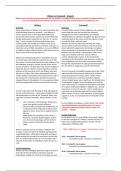
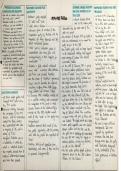
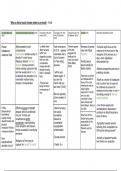
'Liberal' Years: TSAR ALEXANDER II CORE FACTS 1855-81: Opposition:
1856: announced to his nobles better to abolish • Moderate Lib: few literate, intelligentsia
from above than below. Anarchism or Westernisers and Slavophil
1. Emancipation of the Serfs 1861-1866: Economy: • Socialism increased as of move in industr
- Freed millions of Russian serfs. • Beginning 1860s: State-run factories manufacturing essential goods for crisis let zemstva responsible for work tu
- State serfs freed 1866 military e.g. uniform or arms. opposition movements.
- This was a landmark reform aimed at • Domestic craft-based industry e.g. weaving or spinning. • Radical Opposition: Young Russia 2000 sh
modernizing Russia and reducing social • Artels, workshops making all sorts of products in metal or leather. Petersburg fires, 'The Organisation' 1863
tensions. • Textiles and sugar industry privately funded. • Radical Thinkers: Chernyshevsky 'What
- Land given created further land hunger. • 1868 Alexander invited Hughes from South Wales to come to Russia Herzen 'The Bell'.
- State gave compensation to landowners. demonstrate modern methods in iron and steel, establishes Donbass, Nobel • Tchaikovsky Circle: set up 1868-9, literac
2. Judicial Reforms: 1864 Brothers triggered oil industry in Caucasus. distributing scientific and revolutionary li
- Courts open to public. • 1866-1881 railway increased by 3,000 to 13,270 miles. people small.
- Innocent until proven guilty. • Drive for industrialisation was top down, a state sponsored model as of no • Narodniks: 1874 'going to the people', 20
- Judges appointed by Tsar. entrepreneurial middle class. countryside, exploit resentment, 1600 ar
3. Military Reforms: 1874-75 • Alexander's early ministers laid framework for industrial development, radical opposition from underground.
- Conscription compulsory Age 21. encouraged investment and expanded railways. • 'Land and Liberty' 1877: continued popu
- Punishments were made less severe. • Von Reutern 1862-78: series of reforms to boost economy and industrial political assassinations Head of Third Sec
- Modern weaponry used, new command expansion. approaches.
structure. • Treasury reformed, new arrangements for tax. • Separated into, Black Repartition 1879: P
4. Education Reforms: 1863-64: • Foreign investment encouraged. provinces weakened by arrests, leaders t
- Schools open to all regardless of class or • Indirect taxation. • Peoples Free Will: Mikhailov Assassinate
sex from 1870. • Annual rate growth 6% during this. methods.
- Responsibility for school in control by • 1/3 expenditure on debts and currency.
zemstva. • 66% gov revenue from indirect taxation, kept peasantry poor.
- University went up by 7,000. • 1880 94% railways in private hands, as of high construction costs. Culture:
5. Local Government: 1864-70: • 1860s-1880s golden age for Russian liter
- Zemstva established, chosen through Dostoyevsky writing about the social and
electoral colleges, voting procedure unfair. Tsarist Structure: Russia.
- Zemstva power to improve public services • Council of Ministers: chaired by Tsar, officials nominated by him, • Chernyshevsky 1860s wrote 'What is to b
- No control over state or local taxes. abandoned in 1882 draft legislation. unhappiness caused by economic causes
- Urban dumas 1870 • Imperial Council of State, gave advice to the Tsar legally and financially, solutions.
6. Censorship reform: 1858-70: advisory body easily dismissed. • Herzen 'The Bell'.
- Restrictions on publishers reduced, foreign • The Senate: supreme court, dealt with noble titles, legal agreements.
publications permitted with government • Committee of Ministers: interior, war finance, Holy Synod, administrative
approval, increased amount of books from role, conflicts occurred e.g. finance budgets.
1,020 1855 to 10,691 by 1894. • Tsar had complete control, all bodies accountable to the Tsar.
• Absolute power ordained by God, paternalistic duty.
, TSAR ALEXANDER II CORE FACTS 1855-81: Peasantry:
Later Years:
• Although majority were ignorant
After assassination attempts, more
towards political change, some ac
reactionary approach taken, fear of Russification: in opposing reforms.
'Western' ideas. • Polish Rebellion: 1863, 200,00 Poles joint to create an underground National • Accounted for 70-80% population
1.Education: Government for Poland, waged a form of guerrilla warfare, crushed 1864. • 1861 emancipation triggered arou
- Tolstoy minister of education from • Did not engage in systematic persecution of racial minorities, used concessions as a peasant disturbances with 200 kil
previous Golovin, zemstva's power means of keeping control. military.
over education reduced, church • Decrees in 1864 and 1875:
regained authority, modern school Latvians and Estonians allowed to revert to Lutheranism, allowed Finns to
subjects taught. have own diet.
2. Police and Control: • 1876: Prohibition on the use of the Ukrainian language.
- Shuvalov strengthened police
encouraging Third Section.
- Stepped up persecution of ethnics.
Anti-Semitism: Crimean War:
- Show trials to deter others from • 1856 Treaty of Paris signed endin
revolutionary activity. • Context: Pale of Settlement: 1736 Western Russia e.g. Ukraine, Lithuania.
• War highlighted the poor transpo
- Vera Zasulich 1878 found not guilty at • Alexander II himself did not directly promote anti-Semitism, the increased
conscription was poor and no ma
her trial, showed the fragility of the integration of Jews into Russian society during his reign paradoxically led to Western world, leadership poor.
Tsarist state, the power of public heightened anti-Semitic sentiments among some Russians.
opinion, and the deepening tensions • Allowed wealthier Jews until Polish Revolt frightened him.
between reform and repression.
- Symbol of resistance against autocratic
rule.
3. Loris-Melikov Constitution:
- 1880s: released political prisoners,
relaxed censorship lifted restrictions
on zemstva, Third Section abolished,
move to a constituent assembly shut
down with AIII.
, Reforms:
• Loris-Melikov proposals TSAR ALEXANDER III CORE FACTS 1881-94:
abandoned.
• 1881: 'Manifesto of the
Unshakeable Autocracy', Tsarist Structure: Social Divisions:
rigid autocracy. • Council of Ministers: chaired by Tsar, officials • Landed Elite: 1882, 700 nobles owned businesses in Moscow, 2,500
• Changes in Local Gov: Land nominated by him, abandoned in 1882 draft employed in commerce, transport or industry.
Captains appointed in 1889, legislation. • Middle Class: began to growth bankers, doctors.
power to override elections, • Imperial Council of State, gave advice to the Tsar • Urban working class: 2% of population, by 1864 1 in three inhabitants a
responsible for law, 1890 legally and financially, advisory body easily St Petersburg were peasants by birth.
act peasant vote decrease. dismissed.
• 1882-90: 1882 banned employment of children under age 12, reduction
• Changes in Policing: • The Senate: supreme court, dealt with noble
titles, legal agreements. in payment in kind, 33 strikes between 1886-94.
Okhrana, 1882 Statute on
• Committee of Ministers: interior, war finance, • Position of Peasantry: Kulaks richer peasantry, 1880s 2/3 serfs in Tamb
Police Surveillance, any
Holy Synod, administrative role, conflicts occurred unable to feed families without going into debt.
area can be deemed as 'area
of subversion'. e.g. finance budgets. • Church had strict control of censorship and awarded punishments,
• Changes in Judicial System: • Tsar had complete control, all bodies accountable Russification allowed promotion of Orthodox, 40,000 Catholics and
1887 closed court sessions, to the Tsar. Lutherans converted.
1885 MoJ able to dismiss • Absolute power ordained by God, paternalistic
judges. duty.
• Changes in Education:
Universities closed for
women, no more gatherings Economy:
than 5, primary education in • Tariffs raised under Vyshnegradsky 1887: import tariff 30% value of raw materials, to boost home production.
control of Orthodox Church, • Increased indirect taxes, encouraged foreign investment from French 1888.
fees for education. • Grain exports increased by 18% 1881-91, 1892 Russian Budget in surplus.
• Changes in Censorship: • Expense at society 'We ourselves shall not eat, but we shall export', led to famine crisis 1891-2, 350,000 dead.
• Tolstoy established • Witte believed in state-sponsored, foreign loans, high tariffs, exports of grain, strong rouble, raised taxation rates, from
government committee in 1893.
1882, issued 'temporary • Witte expansion in infrastructure e.g. Trans-Siberian railway.
regulations', allowed • Railways helps open up oilfields in Caucasus, stimulated metallurgical, engineering and coal e.g. 1890s end 60% of all
newspapers to be shut
iron and steel consumed by railways.
down ban on
• Sought additional loans, 1890 215 million roubles, went to investment, mining.
editors. 'Russification'
enforced in art and culture, • Became worlds 4th largest industrial economy 1897.
censors more active • Bunge abolished poll tax 1883-87, lowered redemption payments.
on publications. • Peasant 1883 and Noble Land Banks 1885, help purchase land, increased debts, too little land to become prosperous.
• Witte neglected agriculture, no prioritisation on welfare of population, no consumer goods, high foreign debt.
1856: announced to his nobles better to abolish • Moderate Lib: few literate, intelligentsia
from above than below. Anarchism or Westernisers and Slavophil
1. Emancipation of the Serfs 1861-1866: Economy: • Socialism increased as of move in industr
- Freed millions of Russian serfs. • Beginning 1860s: State-run factories manufacturing essential goods for crisis let zemstva responsible for work tu
- State serfs freed 1866 military e.g. uniform or arms. opposition movements.
- This was a landmark reform aimed at • Domestic craft-based industry e.g. weaving or spinning. • Radical Opposition: Young Russia 2000 sh
modernizing Russia and reducing social • Artels, workshops making all sorts of products in metal or leather. Petersburg fires, 'The Organisation' 1863
tensions. • Textiles and sugar industry privately funded. • Radical Thinkers: Chernyshevsky 'What
- Land given created further land hunger. • 1868 Alexander invited Hughes from South Wales to come to Russia Herzen 'The Bell'.
- State gave compensation to landowners. demonstrate modern methods in iron and steel, establishes Donbass, Nobel • Tchaikovsky Circle: set up 1868-9, literac
2. Judicial Reforms: 1864 Brothers triggered oil industry in Caucasus. distributing scientific and revolutionary li
- Courts open to public. • 1866-1881 railway increased by 3,000 to 13,270 miles. people small.
- Innocent until proven guilty. • Drive for industrialisation was top down, a state sponsored model as of no • Narodniks: 1874 'going to the people', 20
- Judges appointed by Tsar. entrepreneurial middle class. countryside, exploit resentment, 1600 ar
3. Military Reforms: 1874-75 • Alexander's early ministers laid framework for industrial development, radical opposition from underground.
- Conscription compulsory Age 21. encouraged investment and expanded railways. • 'Land and Liberty' 1877: continued popu
- Punishments were made less severe. • Von Reutern 1862-78: series of reforms to boost economy and industrial political assassinations Head of Third Sec
- Modern weaponry used, new command expansion. approaches.
structure. • Treasury reformed, new arrangements for tax. • Separated into, Black Repartition 1879: P
4. Education Reforms: 1863-64: • Foreign investment encouraged. provinces weakened by arrests, leaders t
- Schools open to all regardless of class or • Indirect taxation. • Peoples Free Will: Mikhailov Assassinate
sex from 1870. • Annual rate growth 6% during this. methods.
- Responsibility for school in control by • 1/3 expenditure on debts and currency.
zemstva. • 66% gov revenue from indirect taxation, kept peasantry poor.
- University went up by 7,000. • 1880 94% railways in private hands, as of high construction costs. Culture:
5. Local Government: 1864-70: • 1860s-1880s golden age for Russian liter
- Zemstva established, chosen through Dostoyevsky writing about the social and
electoral colleges, voting procedure unfair. Tsarist Structure: Russia.
- Zemstva power to improve public services • Council of Ministers: chaired by Tsar, officials nominated by him, • Chernyshevsky 1860s wrote 'What is to b
- No control over state or local taxes. abandoned in 1882 draft legislation. unhappiness caused by economic causes
- Urban dumas 1870 • Imperial Council of State, gave advice to the Tsar legally and financially, solutions.
6. Censorship reform: 1858-70: advisory body easily dismissed. • Herzen 'The Bell'.
- Restrictions on publishers reduced, foreign • The Senate: supreme court, dealt with noble titles, legal agreements.
publications permitted with government • Committee of Ministers: interior, war finance, Holy Synod, administrative
approval, increased amount of books from role, conflicts occurred e.g. finance budgets.
1,020 1855 to 10,691 by 1894. • Tsar had complete control, all bodies accountable to the Tsar.
• Absolute power ordained by God, paternalistic duty.
, TSAR ALEXANDER II CORE FACTS 1855-81: Peasantry:
Later Years:
• Although majority were ignorant
After assassination attempts, more
towards political change, some ac
reactionary approach taken, fear of Russification: in opposing reforms.
'Western' ideas. • Polish Rebellion: 1863, 200,00 Poles joint to create an underground National • Accounted for 70-80% population
1.Education: Government for Poland, waged a form of guerrilla warfare, crushed 1864. • 1861 emancipation triggered arou
- Tolstoy minister of education from • Did not engage in systematic persecution of racial minorities, used concessions as a peasant disturbances with 200 kil
previous Golovin, zemstva's power means of keeping control. military.
over education reduced, church • Decrees in 1864 and 1875:
regained authority, modern school Latvians and Estonians allowed to revert to Lutheranism, allowed Finns to
subjects taught. have own diet.
2. Police and Control: • 1876: Prohibition on the use of the Ukrainian language.
- Shuvalov strengthened police
encouraging Third Section.
- Stepped up persecution of ethnics.
Anti-Semitism: Crimean War:
- Show trials to deter others from • 1856 Treaty of Paris signed endin
revolutionary activity. • Context: Pale of Settlement: 1736 Western Russia e.g. Ukraine, Lithuania.
• War highlighted the poor transpo
- Vera Zasulich 1878 found not guilty at • Alexander II himself did not directly promote anti-Semitism, the increased
conscription was poor and no ma
her trial, showed the fragility of the integration of Jews into Russian society during his reign paradoxically led to Western world, leadership poor.
Tsarist state, the power of public heightened anti-Semitic sentiments among some Russians.
opinion, and the deepening tensions • Allowed wealthier Jews until Polish Revolt frightened him.
between reform and repression.
- Symbol of resistance against autocratic
rule.
3. Loris-Melikov Constitution:
- 1880s: released political prisoners,
relaxed censorship lifted restrictions
on zemstva, Third Section abolished,
move to a constituent assembly shut
down with AIII.
, Reforms:
• Loris-Melikov proposals TSAR ALEXANDER III CORE FACTS 1881-94:
abandoned.
• 1881: 'Manifesto of the
Unshakeable Autocracy', Tsarist Structure: Social Divisions:
rigid autocracy. • Council of Ministers: chaired by Tsar, officials • Landed Elite: 1882, 700 nobles owned businesses in Moscow, 2,500
• Changes in Local Gov: Land nominated by him, abandoned in 1882 draft employed in commerce, transport or industry.
Captains appointed in 1889, legislation. • Middle Class: began to growth bankers, doctors.
power to override elections, • Imperial Council of State, gave advice to the Tsar • Urban working class: 2% of population, by 1864 1 in three inhabitants a
responsible for law, 1890 legally and financially, advisory body easily St Petersburg were peasants by birth.
act peasant vote decrease. dismissed.
• 1882-90: 1882 banned employment of children under age 12, reduction
• Changes in Policing: • The Senate: supreme court, dealt with noble
titles, legal agreements. in payment in kind, 33 strikes between 1886-94.
Okhrana, 1882 Statute on
• Committee of Ministers: interior, war finance, • Position of Peasantry: Kulaks richer peasantry, 1880s 2/3 serfs in Tamb
Police Surveillance, any
Holy Synod, administrative role, conflicts occurred unable to feed families without going into debt.
area can be deemed as 'area
of subversion'. e.g. finance budgets. • Church had strict control of censorship and awarded punishments,
• Changes in Judicial System: • Tsar had complete control, all bodies accountable Russification allowed promotion of Orthodox, 40,000 Catholics and
1887 closed court sessions, to the Tsar. Lutherans converted.
1885 MoJ able to dismiss • Absolute power ordained by God, paternalistic
judges. duty.
• Changes in Education:
Universities closed for
women, no more gatherings Economy:
than 5, primary education in • Tariffs raised under Vyshnegradsky 1887: import tariff 30% value of raw materials, to boost home production.
control of Orthodox Church, • Increased indirect taxes, encouraged foreign investment from French 1888.
fees for education. • Grain exports increased by 18% 1881-91, 1892 Russian Budget in surplus.
• Changes in Censorship: • Expense at society 'We ourselves shall not eat, but we shall export', led to famine crisis 1891-2, 350,000 dead.
• Tolstoy established • Witte believed in state-sponsored, foreign loans, high tariffs, exports of grain, strong rouble, raised taxation rates, from
government committee in 1893.
1882, issued 'temporary • Witte expansion in infrastructure e.g. Trans-Siberian railway.
regulations', allowed • Railways helps open up oilfields in Caucasus, stimulated metallurgical, engineering and coal e.g. 1890s end 60% of all
newspapers to be shut
iron and steel consumed by railways.
down ban on
• Sought additional loans, 1890 215 million roubles, went to investment, mining.
editors. 'Russification'
enforced in art and culture, • Became worlds 4th largest industrial economy 1897.
censors more active • Bunge abolished poll tax 1883-87, lowered redemption payments.
on publications. • Peasant 1883 and Noble Land Banks 1885, help purchase land, increased debts, too little land to become prosperous.
• Witte neglected agriculture, no prioritisation on welfare of population, no consumer goods, high foreign debt.