TEST BANK
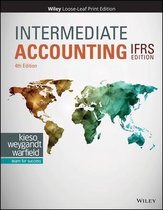
Intermediate Accounting IFRS
by Donald E. Kieso
N
4th Edition
U
R
SE
D
O
C
S
JHGFDS
, KJHGFDS
CHAPTER 1
FINANCIAL ACCOUNTING AND
ACCOUNTING STANDARDS
CHAPTER LEARNING OBJECTIVES
1. Identify the major financial statements and other means of financial reporting.
N
2. Explain how accounting assists in the efficient use of scarce resources.
3. Explain the need for high-quality standards.
4. Identify the objectives of financial reporting.
U
5. Identify the major policy-setting bodies and their role in the standard-setting process.
6. Explain the meaning of IFRS.
R
7. Describe the challenges facing financial reporting.
*8. Identity the major U.S. policy-setting bodies and their role in the standard-setting process.
SE
* This material can be found in the Appendix to the chapter
D
O
C
S
, S
C
O
D
SE
R
U
N
, 1-2 Test Bank for Intermediate Accounting: IFRS Edition
TRUE-FALSE—Conceptual
1. Financial accounting is the process of identifying, measuring, analyzing, and communicating
financial information needed by management to plan, evaluate, and control an organiza-
tion's operations.
2. Financial statements are the principal means through which financial information is
communicated to those outside an enterprise.
3. The major financial statements used under International Financial Reporting Standards
(IFRS) include the statement of changes in financial position and the statement of
N
stockholders’ equity.
4. In order to provide information that is useful in decision making and capital allocation, the
U
International Financial Reporting Standards (IFRS) requires all companies to use a common
currency.
5. Users of the financial information provided by a company use that information to make
R
capital allocation decisions.
6. An effective process of capital allocation promotes productivity and provides an efficient
market for buying and selling securities and obtaining and granting credit.
SE
7. Over 115 countries require or permit use of International Financial Reporting Standards
(IFRS).
8. While objectives for financial reporting exist on an informal basis, no formal objectives have
been adopted.
D
9. One weakness of accrual accounting is that it does not provide a good indication of the
enterprise's present and continuing ability to generate favorable cash flows.
O
10. The passage of a new FASB Standards Statement requires the support of five of the seven
board members.
11. International Financial Reporting Standards preceded International Accounting Standards.
C
12. The standard-setting structure used by the International Accounting Standards Board is very
similar to that used by the Financial Accounting Standards Board.
S
13. The rules-based standards of IASB are more detailed than the simpler, principles-based
standards of U.S. GAAP.
14. The International Accounting Standards Board issues International Financial Reporting
Standards.
15. International Accounting Standards are no longer considered applicable because they have
been replaced by International Financial Reporting Standards.
Intermediate Accounting IFRS
by Donald E. Kieso
N
4th Edition
U
R
SE
D
O
C
S
JHGFDS
, KJHGFDS
CHAPTER 1
FINANCIAL ACCOUNTING AND
ACCOUNTING STANDARDS
CHAPTER LEARNING OBJECTIVES
1. Identify the major financial statements and other means of financial reporting.
N
2. Explain how accounting assists in the efficient use of scarce resources.
3. Explain the need for high-quality standards.
4. Identify the objectives of financial reporting.
U
5. Identify the major policy-setting bodies and their role in the standard-setting process.
6. Explain the meaning of IFRS.
R
7. Describe the challenges facing financial reporting.
*8. Identity the major U.S. policy-setting bodies and their role in the standard-setting process.
SE
* This material can be found in the Appendix to the chapter
D
O
C
S
, S
C
O
D
SE
R
U
N
, 1-2 Test Bank for Intermediate Accounting: IFRS Edition
TRUE-FALSE—Conceptual
1. Financial accounting is the process of identifying, measuring, analyzing, and communicating
financial information needed by management to plan, evaluate, and control an organiza-
tion's operations.
2. Financial statements are the principal means through which financial information is
communicated to those outside an enterprise.
3. The major financial statements used under International Financial Reporting Standards
(IFRS) include the statement of changes in financial position and the statement of
N
stockholders’ equity.
4. In order to provide information that is useful in decision making and capital allocation, the
U
International Financial Reporting Standards (IFRS) requires all companies to use a common
currency.
5. Users of the financial information provided by a company use that information to make
R
capital allocation decisions.
6. An effective process of capital allocation promotes productivity and provides an efficient
market for buying and selling securities and obtaining and granting credit.
SE
7. Over 115 countries require or permit use of International Financial Reporting Standards
(IFRS).
8. While objectives for financial reporting exist on an informal basis, no formal objectives have
been adopted.
D
9. One weakness of accrual accounting is that it does not provide a good indication of the
enterprise's present and continuing ability to generate favorable cash flows.
O
10. The passage of a new FASB Standards Statement requires the support of five of the seven
board members.
11. International Financial Reporting Standards preceded International Accounting Standards.
C
12. The standard-setting structure used by the International Accounting Standards Board is very
similar to that used by the Financial Accounting Standards Board.
S
13. The rules-based standards of IASB are more detailed than the simpler, principles-based
standards of U.S. GAAP.
14. The International Accounting Standards Board issues International Financial Reporting
Standards.
15. International Accounting Standards are no longer considered applicable because they have
been replaced by International Financial Reporting Standards.