Toxicology
Si-Jin van de Vorst
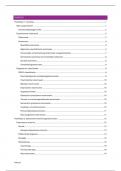
Contents
Introduction ........................................................................................................................................... 2
Basics ...................................................................................................................................................... 5
Toxicokinetics......................................................................................................................................... 8
Safety pharmacology ............................................................................................................................. 9
Before testing; descriptive animal toxicity test ................................................................................. 10
Descriptive animal toxicity test .......................................................................................................... 12
Acute ................................................................................................................................................. 12
Acute to chronic ................................................................................................................................ 14
Chronic and carcinogenesis ............................................................................................................... 18
Genotoxic testing............................................................................................................................... 20
Biologicals- E. Dejonckheere .............................................................................................................. 22
Immunotoxicology ............................................................................................................................... 26
Local tolerance..................................................................................................................................... 29
Skin.................................................................................................................................................... 29
Eye ..................................................................................................................................................... 31
Reproductive & Developmental Toxicity........................................................................................... 32
Definitions ......................................................................................................................................... 32
General strategy................................................................................................................................. 32
Reproductive toxicity ........................................................................................................................ 33
Evaluation of Teratogenicity ............................................................................................................. 33
Alternative methods ............................................................................................................................ 34
Risk Assessment .................................................................................................................................. 36
Threshold approach ........................................................................................................................... 37
Benchmark approach ......................................................................................................................... 39
TTC ................................................................................................................................................... 40
1
,Introduction
The dose makes the poison, as all substances are poisons. Chemicals can come from different
environments: personal, workplace, school, home, and general environment. The exposure to
chemicals depends on the time spent at different locations.
Examples
• Drug Toxicity
o Thalidomide (antidepressant), which caused malformation in babies
• Food & Environmental Contaminant
o Dioxins (TCDD), which have a low lethal dose and are a byproduct of natural fires,
which then contaminate the soil
• Industrial Chemicals (personal environment)
• Industrial Contaminant (environment)
o Cadmium which is carcinogenic
Toxicology
Toxicology is the study of the adverse effects of chemicals on living organisms. It looks at the
interaction between chemicals and biological systems in order to:
• Quantitatively determine the potential for harm which can lead to adverse effects
• Investigate the nature, incidence and mechanisms of production, and factors influencing the
development and reversibility of such adverse effects.
The purpose is to help preserve and protect health and the environment from the hazards presented by
chemical and physical agents. This is done via testing and characterisation, and managing risks.
Subdisciplines include:
• Descriptive toxicology: determination as to whether or not a chemical is toxic. This is usually
done on animals (hazard identification)
• Regulatory toxicology: determine legal use of specific chemicals, as well as the risk posed to
health and ecosystem by marketing of those chemicals.
o Uses scientific data to decide how to protect humans and animals from (excessive)
risk
o Contributes to defining standards for e.g. manufacture, disposal, etc.
• Mechanistic toxicology: examines the biochemical process by which identified toxicants have
an impact on the organism.
o Looks at kinetics
Important concepts of toxicology are risk assessment and risk management. Risk= f(hazard,
exposure). The focus is on hazard identification and dose response assessment (see last topic).
Perception of risk: medicines vs chemicals
Chemicals are designed to be used in industrial and consumer applications with no intention to enter
the body. However, exposure and uptake are possible. They also do not have the intent to exert toxic
effects, but may occur after exposure. The standard packages are according to tonnage. Usually,
testing of chemicals is not possible in humans, but is done on animals. However, this does not always
transfer accurately to humans. Thus, a large safety margin is to be applied in risk assessment.
Medicines are designed to enter the body to reach a target and exert a beneficial effect. This effect is
weighed against the side effects (risk/benefit ratio). Exposure and side effects are under the control of
2
,medical professionals. There is more flexibility and testing is possible on man. The data obtained can
be compared against human data.
Hazard identification
Hazard identification is the identification of the adverse health and/or environmental effects of a
substance. This is done via data collection and evaluation (with toxicokinetics in mind) and addresses
two questions:
1. Does this particular chemical have the potential to cause adverse effects?
2. Under what circumstances may an identified hazard be expressed?
The dose (concentration)-response (effect)
relationship can help with the hazard identification.
Effect is graded and measured, whereas response is
quantal (yes/no) and counted. For some agents, there is
a threshold, but for some, none can be identified.
Additionally, influences of individual susceptibility
also play a role (e.g. genetics).
The U-shape dose-response curve happens when a low
dose gives protective effects, but a high dose leads to
adverse effects.
Dose-response assessment usually comes from animal
studies. Important factors are:
• NOEL or NEL "No (Observed) Effect Level” = dose at which no effect is seen
• NOAEL "No Observed Adverse Effect Level” = dose at which no adverse effect is seen
o Estimate of the highest dose at which incidence of a toxic or ecotoxic effect is not
significantly different from that observed in the untreated group
▪ Based on toxic effects of:
• Functional importance
• Pathological significance
• LOAEL “Lowest Observed Adverse Effect Level” = Lowest dose at which an adverse effect
is seen
3
, Interaction of chemicals
One individual is in contact with different chemicals. Interaction occurs in different mechanisms. They
can be expected between chemicals that:
• Act by binding to the same receptor
• Act through the same mechanism
• Require the same enzyme for activation/detoxification
The types of interactions are based on toxicological or pharmacological effects:
• Additive
o Effecttotal = PotencyA * DoseA …..+PotencyN * DoseN
• Synergistic
o Effecttotal >> PotencyA* DoseA …+ PotencyN* DoseN
o Toxicokinetic interactions (e.g. improved penetration)
o Toxicodynamic interactions (e.g. smoking and air pollution)
• Potentiation
o Effecttotal >> PotencyA* DoseA; where PotencyB = 0
o One is toxic and the other is not
• Antagonist
This is initially not taken into account in hazard assessment.
Hazard assessment in EU
Industrial Chemicals in EU
• ECHA: European Chemical Agency
o Registration, Evaluation and Authorisation of Chemicals – the REACH system
▪ Objectives are, for example:
• Protection of human health and the environment
• Promotion of non-animal testing
▪ There is also an obligation for manufacturers and importers of substances to
submit a registration
• A technical dossier (> 1 tonne)
• A chemical safety report (> 10 tonne)
o Data requirements 1-10 t/a
▪ Toxicological data
▪ Physical chemical data
▪ Ecotoxicological data
o Data requirements 10-1000 t/a
▪ Physical chemical data
▪ Ecotoxicological data
▪ Toxicological data
• Sub-chronic toxicity study
• Reproduction toxicity
• Prenatal developmental toxicity
• 2-generation reproduction toxicity test
o Data requirements > 1000 t/a
▪ Toxicological data
• Carcinogenicity test
▪ Ecotoxicological data
4
Si-Jin van de Vorst
Contents
Introduction ........................................................................................................................................... 2
Basics ...................................................................................................................................................... 5
Toxicokinetics......................................................................................................................................... 8
Safety pharmacology ............................................................................................................................. 9
Before testing; descriptive animal toxicity test ................................................................................. 10
Descriptive animal toxicity test .......................................................................................................... 12
Acute ................................................................................................................................................. 12
Acute to chronic ................................................................................................................................ 14
Chronic and carcinogenesis ............................................................................................................... 18
Genotoxic testing............................................................................................................................... 20
Biologicals- E. Dejonckheere .............................................................................................................. 22
Immunotoxicology ............................................................................................................................... 26
Local tolerance..................................................................................................................................... 29
Skin.................................................................................................................................................... 29
Eye ..................................................................................................................................................... 31
Reproductive & Developmental Toxicity........................................................................................... 32
Definitions ......................................................................................................................................... 32
General strategy................................................................................................................................. 32
Reproductive toxicity ........................................................................................................................ 33
Evaluation of Teratogenicity ............................................................................................................. 33
Alternative methods ............................................................................................................................ 34
Risk Assessment .................................................................................................................................. 36
Threshold approach ........................................................................................................................... 37
Benchmark approach ......................................................................................................................... 39
TTC ................................................................................................................................................... 40
1
,Introduction
The dose makes the poison, as all substances are poisons. Chemicals can come from different
environments: personal, workplace, school, home, and general environment. The exposure to
chemicals depends on the time spent at different locations.
Examples
• Drug Toxicity
o Thalidomide (antidepressant), which caused malformation in babies
• Food & Environmental Contaminant
o Dioxins (TCDD), which have a low lethal dose and are a byproduct of natural fires,
which then contaminate the soil
• Industrial Chemicals (personal environment)
• Industrial Contaminant (environment)
o Cadmium which is carcinogenic
Toxicology
Toxicology is the study of the adverse effects of chemicals on living organisms. It looks at the
interaction between chemicals and biological systems in order to:
• Quantitatively determine the potential for harm which can lead to adverse effects
• Investigate the nature, incidence and mechanisms of production, and factors influencing the
development and reversibility of such adverse effects.
The purpose is to help preserve and protect health and the environment from the hazards presented by
chemical and physical agents. This is done via testing and characterisation, and managing risks.
Subdisciplines include:
• Descriptive toxicology: determination as to whether or not a chemical is toxic. This is usually
done on animals (hazard identification)
• Regulatory toxicology: determine legal use of specific chemicals, as well as the risk posed to
health and ecosystem by marketing of those chemicals.
o Uses scientific data to decide how to protect humans and animals from (excessive)
risk
o Contributes to defining standards for e.g. manufacture, disposal, etc.
• Mechanistic toxicology: examines the biochemical process by which identified toxicants have
an impact on the organism.
o Looks at kinetics
Important concepts of toxicology are risk assessment and risk management. Risk= f(hazard,
exposure). The focus is on hazard identification and dose response assessment (see last topic).
Perception of risk: medicines vs chemicals
Chemicals are designed to be used in industrial and consumer applications with no intention to enter
the body. However, exposure and uptake are possible. They also do not have the intent to exert toxic
effects, but may occur after exposure. The standard packages are according to tonnage. Usually,
testing of chemicals is not possible in humans, but is done on animals. However, this does not always
transfer accurately to humans. Thus, a large safety margin is to be applied in risk assessment.
Medicines are designed to enter the body to reach a target and exert a beneficial effect. This effect is
weighed against the side effects (risk/benefit ratio). Exposure and side effects are under the control of
2
,medical professionals. There is more flexibility and testing is possible on man. The data obtained can
be compared against human data.
Hazard identification
Hazard identification is the identification of the adverse health and/or environmental effects of a
substance. This is done via data collection and evaluation (with toxicokinetics in mind) and addresses
two questions:
1. Does this particular chemical have the potential to cause adverse effects?
2. Under what circumstances may an identified hazard be expressed?
The dose (concentration)-response (effect)
relationship can help with the hazard identification.
Effect is graded and measured, whereas response is
quantal (yes/no) and counted. For some agents, there is
a threshold, but for some, none can be identified.
Additionally, influences of individual susceptibility
also play a role (e.g. genetics).
The U-shape dose-response curve happens when a low
dose gives protective effects, but a high dose leads to
adverse effects.
Dose-response assessment usually comes from animal
studies. Important factors are:
• NOEL or NEL "No (Observed) Effect Level” = dose at which no effect is seen
• NOAEL "No Observed Adverse Effect Level” = dose at which no adverse effect is seen
o Estimate of the highest dose at which incidence of a toxic or ecotoxic effect is not
significantly different from that observed in the untreated group
▪ Based on toxic effects of:
• Functional importance
• Pathological significance
• LOAEL “Lowest Observed Adverse Effect Level” = Lowest dose at which an adverse effect
is seen
3
, Interaction of chemicals
One individual is in contact with different chemicals. Interaction occurs in different mechanisms. They
can be expected between chemicals that:
• Act by binding to the same receptor
• Act through the same mechanism
• Require the same enzyme for activation/detoxification
The types of interactions are based on toxicological or pharmacological effects:
• Additive
o Effecttotal = PotencyA * DoseA …..+PotencyN * DoseN
• Synergistic
o Effecttotal >> PotencyA* DoseA …+ PotencyN* DoseN
o Toxicokinetic interactions (e.g. improved penetration)
o Toxicodynamic interactions (e.g. smoking and air pollution)
• Potentiation
o Effecttotal >> PotencyA* DoseA; where PotencyB = 0
o One is toxic and the other is not
• Antagonist
This is initially not taken into account in hazard assessment.
Hazard assessment in EU
Industrial Chemicals in EU
• ECHA: European Chemical Agency
o Registration, Evaluation and Authorisation of Chemicals – the REACH system
▪ Objectives are, for example:
• Protection of human health and the environment
• Promotion of non-animal testing
▪ There is also an obligation for manufacturers and importers of substances to
submit a registration
• A technical dossier (> 1 tonne)
• A chemical safety report (> 10 tonne)
o Data requirements 1-10 t/a
▪ Toxicological data
▪ Physical chemical data
▪ Ecotoxicological data
o Data requirements 10-1000 t/a
▪ Physical chemical data
▪ Ecotoxicological data
▪ Toxicological data
• Sub-chronic toxicity study
• Reproduction toxicity
• Prenatal developmental toxicity
• 2-generation reproduction toxicity test
o Data requirements > 1000 t/a
▪ Toxicological data
• Carcinogenicity test
▪ Ecotoxicological data
4