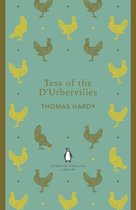
Tess of the D’Urbervilles
By Thomas Hardy
• Born June 2nd, 1840 in Dorset
• Died January 11th, 1928 in Dorset
• English novelist and poet who set much of his work in Wessex
• Father was a stonemason
• Intended to study at university and become a clergyman but because of dwindling finances
and waning faith, he chose not to pursue this
• Was an architect by trade and moved to London but returned to Dorset through ill health
and began writing poetry, when that failed to gain publication he turned to prose
• ‘Far from the Madding Crowd’ published in 1874 was his first critical and financial success
• Married Emma Lavinia Gifford
• His later works: ‘Tess of the d’Ubervilles’ and ‘Jude the Obscure’ both offer deeply
sympathetic representations of working-class figures in powerful, implicitly moralized
narratives
The Industrial Revolution
• Agriculture – selective breeding, four course rotation, new machinery
• Industry – textile industry, production of iron increased 30 fold, production of coal
increased 20 fold
• Transport and communications – road and canals built, railways built
• Long list of scientific discoveries and technological inventions that changed society and
industry
• By 1914 England had become a great trading nation with a worldwide empire, which
covered a fifth of the globe
• A 260% growth in population
• A change from agriculture to industry
• A move from domestic industry to factory work
• A move from water and wind power to steam engines
• Women still had very little power, they couldn’t vote and very few jobs were available to
them
• Money and class affected women’s opportunities
Heroines
• Female
• Powerful
• Courageous
• Admired for qualities
• Role model
• Goes against expectations – above and beyond
• Doesn’t rely on a man
• Moral
,• Younger view of a heroine as female with superpowers
• In Pride and Prejudice, Austen portrays Lizzy as an opinionated and headstrong which shows
the contrast between her and the other women in Austen’s society
• Progress towards just/doing the right thing
• Biblical/religious idea
• Moral – what your personal thoughts are of right or wrong – do good people have a good
ending
• Hero/heroine relationships – love story and the challenges they face
• Stand out/diiferent
• Willing to stand up for what they believe in
• Do authors choose to use a heroine instead of a hero just to use a female character? Or to
bring up stereotypical and gender issues?
Hero
• All the points from above, but male characters bring physical strength on top of it
• Through their patience and perseverance, they prove that overcoming everyday fears if
heroic
• Heroism isn’t always about acts of fame, glory and acts of valor
• Saving the day – stereotypical view that men save people but women influence others
Encompassing both characters, are attitudes and values (author and reader) – context
The context that you read it in may not be the context that it was written in.
CHAPTER 1
1) What are your impressions of Jack Durbeyfield at the start of the novel?
• First questions why he’s being called sir, but by the end of the chapter he’s ordering the boy
about and is happy to be called Sir John because he believes he’s of noble descent.
• He’s being foolish by using his money to earn respect, the boy only starts to listen when he
pays him – but he has no fortune to inherit.
• As he is drunk, this information affects him more than a sober person, he has no doubts
about the information and it suggests that it will come back to ruin him.
• His demeanor at the start when he talks to the parson contrasts his conversation with the
boy. There’s an obvious change in his address to people. The small piece of information
changes his character and the way he views himself
• ‘Now obey my orders’ – his vocabulary becomes more forceful, he orders the boy around
even though they know each other well.
• ‘Luxuriously stretched himself out’ – even his body language has changed.
• He clings onto the idea of being noble because class is important at the time, by hanging
onto the information it shows us how simple and vain a character he is.
2) What themes are suggested by the parson’s revelation that Jack is the ‘lineal representative
of the ancient and knightly family’. What could be the implications of this?
,• The importance of class - his attitude at the beginning greatly contrasts his attitude at the
end of the chapter.
• The information that he was affiliated with nobility and the King really goes to his head.
3) ‘How the mighty have fallen’ is taken from the Bible (2 Samuel 1:27) – why does Parson use
this when talking to Jack?
• It suggests that the d’Uberville family used to own vast lands and riches but have lost all
their money – there was no male heir to take on the title
• The parson does this to highlight the fact that Jack will only be inheriting a name and not a
large fortune
• The idea of physically falling down suggests a descent, ironic because Jack lifts himself up to
high status
• Idea of foreboding
• Inner metaphor for Jack’s foolish behavior, and his fall from grace when he realizes that he
has nothing to inherit at all
4) What do you think ‘club walking’ is?
• Club walking is a parish club and society formed to raise money for its members in case of
sickness. Every year the women performed a traditional ceremony of worshipping the earth
and the fertility goddesses.
By including the dialect, the author highlights the status of Jack as a working man, how he will
always be a working man and allows you to immerse yourself in the character.
Helpful definitions:
Verisimilitude – giving the appearance of truth or reality (dialect)
Foreshadowing – the ‘fore’ shadowing of something that will later happen
Omniscient narrator – story teller with a ‘God-like’ knowledge of the characters and their
actions
Dialect – a non-standard- mode of speech related to a particular geographical area. Hardy
conveys the life of rural characters through his use of a west country dialect (verisimilitude)
CHAPTER 2
• The land is underdeveloped. The rest of the country is going through an industrial
revolution but Blackmoor/Blakemoore appears as if it’s still poor and reliant on farming.
• The forest has been mostly chopped down for farming but some still stands
• Encapsulated in one area, like the town goes on without interrupting from the surrounding
cities
• It is isolated and simple, which reflects the people that live there
• ‘Genuine country girls, unaccustomed to many eyes’ emphasizes the lack of tourists that
visit the community
First impressions of Tess:
• ‘Mobile peony mouth’ lips like petals, she is nature’s child
, • ‘Innocent eyes’ lack of experience, lack of knowledge, naïve, later connotations of
innocence vs guilt
• ‘Red ribbon’ colour contrast, white = purity and red = death, blood
• ‘The colour upon her cheeks spread over her face and neck’ easily affected by other’s
opinions shows how important reputation is and will be
• Embarrassed by her father but is also protective over him, makes excuses for him even
though she knows he is drunk (omniscient narrator tells all) importance of reputation in
the time period
• ‘A mere vessel of emotion untinctured by experience’ links to the theme of innocence
introduced at the start of the paragraph untainted, stained, colour contrast, good or bad
experience
Angel wants to dance with the girls, but his older brothers Felix and Cuthbert think it is
below them
They are reading a book (A Counterblast to Agnosticism) suggests they are very religious –
foreshadowing as religious integrity is very important further on into the novel
Angel fails to dance with Tess and regrets it, she too is disappointed that she wasn’t asked
to dance. She believes that he has danced with everyone, even the plainest girls and had
not observed her
‘This white shape stood apart by the hedge alone’ repetition and contrast of white dress
‘She was so modest’ contrast between Tess and the woman that thrusts herself apon
Angel she is unexperienced with men
‘She had looked so soft in her thin white gown’ sexual allure of Tess, spark of attraction –
he will be an important character later on in the novel
Tess embodies modesty
CHAPTER 3
Tess and her family:
Tess dances for a while but remembers her father’s strange behaviour and gets worried so
returns home
Tess feels bad that she was out having fun while her mother was doing chores - ‘Tess felt it
with a dreadful sting of remorse’
Tess’s mother explains the discovery of their aristocratic family, saying that great things will
come from it
Jack Durbeyfield has a weak heart – ‘You mid last ten years: you mid go off in ten months or
ten days’
Her mother says Jack is in the pub Tess is upset that he is being irresponsible, her mother
said she didn’t agree but wants Tess to wait for her to go fetch him
The reader is told that Mrs Durbeyfield enjoys ‘fetching her husband from Rolliver’s’ and
that it’s one of the few bits of fun she has in married life
‘Her mother’s fetching simply meant one more to fetch’
Mrs Durbeyfield asks Tess to take the “Complete Fortune-Teller” to the outhouse and
finishes the laundry
By Thomas Hardy
• Born June 2nd, 1840 in Dorset
• Died January 11th, 1928 in Dorset
• English novelist and poet who set much of his work in Wessex
• Father was a stonemason
• Intended to study at university and become a clergyman but because of dwindling finances
and waning faith, he chose not to pursue this
• Was an architect by trade and moved to London but returned to Dorset through ill health
and began writing poetry, when that failed to gain publication he turned to prose
• ‘Far from the Madding Crowd’ published in 1874 was his first critical and financial success
• Married Emma Lavinia Gifford
• His later works: ‘Tess of the d’Ubervilles’ and ‘Jude the Obscure’ both offer deeply
sympathetic representations of working-class figures in powerful, implicitly moralized
narratives
The Industrial Revolution
• Agriculture – selective breeding, four course rotation, new machinery
• Industry – textile industry, production of iron increased 30 fold, production of coal
increased 20 fold
• Transport and communications – road and canals built, railways built
• Long list of scientific discoveries and technological inventions that changed society and
industry
• By 1914 England had become a great trading nation with a worldwide empire, which
covered a fifth of the globe
• A 260% growth in population
• A change from agriculture to industry
• A move from domestic industry to factory work
• A move from water and wind power to steam engines
• Women still had very little power, they couldn’t vote and very few jobs were available to
them
• Money and class affected women’s opportunities
Heroines
• Female
• Powerful
• Courageous
• Admired for qualities
• Role model
• Goes against expectations – above and beyond
• Doesn’t rely on a man
• Moral
,• Younger view of a heroine as female with superpowers
• In Pride and Prejudice, Austen portrays Lizzy as an opinionated and headstrong which shows
the contrast between her and the other women in Austen’s society
• Progress towards just/doing the right thing
• Biblical/religious idea
• Moral – what your personal thoughts are of right or wrong – do good people have a good
ending
• Hero/heroine relationships – love story and the challenges they face
• Stand out/diiferent
• Willing to stand up for what they believe in
• Do authors choose to use a heroine instead of a hero just to use a female character? Or to
bring up stereotypical and gender issues?
Hero
• All the points from above, but male characters bring physical strength on top of it
• Through their patience and perseverance, they prove that overcoming everyday fears if
heroic
• Heroism isn’t always about acts of fame, glory and acts of valor
• Saving the day – stereotypical view that men save people but women influence others
Encompassing both characters, are attitudes and values (author and reader) – context
The context that you read it in may not be the context that it was written in.
CHAPTER 1
1) What are your impressions of Jack Durbeyfield at the start of the novel?
• First questions why he’s being called sir, but by the end of the chapter he’s ordering the boy
about and is happy to be called Sir John because he believes he’s of noble descent.
• He’s being foolish by using his money to earn respect, the boy only starts to listen when he
pays him – but he has no fortune to inherit.
• As he is drunk, this information affects him more than a sober person, he has no doubts
about the information and it suggests that it will come back to ruin him.
• His demeanor at the start when he talks to the parson contrasts his conversation with the
boy. There’s an obvious change in his address to people. The small piece of information
changes his character and the way he views himself
• ‘Now obey my orders’ – his vocabulary becomes more forceful, he orders the boy around
even though they know each other well.
• ‘Luxuriously stretched himself out’ – even his body language has changed.
• He clings onto the idea of being noble because class is important at the time, by hanging
onto the information it shows us how simple and vain a character he is.
2) What themes are suggested by the parson’s revelation that Jack is the ‘lineal representative
of the ancient and knightly family’. What could be the implications of this?
,• The importance of class - his attitude at the beginning greatly contrasts his attitude at the
end of the chapter.
• The information that he was affiliated with nobility and the King really goes to his head.
3) ‘How the mighty have fallen’ is taken from the Bible (2 Samuel 1:27) – why does Parson use
this when talking to Jack?
• It suggests that the d’Uberville family used to own vast lands and riches but have lost all
their money – there was no male heir to take on the title
• The parson does this to highlight the fact that Jack will only be inheriting a name and not a
large fortune
• The idea of physically falling down suggests a descent, ironic because Jack lifts himself up to
high status
• Idea of foreboding
• Inner metaphor for Jack’s foolish behavior, and his fall from grace when he realizes that he
has nothing to inherit at all
4) What do you think ‘club walking’ is?
• Club walking is a parish club and society formed to raise money for its members in case of
sickness. Every year the women performed a traditional ceremony of worshipping the earth
and the fertility goddesses.
By including the dialect, the author highlights the status of Jack as a working man, how he will
always be a working man and allows you to immerse yourself in the character.
Helpful definitions:
Verisimilitude – giving the appearance of truth or reality (dialect)
Foreshadowing – the ‘fore’ shadowing of something that will later happen
Omniscient narrator – story teller with a ‘God-like’ knowledge of the characters and their
actions
Dialect – a non-standard- mode of speech related to a particular geographical area. Hardy
conveys the life of rural characters through his use of a west country dialect (verisimilitude)
CHAPTER 2
• The land is underdeveloped. The rest of the country is going through an industrial
revolution but Blackmoor/Blakemoore appears as if it’s still poor and reliant on farming.
• The forest has been mostly chopped down for farming but some still stands
• Encapsulated in one area, like the town goes on without interrupting from the surrounding
cities
• It is isolated and simple, which reflects the people that live there
• ‘Genuine country girls, unaccustomed to many eyes’ emphasizes the lack of tourists that
visit the community
First impressions of Tess:
• ‘Mobile peony mouth’ lips like petals, she is nature’s child
, • ‘Innocent eyes’ lack of experience, lack of knowledge, naïve, later connotations of
innocence vs guilt
• ‘Red ribbon’ colour contrast, white = purity and red = death, blood
• ‘The colour upon her cheeks spread over her face and neck’ easily affected by other’s
opinions shows how important reputation is and will be
• Embarrassed by her father but is also protective over him, makes excuses for him even
though she knows he is drunk (omniscient narrator tells all) importance of reputation in
the time period
• ‘A mere vessel of emotion untinctured by experience’ links to the theme of innocence
introduced at the start of the paragraph untainted, stained, colour contrast, good or bad
experience
Angel wants to dance with the girls, but his older brothers Felix and Cuthbert think it is
below them
They are reading a book (A Counterblast to Agnosticism) suggests they are very religious –
foreshadowing as religious integrity is very important further on into the novel
Angel fails to dance with Tess and regrets it, she too is disappointed that she wasn’t asked
to dance. She believes that he has danced with everyone, even the plainest girls and had
not observed her
‘This white shape stood apart by the hedge alone’ repetition and contrast of white dress
‘She was so modest’ contrast between Tess and the woman that thrusts herself apon
Angel she is unexperienced with men
‘She had looked so soft in her thin white gown’ sexual allure of Tess, spark of attraction –
he will be an important character later on in the novel
Tess embodies modesty
CHAPTER 3
Tess and her family:
Tess dances for a while but remembers her father’s strange behaviour and gets worried so
returns home
Tess feels bad that she was out having fun while her mother was doing chores - ‘Tess felt it
with a dreadful sting of remorse’
Tess’s mother explains the discovery of their aristocratic family, saying that great things will
come from it
Jack Durbeyfield has a weak heart – ‘You mid last ten years: you mid go off in ten months or
ten days’
Her mother says Jack is in the pub Tess is upset that he is being irresponsible, her mother
said she didn’t agree but wants Tess to wait for her to go fetch him
The reader is told that Mrs Durbeyfield enjoys ‘fetching her husband from Rolliver’s’ and
that it’s one of the few bits of fun she has in married life
‘Her mother’s fetching simply meant one more to fetch’
Mrs Durbeyfield asks Tess to take the “Complete Fortune-Teller” to the outhouse and
finishes the laundry