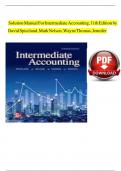
Solution Manual For Intermediate Accounting, 11th Edition by
o o o o o o o o
David Spiceland, Mark Nelson, Wayne Thomas, Jennifer
o o o o o o
,Chapter 1 Environment and Theoretical Structure of o o o o o o
Financial Accounting o
Question 1–1 o
Financial accounting is concerned with providing relevant financial information ab
o o o o o o o o o
out various kinds of organizations to different types of external users. The primary focus
o o o o o o o o o o o o o o
of financial accounting is on the financial information provided by profit-
o o o o o o o o o o
oriented companies to their present and potential investors and creditors.
o o o o o o o o o o
Question 1–2 o
Resources are efficiently allocated if they are given to enterprises that will use them
o o o o o o o o o o o o o
to provide goods and services desired by society and not to enterprises that will waste th
o o o o o o o o o o o o o o o o
em. The capital markets are the mechanism that fosters this efficient allocation of resour
o o o o o o o o o o o o o
ces.
Question 1–3 o
Two extremely important variables that must be considered in any investment decis
o o o o o o o o o o o
ion are the expected rate of return and the uncertainty or risk of that expected return.
o o o o o o o o o o o o o o o
Question 1–4 o
In the long run, a company will be able to provide investors and creditors with a rate
o o o o o o o o o o o o o o o o
of return only if it can generate a profit. That is, it must be able to use the resources provi
o o o o o o o o o o o o o o o o o o o o
ded to it to generate cash receipts from selling a product or service thatexceed the cash di
o o o o o o o o o o o o o o o o o
sbursements necessary to provide that product or service. o o o o o o o
Question 1–5 o
The primary objective of financial accounting is to provide investors and creditors
o o o o o o o o o o o o
with information that will help them make investment and credit decisions.
o o o o o o o o o o
Question 1–6 o
Net operating cash flows are the difference between cash receipts and cash disburse
o o o o o o o o o o o o
ments during a period of time from transactions related to providing goods and services
o o o o o o o o o o o o o o
to customers. Net operating cash flows may not be a good indicator of future cash flows
o o o o o o o o o o o o o o o o
because, by ignoring uncompleted transactions, they may not match the accomplishment
o o o o o o o o o o
s and sacrifices of the period.
o o o o o
,Question 1–7 o
GAAP (generally accepted accounting principles) are a dynamic set of both broad
o o o o o o o o o o o o
and specific guidelines that a company should follow in measuring and reporting the inf
o o o o o o o o o o o o o
ormation in their financial statements and related notes. It is important that all compani
o o o o o o o o o o o o o
es follow GAAP so that investors can compare financial information across companies t
o o o o o o o o o o o o
o make their resource allocation decisions.
o o o o o
Question 1–8 o
In 1934, Congress created the SEC and gave it the job of setting accounting and rep
o o o o o o o o o o o o o o o
orting standards for companies whose securities are publicly traded. The SEC has retain
o o o o o o o o o o o o
ed the power, but has relied on private sector bodies to create the standards. The current p
o o o o o o o o o o o o o o o o
rivate sector body responsible for setting accounting standards is the FASB.
o o o o o o o o o o
Question 1–9 o
Auditors are independent, professional accountants who examine financial stateme
o o o o o o o o
nts to express an opinion. The opinion reflects the auditors‘ assessment of the statements
o o o o o o o o o o o o o
' fairness, which is determined by the extent to which they are prepared in compliance wi
o o o o o o o o o o o o o o o
th GAAP. The auditor adds credibility to the financial statements, which increases the c
o o o o o o o o o o o o o
onfidence of capital market participants relying on that information.
o o o o o o o o
, Question 1–10 o
Key provisions included in the text are:
o o o o o o
Creation of the Public Company Accounting Oversight Board
o o o o o o o
Regulate types of non-audit audit services o o o o o
Require lead audit partner rotation every 5 year
o o o o o o o
Corporate executive accountability o o
Addresses conflicts of interest for security analysts o o o o o o
Internal control reporting and auditor opinion about controls
o o o o o o o
Question 1–11 o
New accounting standards, or changes in standards, can have significant differentia
o o o o o o o o o o
l effects on companies, investors and creditors, and other interest groups by causing redi
o o o o o o o o o o o o o
stribution of wealth. There also is the possibility that standards could harm the economy
o o o o o o o o o o o o o o
as a whole by causing companies to change their behavior.
o o o o o o o o o
Question 1–12 o
The FASB undertakes a series of elaborate information gathering steps before issui
o o o o o o o o o o o
ng an accounting standard to determine consensus as to the preferred method of accounti
o o o o o o o o o o o o o
ng, as well as to anticipate adverse economic consequences.
o o o o o o o o
Question 1–13 o
The purpose of the conceptual framework is to guide the Board in developing accou
o o o o o o o o o o o o o
nting standards by providing an underlying foundation and basic reasoning on which to c
o o o o o o o o o o o o o
onsider merits of alternatives. The framework does not prescribe GAAP.
o o o o o o o o o
o o o o o o o o
David Spiceland, Mark Nelson, Wayne Thomas, Jennifer
o o o o o o
,Chapter 1 Environment and Theoretical Structure of o o o o o o
Financial Accounting o
Question 1–1 o
Financial accounting is concerned with providing relevant financial information ab
o o o o o o o o o
out various kinds of organizations to different types of external users. The primary focus
o o o o o o o o o o o o o o
of financial accounting is on the financial information provided by profit-
o o o o o o o o o o
oriented companies to their present and potential investors and creditors.
o o o o o o o o o o
Question 1–2 o
Resources are efficiently allocated if they are given to enterprises that will use them
o o o o o o o o o o o o o
to provide goods and services desired by society and not to enterprises that will waste th
o o o o o o o o o o o o o o o o
em. The capital markets are the mechanism that fosters this efficient allocation of resour
o o o o o o o o o o o o o
ces.
Question 1–3 o
Two extremely important variables that must be considered in any investment decis
o o o o o o o o o o o
ion are the expected rate of return and the uncertainty or risk of that expected return.
o o o o o o o o o o o o o o o
Question 1–4 o
In the long run, a company will be able to provide investors and creditors with a rate
o o o o o o o o o o o o o o o o
of return only if it can generate a profit. That is, it must be able to use the resources provi
o o o o o o o o o o o o o o o o o o o o
ded to it to generate cash receipts from selling a product or service thatexceed the cash di
o o o o o o o o o o o o o o o o o
sbursements necessary to provide that product or service. o o o o o o o
Question 1–5 o
The primary objective of financial accounting is to provide investors and creditors
o o o o o o o o o o o o
with information that will help them make investment and credit decisions.
o o o o o o o o o o
Question 1–6 o
Net operating cash flows are the difference between cash receipts and cash disburse
o o o o o o o o o o o o
ments during a period of time from transactions related to providing goods and services
o o o o o o o o o o o o o o
to customers. Net operating cash flows may not be a good indicator of future cash flows
o o o o o o o o o o o o o o o o
because, by ignoring uncompleted transactions, they may not match the accomplishment
o o o o o o o o o o
s and sacrifices of the period.
o o o o o
,Question 1–7 o
GAAP (generally accepted accounting principles) are a dynamic set of both broad
o o o o o o o o o o o o
and specific guidelines that a company should follow in measuring and reporting the inf
o o o o o o o o o o o o o
ormation in their financial statements and related notes. It is important that all compani
o o o o o o o o o o o o o
es follow GAAP so that investors can compare financial information across companies t
o o o o o o o o o o o o
o make their resource allocation decisions.
o o o o o
Question 1–8 o
In 1934, Congress created the SEC and gave it the job of setting accounting and rep
o o o o o o o o o o o o o o o
orting standards for companies whose securities are publicly traded. The SEC has retain
o o o o o o o o o o o o
ed the power, but has relied on private sector bodies to create the standards. The current p
o o o o o o o o o o o o o o o o
rivate sector body responsible for setting accounting standards is the FASB.
o o o o o o o o o o
Question 1–9 o
Auditors are independent, professional accountants who examine financial stateme
o o o o o o o o
nts to express an opinion. The opinion reflects the auditors‘ assessment of the statements
o o o o o o o o o o o o o
' fairness, which is determined by the extent to which they are prepared in compliance wi
o o o o o o o o o o o o o o o
th GAAP. The auditor adds credibility to the financial statements, which increases the c
o o o o o o o o o o o o o
onfidence of capital market participants relying on that information.
o o o o o o o o
, Question 1–10 o
Key provisions included in the text are:
o o o o o o
Creation of the Public Company Accounting Oversight Board
o o o o o o o
Regulate types of non-audit audit services o o o o o
Require lead audit partner rotation every 5 year
o o o o o o o
Corporate executive accountability o o
Addresses conflicts of interest for security analysts o o o o o o
Internal control reporting and auditor opinion about controls
o o o o o o o
Question 1–11 o
New accounting standards, or changes in standards, can have significant differentia
o o o o o o o o o o
l effects on companies, investors and creditors, and other interest groups by causing redi
o o o o o o o o o o o o o
stribution of wealth. There also is the possibility that standards could harm the economy
o o o o o o o o o o o o o o
as a whole by causing companies to change their behavior.
o o o o o o o o o
Question 1–12 o
The FASB undertakes a series of elaborate information gathering steps before issui
o o o o o o o o o o o
ng an accounting standard to determine consensus as to the preferred method of accounti
o o o o o o o o o o o o o
ng, as well as to anticipate adverse economic consequences.
o o o o o o o o
Question 1–13 o
The purpose of the conceptual framework is to guide the Board in developing accou
o o o o o o o o o o o o o
nting standards by providing an underlying foundation and basic reasoning on which to c
o o o o o o o o o o o o o
onsider merits of alternatives. The framework does not prescribe GAAP.
o o o o o o o o o