Chapter 2
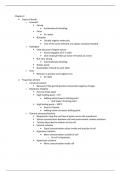
• Types of bonds
o Covalent
§ Strong
• Intramolecular bonding
§ Polar
• Ex: water
§ Nonpolar
• Usually organic molecules
• Two of the same element are always nonpolar bonded
o Hydrogen
§ Exist because of dipole nature
• Partial negative of O in H2O
• One molecule H2O can have 4 H bonds at a time
§ Not very strong
• Intermolecular bonding
§ Breaks easily
§ Nucleotides H bond to each other
o Ionic
§ Between a positive and negative ion
• Ex: NaCl
• Properties of H2O
o Universal solvent
§ Because of the partial positive and partial negative charges
o Maintains integrity
§ Hard to break apart
§ High melting point – 0°C
• Adding solute lowers melting point
o And lowers freezing point
§ High boiling point – 100°C
• Due to H bonds
• Adding solute increases boiling point
o Osmotic pressure/tonicity
§ Required to stop the net flow of water across the membrane
§ Solute concentration between cell and environment creates solutions
§ Tonicity described in relation to the cell
§ Isotonic solution
• Equal concentration solute inside and outside of cell
§ Hypotonic solution
• More concentration outside of cell
o So cell is hypotonic
§ Hypertonic solution
• More concentration inside cell
, o So cell is hypertonic
o Can lead to cell lysis
• Molarity
!"#$%
o 𝑀= &
!'%%()) ", %"#-.$ 5666 !&
§ 𝑀 = !"#$/-#'0 1$2)3.()/!"#) ", %"#-.$ ∗ 7"# (!&)
o Ex: We want to make 0.05M NaCl using 250mL. How much NaCl should we use?
8 5666
§ 0.05 = 9:.<<)/!"# ∗ =96
§ 0.7305g
o Ex: We dissolved 25g of C6H12O6 in 500mL H2O. What is the concentration of
glucose?
=9 5666
§ 𝑥 = 5:6.59>)/!"# ∗ 966
§ 0.278M
o Ex: We are making 0.02M C12H22O11 and we have 0.25g sucrose. How many mL
H2O should we add?
6.=9 5666
§ 0.02 = ?<=.=@)/!"# ∗ 8
§ 36.52mL
• Effect of pH
o 𝐾$A = [𝐻B ][𝑂𝐻C ]
§ Also called Kw
§ At room temp and 1 atm, Kw = 1 * 10-14
o 𝑝𝐻 = −log [𝐻B ]
§ pH + pOH = 14
§ More protons = lower pH = more acidic
o [𝐻B ] = 10CDE
o [𝑂𝐻C ] = 10CDFE
§ Ex: Calculate the pH and pOH of a 0.002M NaOH solution.
• 𝑝𝑂𝐻 = −log (2 ∗ 10C? )
• pOH = 2.69
• 14 − 𝑝𝑂𝐻 = 𝑝𝐻
• 14 – 2.69 = 11.3
• pH = 11.3
§ Ex: Calculate the pH of a 5*10-4M HCl solution. Then determine how
many OH- ions are present.
• 𝑝𝐻 = − log(5 ∗ 10C< )
• pH = 3.3
• 14 − 3.3 = 𝑝𝑂𝐻
• 𝑝𝑂𝐻 = 10.7
• 𝑝𝑂𝐻 = − log[𝑂𝐻C ]
• 10C56.G = [𝑂𝐻C ]
• [OH-] = 2 * 10-11 M
o Acid
, § Acids have more Hs
§ Proton donor (Lewis definition)
• A conjugate base of an acid loses an H and receives an additional
negative charge
• Ex: H3PO4’s conjugate base is H2PO4- ; H2PO4- ‘s conjugate base is
HPO42-
• More H ions present in acid means lower pH to convert to
conjugate base, so H3PO4 to H2PO4- has a lower pH than H2PO4- to
HPO42-
o Aka more acidic = lower pH
§ Strong acids completely dissociate in water
• HCl, H2SO4, HI, HBr, HNO3, HClO4
§ Weak acids do not completely dissociate in water
• CH3COOH, HCOOH
§ Acid dissociation constant
• 𝑝𝐾' = −𝑙𝑜𝑔𝐾'
• Expresses strength of a weak acid: lower = stronger acid
o Base
§ Proton acceptor (Lewis definition)
§ Strong bases
• NaOH, KOH, LiOH, Ba(OH)2, Ca(OH)2
§ Weak bases
o Henderson-Hasselbach Equation
§ Relationship between pH and pKa
[I! ]
§ 𝑝𝐻 = 𝑝𝐾' + log ([EI])
§ [A-] = conjugate base
§ [HA] = weak acid
§ When [A-] = [HA], pH = pKa
§ Buffer solution
• Equal concentration acid and conjugate base
• Buffers more effective when composed of equal parts weak acid
and conjugate base
• Best buffering occurs 1 pH unit above or below pKa
o Ex: Calculate the pH of a mixture of 0.25M acetic acid and 0.1M sodium acetate
if the pKa of acetic acid is 4.76.
§ Conjugate base is CH3COONa
§ Weak acid is CH3COOH
6.5
§ 𝑝𝐻 = 4.76 + log (6.=9)
§ pH = 4.36
o Ex: Calculate the pH of a mixture of 0.25M Na2HPO4 and 0.5M NaH2PO4 if the pKa
of NaH2PO4 is 7.2.
§ Conjugate base is Na2HPO4
• Types of bonds
o Covalent
§ Strong
• Intramolecular bonding
§ Polar
• Ex: water
§ Nonpolar
• Usually organic molecules
• Two of the same element are always nonpolar bonded
o Hydrogen
§ Exist because of dipole nature
• Partial negative of O in H2O
• One molecule H2O can have 4 H bonds at a time
§ Not very strong
• Intermolecular bonding
§ Breaks easily
§ Nucleotides H bond to each other
o Ionic
§ Between a positive and negative ion
• Ex: NaCl
• Properties of H2O
o Universal solvent
§ Because of the partial positive and partial negative charges
o Maintains integrity
§ Hard to break apart
§ High melting point – 0°C
• Adding solute lowers melting point
o And lowers freezing point
§ High boiling point – 100°C
• Due to H bonds
• Adding solute increases boiling point
o Osmotic pressure/tonicity
§ Required to stop the net flow of water across the membrane
§ Solute concentration between cell and environment creates solutions
§ Tonicity described in relation to the cell
§ Isotonic solution
• Equal concentration solute inside and outside of cell
§ Hypotonic solution
• More concentration outside of cell
o So cell is hypotonic
§ Hypertonic solution
• More concentration inside cell
, o So cell is hypertonic
o Can lead to cell lysis
• Molarity
!"#$%
o 𝑀= &
!'%%()) ", %"#-.$ 5666 !&
§ 𝑀 = !"#$/-#'0 1$2)3.()/!"#) ", %"#-.$ ∗ 7"# (!&)
o Ex: We want to make 0.05M NaCl using 250mL. How much NaCl should we use?
8 5666
§ 0.05 = 9:.<<)/!"# ∗ =96
§ 0.7305g
o Ex: We dissolved 25g of C6H12O6 in 500mL H2O. What is the concentration of
glucose?
=9 5666
§ 𝑥 = 5:6.59>)/!"# ∗ 966
§ 0.278M
o Ex: We are making 0.02M C12H22O11 and we have 0.25g sucrose. How many mL
H2O should we add?
6.=9 5666
§ 0.02 = ?<=.=@)/!"# ∗ 8
§ 36.52mL
• Effect of pH
o 𝐾$A = [𝐻B ][𝑂𝐻C ]
§ Also called Kw
§ At room temp and 1 atm, Kw = 1 * 10-14
o 𝑝𝐻 = −log [𝐻B ]
§ pH + pOH = 14
§ More protons = lower pH = more acidic
o [𝐻B ] = 10CDE
o [𝑂𝐻C ] = 10CDFE
§ Ex: Calculate the pH and pOH of a 0.002M NaOH solution.
• 𝑝𝑂𝐻 = −log (2 ∗ 10C? )
• pOH = 2.69
• 14 − 𝑝𝑂𝐻 = 𝑝𝐻
• 14 – 2.69 = 11.3
• pH = 11.3
§ Ex: Calculate the pH of a 5*10-4M HCl solution. Then determine how
many OH- ions are present.
• 𝑝𝐻 = − log(5 ∗ 10C< )
• pH = 3.3
• 14 − 3.3 = 𝑝𝑂𝐻
• 𝑝𝑂𝐻 = 10.7
• 𝑝𝑂𝐻 = − log[𝑂𝐻C ]
• 10C56.G = [𝑂𝐻C ]
• [OH-] = 2 * 10-11 M
o Acid
, § Acids have more Hs
§ Proton donor (Lewis definition)
• A conjugate base of an acid loses an H and receives an additional
negative charge
• Ex: H3PO4’s conjugate base is H2PO4- ; H2PO4- ‘s conjugate base is
HPO42-
• More H ions present in acid means lower pH to convert to
conjugate base, so H3PO4 to H2PO4- has a lower pH than H2PO4- to
HPO42-
o Aka more acidic = lower pH
§ Strong acids completely dissociate in water
• HCl, H2SO4, HI, HBr, HNO3, HClO4
§ Weak acids do not completely dissociate in water
• CH3COOH, HCOOH
§ Acid dissociation constant
• 𝑝𝐾' = −𝑙𝑜𝑔𝐾'
• Expresses strength of a weak acid: lower = stronger acid
o Base
§ Proton acceptor (Lewis definition)
§ Strong bases
• NaOH, KOH, LiOH, Ba(OH)2, Ca(OH)2
§ Weak bases
o Henderson-Hasselbach Equation
§ Relationship between pH and pKa
[I! ]
§ 𝑝𝐻 = 𝑝𝐾' + log ([EI])
§ [A-] = conjugate base
§ [HA] = weak acid
§ When [A-] = [HA], pH = pKa
§ Buffer solution
• Equal concentration acid and conjugate base
• Buffers more effective when composed of equal parts weak acid
and conjugate base
• Best buffering occurs 1 pH unit above or below pKa
o Ex: Calculate the pH of a mixture of 0.25M acetic acid and 0.1M sodium acetate
if the pKa of acetic acid is 4.76.
§ Conjugate base is CH3COONa
§ Weak acid is CH3COOH
6.5
§ 𝑝𝐻 = 4.76 + log (6.=9)
§ pH = 4.36
o Ex: Calculate the pH of a mixture of 0.25M Na2HPO4 and 0.5M NaH2PO4 if the pKa
of NaH2PO4 is 7.2.
§ Conjugate base is Na2HPO4