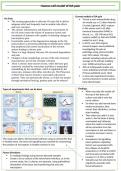
Human cell model of OA pain
Current models of OA pain
On Pain To test a new osteoarthritis drug:
The existing approaches to alleviate OA pain fail to deliver we would use n=11 after Anterior
adequate relief and frequently lead to notable side effects Cruciate Ligament (ACL) rupture
and toxic reactions
in the mouse and n=15 after
The chronic inflammatory and destructive environment of
meniscal transection (MNX) in
the OA joint causes the release of numerous factors and
recruitment of immune cells capable of initiating changes in the rat, i.e., 132-198 mice (ACL
(nociceptive) pain. rupture model) or 360 rats (MINX
Irresolvable nature of the degenerative damage in the OA model) to test 1 drug
joint produces a persistent pathological inflammatory milieu In 2019, over 650 original
that peripheral and central sensitization of the nervous research papers were published
system leading to chronic pain investigating OA pain in
There is a large disparity between OA structural degradation pathology using animal models-
and pain over 95% rodent, 5% large
Changes in bone morphology are one of the only structural animals including canines with an
characteristics in OA that correlate with pain average of 23 animals totalling
There is chronic bone marrow lesion, where the bone gets over 14000 animal lives used
massively resorbed by osteoclasts and there is unmatched 40% of orthopaedic studies are
remodelling by the osteoblasts, which is regulated by the never published and half of those
osteocytes, immune cells influx into this site. The Prescence if those published never cited
of these bone marrow lesions is associated with pain in In vivo pain experiments involve
patients. They are mechanically driven, so if they are treated
severe protocols to evoke animal
through mechanical bracing, patients pain can be reduced
bone derived pain
Types of experiments that can be done Findings:
When you take the media off
the top of the bone cell
culture and add it onto the
nerve culture
So when you add normal bone
media nociceptors, they
retract their dendrites, so they
stop invading
Then when you add IL-6 and
yoda-1, the the bone is being
overloaded and inflamed,
when the media is transferred,
all the retraction from the
nociceptors is lost and there is
a massive increase in nerve
invasion
This study was able to demonstrate (without using an animal life) that Semaphorin-3A signalling
in healthy bone, the sema-3A signalling was essential for maintaining (axon guidance signalling
the position of nociceptors in healthy animals in vivo factor) was associated with
the collapse of dendritic
projections (r=0.958, p<0.001)
Future directions:
and inversely correlated with
To validate findings isoing human diseased samples
invasion (r=-0.740, p=0.023)
Create a 3d co-culture of the nerve/bone interface, as in the
Sema3A was the only factor to
current study, the 2 cultures are separate, using patholofical
negatively associate with
stimulation of the bone and transferring that onto the
these behaviours
nociceptors
Current models of OA pain
On Pain To test a new osteoarthritis drug:
The existing approaches to alleviate OA pain fail to deliver we would use n=11 after Anterior
adequate relief and frequently lead to notable side effects Cruciate Ligament (ACL) rupture
and toxic reactions
in the mouse and n=15 after
The chronic inflammatory and destructive environment of
meniscal transection (MNX) in
the OA joint causes the release of numerous factors and
recruitment of immune cells capable of initiating changes in the rat, i.e., 132-198 mice (ACL
(nociceptive) pain. rupture model) or 360 rats (MINX
Irresolvable nature of the degenerative damage in the OA model) to test 1 drug
joint produces a persistent pathological inflammatory milieu In 2019, over 650 original
that peripheral and central sensitization of the nervous research papers were published
system leading to chronic pain investigating OA pain in
There is a large disparity between OA structural degradation pathology using animal models-
and pain over 95% rodent, 5% large
Changes in bone morphology are one of the only structural animals including canines with an
characteristics in OA that correlate with pain average of 23 animals totalling
There is chronic bone marrow lesion, where the bone gets over 14000 animal lives used
massively resorbed by osteoclasts and there is unmatched 40% of orthopaedic studies are
remodelling by the osteoblasts, which is regulated by the never published and half of those
osteocytes, immune cells influx into this site. The Prescence if those published never cited
of these bone marrow lesions is associated with pain in In vivo pain experiments involve
patients. They are mechanically driven, so if they are treated
severe protocols to evoke animal
through mechanical bracing, patients pain can be reduced
bone derived pain
Types of experiments that can be done Findings:
When you take the media off
the top of the bone cell
culture and add it onto the
nerve culture
So when you add normal bone
media nociceptors, they
retract their dendrites, so they
stop invading
Then when you add IL-6 and
yoda-1, the the bone is being
overloaded and inflamed,
when the media is transferred,
all the retraction from the
nociceptors is lost and there is
a massive increase in nerve
invasion
This study was able to demonstrate (without using an animal life) that Semaphorin-3A signalling
in healthy bone, the sema-3A signalling was essential for maintaining (axon guidance signalling
the position of nociceptors in healthy animals in vivo factor) was associated with
the collapse of dendritic
projections (r=0.958, p<0.001)
Future directions:
and inversely correlated with
To validate findings isoing human diseased samples
invasion (r=-0.740, p=0.023)
Create a 3d co-culture of the nerve/bone interface, as in the
Sema3A was the only factor to
current study, the 2 cultures are separate, using patholofical
negatively associate with
stimulation of the bone and transferring that onto the
these behaviours
nociceptors