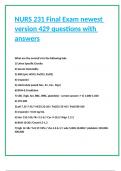
NURS 231 Final Exam newest
version 429 questions with
answers
What are the normal's for the following labs
||||| ||||| ||||| ||||| ||||| ||||| |||||
1) Urine Specific Gravity
||||| ||||| ||||| |||||
2) Serum Osmolality
||||| ||||| |||||
3) ABG (pH, HCO3, PaCO2, PaO2)
||||| ||||| ||||| ||||| |||||
4) troponin I
||||| ||||| |||||
5) electrolyte panel( Na+, K+, Ca+, Mg+)
||||| ||||| ||||| ||||| ||||| |||||
6) BUN & Creatinine
||||| ||||| |||||
7) CBC ( hgb, hct, RBC, WBC, platelets) - correct answer ✔1) 1.000-1.030
||||| ||||| ||||| ||||| ||||| ||||| ||||| ||||| ||||| ||||| ||||| |||||
2) 270-300
|||||
3) pH 7.35-7.45// HC03 22-26// PaCO2 35-45// Pa02 80-100
||||| ||||| ||||| ||||| ||||| ||||| ||||| |||||
4) troponin I <0.03 ng/mL
||||| ||||| ||||| |||||
5) Na+ 135-145//K+ 3.5-5// Ca+ 9-10.5//Mg+ 1.2-2
||||| ||||| ||||| ||||| ||||| |||||
6) BUN 10-20//Creat 0.5-1.2
||||| ||||| |||||
7) hgb 12-18// hct 37-52%// rbc 4.2-6.1// wbc 5,000-10,000// platelets 150,000-
||||| ||||| ||||| ||||| ||||| ||||| ||||| ||||| ||||| |||||
400,000
,Match the lab profile with the most likely fluid imbalance like A) Fluid Volume
||||| ||||| ||||| ||||| ||||| ||||| ||||| ||||| ||||| ||||| ||||| ||||| ||||| |||||
Deficit 2) Fluid Volume Excess ||||| ||||| ||||| |||||
1) ____Na 148; Hct 40% yesterday, 49% today; serum osmolarity 308
||||| ||||| ||||| ||||| ||||| ||||| ||||| ||||| ||||| |||||
2) ____Hgb 13.2 yesterday, 10.1 today; Urine specific gravity 1.001
||||| ||||| ||||| ||||| ||||| ||||| ||||| ||||| |||||
3) ____BUN 45; Cr 0.7 - correct answer ✔1) A
||||| ||||| ||||| ||||| ||||| ||||| ||||| ||||| |||||
2) B |||||
3) A |||||
The nurse is preparing to administer lisinopril (Zestril) to a patient with acute
||||| ||||| ||||| ||||| ||||| ||||| ||||| ||||| ||||| ||||| ||||| ||||| |||||
coronary syndrome. Which of the following findings should prompt the nurse to ||||| ||||| ||||| ||||| ||||| ||||| ||||| ||||| ||||| ||||| ||||| |||||
hold the medication and consult the healthcare provider?
||||| ||||| ||||| ||||| ||||| ||||| |||||
a) Serum sodium level 134
||||| ||||| ||||| |||||
b) Serum potassium 5.6
||||| ||||| |||||
c) Heart rate 58
||||| ||||| |||||
d) Blood pressure 125/78 - correct answer ✔b) Serum potassium 5.6
||||| ||||| ||||| ||||| ||||| ||||| ||||| ||||| ||||| |||||
*ACE inhibitors can cause/exacerbate hyperkalemia.
||||| ||||| ||||| |||||
The nurse is caring for a patient who is in hypovolemic shock following an
||||| ||||| ||||| ||||| ||||| ||||| ||||| ||||| ||||| ||||| ||||| ||||| ||||| |||||
extensive burn injury. What is the intravenous fluid of choice for this patient in ||||| ||||| ||||| ||||| ||||| ||||| ||||| ||||| ||||| ||||| ||||| ||||| ||||| |||||
the emergent phase of treatment?
||||| ||||| ||||| |||||
a) Lactated Ringers
||||| |||||
b) 0.45 NS with 20 mEq potassium chloride
||||| ||||| ||||| ||||| ||||| ||||| |||||
c) Fresh Frozen Plasma
||||| ||||| |||||
d) 5% Dextrose in saline - correct answer ✔a) Lactated Ringers
||||| ||||| ||||| ||||| ||||| ||||| ||||| ||||| ||||| |||||
*Isotonic solutions (crystalloids) are used to restore fluid volume in patients with ||||| ||||| ||||| ||||| ||||| ||||| ||||| ||||| ||||| ||||| |||||
shock. Lactated Ringers is isotonic. Normal saline is also isotonic.
||||| ||||| ||||| ||||| ||||| ||||| ||||| ||||| ||||| |||||
,The client on a ventilator is assessed for untoward responses to the therapy.
||||| ||||| ||||| ||||| ||||| ||||| ||||| ||||| ||||| ||||| ||||| ||||| |||||
Which of the following would indicate a possible complication of ventilator
||||| ||||| ||||| ||||| ||||| ||||| ||||| ||||| ||||| ||||| |||||
therapy?
a) Blood pressure has increased 5mmHg in the last 24 hours
||||| ||||| ||||| ||||| ||||| ||||| ||||| ||||| ||||| |||||
b) Lung sounds absent on one side.
||||| ||||| ||||| ||||| ||||| |||||
c) Forceful cough periodically
||||| ||||| |||||
d) Broncho-vesicular breath sounds throughout peripheral lung fields. - correct
||||| ||||| ||||| ||||| ||||| ||||| ||||| ||||| ||||| |||||
answer ✔b) Lung sounds absent on one side. ||||| ||||| ||||| ||||| ||||| ||||| |||||
*This may indicate a pneumothorax--a complication caused by barotrauma.
||||| ||||| ||||| ||||| ||||| ||||| ||||| |||||
The pressure reading during inspiration on the ventilator of a client receiving
||||| ||||| ||||| ||||| ||||| ||||| ||||| ||||| ||||| ||||| ||||| |||||
mechanical ventilation is high and alarming intermittently. What is the nurse's ||||| ||||| ||||| ||||| ||||| ||||| ||||| ||||| ||||| ||||| |||||
first action? |||||
a) Assess the client's oxygenation.
||||| ||||| ||||| |||||
b) Call the RT to check the ventilator settings.
||||| ||||| ||||| ||||| ||||| ||||| ||||| |||||
c) Listen for bilateral lung sounds.
||||| ||||| ||||| ||||| |||||
d) Determine whether an air leak is present in the client's endotracheal tube
||||| ||||| ||||| ||||| ||||| ||||| ||||| ||||| ||||| ||||| ||||| ||||| |||||
cuff. - correct answer ✔a) Assess the client's oxygenation.
||||| ||||| ||||| ||||| ||||| ||||| ||||| |||||
Which assessment finding best indicates that fluid resuscitation therapy for the
||||| ||||| ||||| ||||| ||||| ||||| ||||| ||||| ||||| ||||| |||||
patient with hypertonic dehydration has acheived the desired effect?
||||| ||||| ||||| ||||| ||||| ||||| ||||| |||||
a) Peripheral pulses changed from 1+ to 3+
||||| ||||| ||||| ||||| ||||| ||||| |||||
b) Neck veins slightly distended @ 30 degrees
||||| ||||| ||||| ||||| ||||| ||||| |||||
c) Serum sodium level has changed from 151 to 143.
||||| ||||| ||||| ||||| ||||| ||||| ||||| ||||| |||||
d) Pulse oximetry shows oxygen saturation of 95% - correct answer ✔c) Serum
||||| ||||| ||||| ||||| ||||| ||||| ||||| ||||| ||||| ||||| ||||| ||||| |||||
sodium level has changed from 151 to 143. ||||| ||||| ||||| ||||| ||||| ||||| |||||
, Which intravenous solution should you be prepared to administer to a patient
||||| ||||| ||||| ||||| ||||| ||||| ||||| ||||| ||||| ||||| ||||| |||||
with isotonic dehydration?||||| |||||
a) 0.45% saline
||||| |||||
b) Dextrose 5% in water
||||| ||||| ||||| |||||
c) Dextrose 10% in water
||||| ||||| ||||| |||||
d) 0.9% saline - correct answer ✔d) 0.9% saline
||||| ||||| ||||| ||||| ||||| ||||| ||||| |||||
A patient is receiving dobutamine [Dobutrex] as a continuous infusion in the
||||| ||||| ||||| ||||| ||||| ||||| ||||| ||||| ||||| ||||| ||||| |||||
immediate postoperative period. The patient also is receiving a diuretic. What||||| ||||| ||||| ||||| ||||| ||||| ||||| ||||| ||||| ||||| |||||
adverse drug reactions are possible in this patient? (select all that apply)
||||| ||||| ||||| ||||| ||||| ||||| ||||| ||||| ||||| ||||| |||||
a)Angina
b)Hypotension
c)Dysrhythmias
d)Oliguria
e)Tachycardia - correct answer ✔a)Angina ||||| ||||| ||||| |||||
c)Dysrhythmias
e)Tachycardia
*Is a beta1 aderenergic agonist; general anesthetics can increase the likelihood
||||| ||||| ||||| ||||| ||||| ||||| ||||| ||||| ||||| ||||| |||||
of dysrhythmias. Dobutamine elevates BP by increasing CO. Diuretics
||||| ||||| ||||| ||||| ||||| ||||| ||||| ||||| |||||
complement the beneficial effects of dobutamine on the kidney, so urine output ||||| ||||| ||||| ||||| ||||| ||||| ||||| ||||| ||||| ||||| ||||| |||||
would be increased, not decreased.||||| ||||| ||||| |||||
A patient who has severe sepsis is receiving an intravenous normal saline
||||| ||||| ||||| ||||| ||||| ||||| ||||| ||||| ||||| ||||| ||||| |||||
infusion. She weighs 78 kgs. Which of the following is an indicator that the
||||| ||||| ||||| ||||| ||||| ||||| ||||| ||||| ||||| ||||| ||||| ||||| ||||| |||||
therapeutic goal has been met? ||||| ||||| ||||| |||||
version 429 questions with
answers
What are the normal's for the following labs
||||| ||||| ||||| ||||| ||||| ||||| |||||
1) Urine Specific Gravity
||||| ||||| ||||| |||||
2) Serum Osmolality
||||| ||||| |||||
3) ABG (pH, HCO3, PaCO2, PaO2)
||||| ||||| ||||| ||||| |||||
4) troponin I
||||| ||||| |||||
5) electrolyte panel( Na+, K+, Ca+, Mg+)
||||| ||||| ||||| ||||| ||||| |||||
6) BUN & Creatinine
||||| ||||| |||||
7) CBC ( hgb, hct, RBC, WBC, platelets) - correct answer ✔1) 1.000-1.030
||||| ||||| ||||| ||||| ||||| ||||| ||||| ||||| ||||| ||||| ||||| |||||
2) 270-300
|||||
3) pH 7.35-7.45// HC03 22-26// PaCO2 35-45// Pa02 80-100
||||| ||||| ||||| ||||| ||||| ||||| ||||| |||||
4) troponin I <0.03 ng/mL
||||| ||||| ||||| |||||
5) Na+ 135-145//K+ 3.5-5// Ca+ 9-10.5//Mg+ 1.2-2
||||| ||||| ||||| ||||| ||||| |||||
6) BUN 10-20//Creat 0.5-1.2
||||| ||||| |||||
7) hgb 12-18// hct 37-52%// rbc 4.2-6.1// wbc 5,000-10,000// platelets 150,000-
||||| ||||| ||||| ||||| ||||| ||||| ||||| ||||| ||||| |||||
400,000
,Match the lab profile with the most likely fluid imbalance like A) Fluid Volume
||||| ||||| ||||| ||||| ||||| ||||| ||||| ||||| ||||| ||||| ||||| ||||| ||||| |||||
Deficit 2) Fluid Volume Excess ||||| ||||| ||||| |||||
1) ____Na 148; Hct 40% yesterday, 49% today; serum osmolarity 308
||||| ||||| ||||| ||||| ||||| ||||| ||||| ||||| ||||| |||||
2) ____Hgb 13.2 yesterday, 10.1 today; Urine specific gravity 1.001
||||| ||||| ||||| ||||| ||||| ||||| ||||| ||||| |||||
3) ____BUN 45; Cr 0.7 - correct answer ✔1) A
||||| ||||| ||||| ||||| ||||| ||||| ||||| ||||| |||||
2) B |||||
3) A |||||
The nurse is preparing to administer lisinopril (Zestril) to a patient with acute
||||| ||||| ||||| ||||| ||||| ||||| ||||| ||||| ||||| ||||| ||||| ||||| |||||
coronary syndrome. Which of the following findings should prompt the nurse to ||||| ||||| ||||| ||||| ||||| ||||| ||||| ||||| ||||| ||||| ||||| |||||
hold the medication and consult the healthcare provider?
||||| ||||| ||||| ||||| ||||| ||||| |||||
a) Serum sodium level 134
||||| ||||| ||||| |||||
b) Serum potassium 5.6
||||| ||||| |||||
c) Heart rate 58
||||| ||||| |||||
d) Blood pressure 125/78 - correct answer ✔b) Serum potassium 5.6
||||| ||||| ||||| ||||| ||||| ||||| ||||| ||||| ||||| |||||
*ACE inhibitors can cause/exacerbate hyperkalemia.
||||| ||||| ||||| |||||
The nurse is caring for a patient who is in hypovolemic shock following an
||||| ||||| ||||| ||||| ||||| ||||| ||||| ||||| ||||| ||||| ||||| ||||| ||||| |||||
extensive burn injury. What is the intravenous fluid of choice for this patient in ||||| ||||| ||||| ||||| ||||| ||||| ||||| ||||| ||||| ||||| ||||| ||||| ||||| |||||
the emergent phase of treatment?
||||| ||||| ||||| |||||
a) Lactated Ringers
||||| |||||
b) 0.45 NS with 20 mEq potassium chloride
||||| ||||| ||||| ||||| ||||| ||||| |||||
c) Fresh Frozen Plasma
||||| ||||| |||||
d) 5% Dextrose in saline - correct answer ✔a) Lactated Ringers
||||| ||||| ||||| ||||| ||||| ||||| ||||| ||||| ||||| |||||
*Isotonic solutions (crystalloids) are used to restore fluid volume in patients with ||||| ||||| ||||| ||||| ||||| ||||| ||||| ||||| ||||| ||||| |||||
shock. Lactated Ringers is isotonic. Normal saline is also isotonic.
||||| ||||| ||||| ||||| ||||| ||||| ||||| ||||| ||||| |||||
,The client on a ventilator is assessed for untoward responses to the therapy.
||||| ||||| ||||| ||||| ||||| ||||| ||||| ||||| ||||| ||||| ||||| ||||| |||||
Which of the following would indicate a possible complication of ventilator
||||| ||||| ||||| ||||| ||||| ||||| ||||| ||||| ||||| ||||| |||||
therapy?
a) Blood pressure has increased 5mmHg in the last 24 hours
||||| ||||| ||||| ||||| ||||| ||||| ||||| ||||| ||||| |||||
b) Lung sounds absent on one side.
||||| ||||| ||||| ||||| ||||| |||||
c) Forceful cough periodically
||||| ||||| |||||
d) Broncho-vesicular breath sounds throughout peripheral lung fields. - correct
||||| ||||| ||||| ||||| ||||| ||||| ||||| ||||| ||||| |||||
answer ✔b) Lung sounds absent on one side. ||||| ||||| ||||| ||||| ||||| ||||| |||||
*This may indicate a pneumothorax--a complication caused by barotrauma.
||||| ||||| ||||| ||||| ||||| ||||| ||||| |||||
The pressure reading during inspiration on the ventilator of a client receiving
||||| ||||| ||||| ||||| ||||| ||||| ||||| ||||| ||||| ||||| ||||| |||||
mechanical ventilation is high and alarming intermittently. What is the nurse's ||||| ||||| ||||| ||||| ||||| ||||| ||||| ||||| ||||| ||||| |||||
first action? |||||
a) Assess the client's oxygenation.
||||| ||||| ||||| |||||
b) Call the RT to check the ventilator settings.
||||| ||||| ||||| ||||| ||||| ||||| ||||| |||||
c) Listen for bilateral lung sounds.
||||| ||||| ||||| ||||| |||||
d) Determine whether an air leak is present in the client's endotracheal tube
||||| ||||| ||||| ||||| ||||| ||||| ||||| ||||| ||||| ||||| ||||| ||||| |||||
cuff. - correct answer ✔a) Assess the client's oxygenation.
||||| ||||| ||||| ||||| ||||| ||||| ||||| |||||
Which assessment finding best indicates that fluid resuscitation therapy for the
||||| ||||| ||||| ||||| ||||| ||||| ||||| ||||| ||||| ||||| |||||
patient with hypertonic dehydration has acheived the desired effect?
||||| ||||| ||||| ||||| ||||| ||||| ||||| |||||
a) Peripheral pulses changed from 1+ to 3+
||||| ||||| ||||| ||||| ||||| ||||| |||||
b) Neck veins slightly distended @ 30 degrees
||||| ||||| ||||| ||||| ||||| ||||| |||||
c) Serum sodium level has changed from 151 to 143.
||||| ||||| ||||| ||||| ||||| ||||| ||||| ||||| |||||
d) Pulse oximetry shows oxygen saturation of 95% - correct answer ✔c) Serum
||||| ||||| ||||| ||||| ||||| ||||| ||||| ||||| ||||| ||||| ||||| ||||| |||||
sodium level has changed from 151 to 143. ||||| ||||| ||||| ||||| ||||| ||||| |||||
, Which intravenous solution should you be prepared to administer to a patient
||||| ||||| ||||| ||||| ||||| ||||| ||||| ||||| ||||| ||||| ||||| |||||
with isotonic dehydration?||||| |||||
a) 0.45% saline
||||| |||||
b) Dextrose 5% in water
||||| ||||| ||||| |||||
c) Dextrose 10% in water
||||| ||||| ||||| |||||
d) 0.9% saline - correct answer ✔d) 0.9% saline
||||| ||||| ||||| ||||| ||||| ||||| ||||| |||||
A patient is receiving dobutamine [Dobutrex] as a continuous infusion in the
||||| ||||| ||||| ||||| ||||| ||||| ||||| ||||| ||||| ||||| ||||| |||||
immediate postoperative period. The patient also is receiving a diuretic. What||||| ||||| ||||| ||||| ||||| ||||| ||||| ||||| ||||| ||||| |||||
adverse drug reactions are possible in this patient? (select all that apply)
||||| ||||| ||||| ||||| ||||| ||||| ||||| ||||| ||||| ||||| |||||
a)Angina
b)Hypotension
c)Dysrhythmias
d)Oliguria
e)Tachycardia - correct answer ✔a)Angina ||||| ||||| ||||| |||||
c)Dysrhythmias
e)Tachycardia
*Is a beta1 aderenergic agonist; general anesthetics can increase the likelihood
||||| ||||| ||||| ||||| ||||| ||||| ||||| ||||| ||||| ||||| |||||
of dysrhythmias. Dobutamine elevates BP by increasing CO. Diuretics
||||| ||||| ||||| ||||| ||||| ||||| ||||| ||||| |||||
complement the beneficial effects of dobutamine on the kidney, so urine output ||||| ||||| ||||| ||||| ||||| ||||| ||||| ||||| ||||| ||||| ||||| |||||
would be increased, not decreased.||||| ||||| ||||| |||||
A patient who has severe sepsis is receiving an intravenous normal saline
||||| ||||| ||||| ||||| ||||| ||||| ||||| ||||| ||||| ||||| ||||| |||||
infusion. She weighs 78 kgs. Which of the following is an indicator that the
||||| ||||| ||||| ||||| ||||| ||||| ||||| ||||| ||||| ||||| ||||| ||||| ||||| |||||
therapeutic goal has been met? ||||| ||||| ||||| |||||