Beliefs in Society - AQA A-Level Sociology Essays
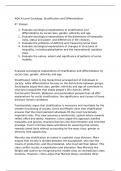
A* Essays:
1. Evaluate different sociological conceptions of ideology, science, and
religion.
2. Evaluate the role of religion in promoting and preventing social
change.
3. Evaluate the role of religious organisations in contemporary society.
4. Evaluate the relationship between social groups and religious beliefs
and practices.
5. Evaluate the extent of secularisation and its global context.
1. Evaluate different sociological conceptions of
ideology, science, and religion.
Sociologists have developed distinct conceptions of ideology, science, and
religion, each of which helps explain how knowledge, beliefs, and social
systems are structured in society. Ideology refers to a set of ideas or
beliefs that justify the power and status quo within society, while science
is an empirical, systematic process that aims to uncover the truth through
observation and experimentation. Religion, on the other hand, often deals
with faith, spiritual practices, and the moral framework that shapes a
society's beliefs and values. Sociological theories offer various
perspectives on how these constructs function and interrelate within
society.
Marxists view ideology as a tool of the ruling class to maintain control,
with ideas serving to legitimise inequality and exploitation. For Marx, the
dominant ideology perpetuates capitalist interests by presenting them as
universal truths, thus obscuring the real relationships of power in society.
Religion, for Marx, is also an ideological force that keeps the oppressed in
a state of false consciousness by offering them hope of a better afterlife,
distracting them from their material conditions. Religion, therefore,
functions to preserve the status quo.
In contrast, functionalists, like Durkheim, argue that religion serves a
positive role in promoting social cohesion and solidarity. For Durkheim,
religion binds individuals together through shared values and rituals,
reinforcing the collective conscience and promoting social stability. This is
in stark contrast to the Marxist view, which sees religion as a mechanism
, of control. Functionalists also view science as a force for societal progress,
where knowledge and rationality help improve the quality of life and
society’s overall function.
Weber’s perspective on science and religion focuses on how they shape
social change. In his analysis of the Protestant Ethic and the Spirit of
Capitalism, Weber argued that Protestantism, particularly Calvinism,
fostered capitalist economic systems by encouraging hard work, frugality,
and individual responsibility. This suggests that religion can also act as a
force for social change. However, Weber also noted that science and
rationalisation in modern society have gradually displaced religious
explanations, leading to what he called the "disenchantment of the
world."
In conclusion, sociological conceptions of ideology, science, and religion
vary significantly. Marxists view ideology and religion as tools of
oppression, while functionalists focus on their role in maintaining social
cohesion. Weber sees religion as an agent of social change, which
contrasts with the secularisation trend associated with the rise of science.
Each perspective provides insight into how these systems shape social
order, identity, and values.
2. Evaluate the role of religion in promoting and
preventing social change.
Religion’s role in promoting and preventing social change is a central topic
in sociological debates. Some sociologists argue that religion can be a
catalyst for social change, while others see it as a conservative force that
upholds the status quo.
Weber’s analysis of the Protestant Ethic and the Spirit of Capitalism
suggests that religion can be a significant force for social change. Weber
argued that Calvinism, in particular, encouraged the development of
capitalism by promoting values like hard work, frugality, and the belief in
individual responsibility. This idea of the “Protestant work ethic” provided
the moral basis for the rise of capitalism in Western Europe, highlighting
how religion can influence economic and social development.
On the other hand, Marxists view religion as a tool used by the ruling class
to prevent social change. Marx famously described religion as the “opium
of the people,” arguing that it pacifies the oppressed by offering them a
false sense of hope and diverting their attention from material inequality.
A* Essays:
1. Evaluate different sociological conceptions of ideology, science, and
religion.
2. Evaluate the role of religion in promoting and preventing social
change.
3. Evaluate the role of religious organisations in contemporary society.
4. Evaluate the relationship between social groups and religious beliefs
and practices.
5. Evaluate the extent of secularisation and its global context.
1. Evaluate different sociological conceptions of
ideology, science, and religion.
Sociologists have developed distinct conceptions of ideology, science, and
religion, each of which helps explain how knowledge, beliefs, and social
systems are structured in society. Ideology refers to a set of ideas or
beliefs that justify the power and status quo within society, while science
is an empirical, systematic process that aims to uncover the truth through
observation and experimentation. Religion, on the other hand, often deals
with faith, spiritual practices, and the moral framework that shapes a
society's beliefs and values. Sociological theories offer various
perspectives on how these constructs function and interrelate within
society.
Marxists view ideology as a tool of the ruling class to maintain control,
with ideas serving to legitimise inequality and exploitation. For Marx, the
dominant ideology perpetuates capitalist interests by presenting them as
universal truths, thus obscuring the real relationships of power in society.
Religion, for Marx, is also an ideological force that keeps the oppressed in
a state of false consciousness by offering them hope of a better afterlife,
distracting them from their material conditions. Religion, therefore,
functions to preserve the status quo.
In contrast, functionalists, like Durkheim, argue that religion serves a
positive role in promoting social cohesion and solidarity. For Durkheim,
religion binds individuals together through shared values and rituals,
reinforcing the collective conscience and promoting social stability. This is
in stark contrast to the Marxist view, which sees religion as a mechanism
, of control. Functionalists also view science as a force for societal progress,
where knowledge and rationality help improve the quality of life and
society’s overall function.
Weber’s perspective on science and religion focuses on how they shape
social change. In his analysis of the Protestant Ethic and the Spirit of
Capitalism, Weber argued that Protestantism, particularly Calvinism,
fostered capitalist economic systems by encouraging hard work, frugality,
and individual responsibility. This suggests that religion can also act as a
force for social change. However, Weber also noted that science and
rationalisation in modern society have gradually displaced religious
explanations, leading to what he called the "disenchantment of the
world."
In conclusion, sociological conceptions of ideology, science, and religion
vary significantly. Marxists view ideology and religion as tools of
oppression, while functionalists focus on their role in maintaining social
cohesion. Weber sees religion as an agent of social change, which
contrasts with the secularisation trend associated with the rise of science.
Each perspective provides insight into how these systems shape social
order, identity, and values.
2. Evaluate the role of religion in promoting and
preventing social change.
Religion’s role in promoting and preventing social change is a central topic
in sociological debates. Some sociologists argue that religion can be a
catalyst for social change, while others see it as a conservative force that
upholds the status quo.
Weber’s analysis of the Protestant Ethic and the Spirit of Capitalism
suggests that religion can be a significant force for social change. Weber
argued that Calvinism, in particular, encouraged the development of
capitalism by promoting values like hard work, frugality, and the belief in
individual responsibility. This idea of the “Protestant work ethic” provided
the moral basis for the rise of capitalism in Western Europe, highlighting
how religion can influence economic and social development.
On the other hand, Marxists view religion as a tool used by the ruling class
to prevent social change. Marx famously described religion as the “opium
of the people,” arguing that it pacifies the oppressed by offering them a
false sense of hope and diverting their attention from material inequality.