Week 7: Lead Lessons
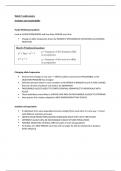
Evolution and sustainability
Hardy-Weinberg equations
Look at ALLELE FREQUENCIES and how they CHANGE over time
Change in allele frequencies driven by RANDOM, SPONTANEOUS MUTATIONS and NATURAL
SELECTION
Changing allele frequencies
Environment changes in any way => different alleles may become FAVOURABLE as the
SELECTION PRESSURE has changed
Selection pressure doesn’t cause mutation as MUTATION IS RANDOM and it is PURE CHANCE
that one of these mutations may lead to an ADVANTAGE
FAVOURABLE ALLELES LIKELY TO CONFER SURVIVAL ADVANTAGE TO INDIVIDUALS WITH
ALLELE
Those individuals more likely to SURVIVE AND PASS ON FAVOURABLE ALLELES TO OFFSPRING
New species that’s better adapted to NEW ENVIRONMENT MAY EVOLVE
Isolation and speciation
If individuals from same population become isolated from each other in some way => faced
with different selection pressures
GENE FLOW BETWEEN POPULATIONS IS REDUCED SINCE THEY CAN’T MEET/MATE
DIFFERENT ALLELES WILL BE FAVOURABLE IN EACH OF NEW POPULATIONS
NATURAL SELECTION will follow different paths in each of populations
Formation of 2 NEW SPECIES since they will no longer be able to interbreed to produce
fertile offspring
, Climate change and selection pressures
Anthropogenic global warming identified globally
Effects on climate change acting as selection pressures:
-temperatures rising or cooling
-rainfall increasing or decreasing
Changes causing a much higher extinction rate since ORGANISMS NOT ADAPTING/EVOLVING
FAST ENOUGH
Species that already show very little genetic variation are particularly vulnerable
Species adapted to a very specific habitat or food source are vulnerable
Adaptation and survival
Species more likely to survive are those with LARGE GENETIC VARIATION in areas where
conditions are ALREADY EXTREME AND UNDERGO WIDE FLUCTUATIONS IN TEMP & WATER
AVAILABILITY
Species that live in relatively stable conditions => VERY LITTLE GENETIC VARIATION so they
are MORE VULNERABLE WITH CHANING CONDITIONS
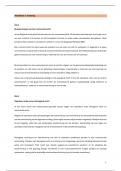
Climate change and isolation
Isolation is a main driver of SPECIATION [formation of new species]
1. Allopatric speciation
Populations become PHYSICALLY OR GEOGRAPHICALLY ISOLATED
2. Sympatric speciation
Populations become REPRODUCTIVELY ISOLATED in some way through MECHANICAL,
BEHAVIOURAL OR SEASONAL CHANGES
Allopatric speciation
Physical or geographical isolation = GROUP SEPARATED FROM PARENT GROUP
More likely to occur as global warming causes flooding = isolates communities
Complete isolation can occur = NO GENE FLOW AT ALL
Species evolves in just one place in GEOGRAPHICAL ISOLATION => ENDEMIC
Seen in Galapagos and Madagascar => selection pressures have caused unique
species to evolve to fill a range of niches
Evolution and sustainability
Hardy-Weinberg equations
Look at ALLELE FREQUENCIES and how they CHANGE over time
Change in allele frequencies driven by RANDOM, SPONTANEOUS MUTATIONS and NATURAL
SELECTION
Changing allele frequencies
Environment changes in any way => different alleles may become FAVOURABLE as the
SELECTION PRESSURE has changed
Selection pressure doesn’t cause mutation as MUTATION IS RANDOM and it is PURE CHANCE
that one of these mutations may lead to an ADVANTAGE
FAVOURABLE ALLELES LIKELY TO CONFER SURVIVAL ADVANTAGE TO INDIVIDUALS WITH
ALLELE
Those individuals more likely to SURVIVE AND PASS ON FAVOURABLE ALLELES TO OFFSPRING
New species that’s better adapted to NEW ENVIRONMENT MAY EVOLVE
Isolation and speciation
If individuals from same population become isolated from each other in some way => faced
with different selection pressures
GENE FLOW BETWEEN POPULATIONS IS REDUCED SINCE THEY CAN’T MEET/MATE
DIFFERENT ALLELES WILL BE FAVOURABLE IN EACH OF NEW POPULATIONS
NATURAL SELECTION will follow different paths in each of populations
Formation of 2 NEW SPECIES since they will no longer be able to interbreed to produce
fertile offspring
, Climate change and selection pressures
Anthropogenic global warming identified globally
Effects on climate change acting as selection pressures:
-temperatures rising or cooling
-rainfall increasing or decreasing
Changes causing a much higher extinction rate since ORGANISMS NOT ADAPTING/EVOLVING
FAST ENOUGH
Species that already show very little genetic variation are particularly vulnerable
Species adapted to a very specific habitat or food source are vulnerable
Adaptation and survival
Species more likely to survive are those with LARGE GENETIC VARIATION in areas where
conditions are ALREADY EXTREME AND UNDERGO WIDE FLUCTUATIONS IN TEMP & WATER
AVAILABILITY
Species that live in relatively stable conditions => VERY LITTLE GENETIC VARIATION so they
are MORE VULNERABLE WITH CHANING CONDITIONS
Climate change and isolation
Isolation is a main driver of SPECIATION [formation of new species]
1. Allopatric speciation
Populations become PHYSICALLY OR GEOGRAPHICALLY ISOLATED
2. Sympatric speciation
Populations become REPRODUCTIVELY ISOLATED in some way through MECHANICAL,
BEHAVIOURAL OR SEASONAL CHANGES
Allopatric speciation
Physical or geographical isolation = GROUP SEPARATED FROM PARENT GROUP
More likely to occur as global warming causes flooding = isolates communities
Complete isolation can occur = NO GENE FLOW AT ALL
Species evolves in just one place in GEOGRAPHICAL ISOLATION => ENDEMIC
Seen in Galapagos and Madagascar => selection pressures have caused unique
species to evolve to fill a range of niches