Lecture 1 Marketing research
- 50% of the new products fail
- 50% of advertising has no effect
Goals of marketing research:
1. Guide and improve decision making
2. Guide the marketing plan
3. Trace problems
4. Understand changes
5. Predict outcomes
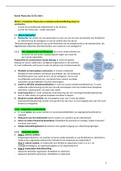
Marketing research process
DIfference management decision problem <> marketing research problem
- Asks what the decision maker needs to do <> how the information should be obtained
- Action oriented <> information oriented
- Focused on symptoms <> focused on causes
,Differences
Secondary data: data collected for another purpose
Primary data: data collected for this specific purpose
Start with secondary data > when exhausted > collect primary data
Lecture 2 qualitative research
Qualitative is exploratory
Strengths of qualitative research:
- Flexibility, questions can be adapted
- Collect rich data, in depth
- Suitable for sensitive topics
, Limitations
- Small number of cases
- Subjective nature of data collection (what happens depends on interviewer)
Triangulation: Observate the research issue from at least two different perspectives
- Increases validity
- For example: depth interviews, online surveys and participant observation
- = triangulation of data
- Can also be triangulation of investigators (multiple interviewers) , of methods (within and
between) , of theories (approach data from different theories)
Generates novel insights and in depth understanding, not generalizable
Focus groups
- No right or wrong answers, question may seem obvious
Depth interview technique: laddering
- Attributes > consequences > values
- Hidden issue questioning: What if you'd win 10 million?
- Symbolic analysis: meaning of objects, what if you can't use planes anymore
Projective techniques: Indirect: attempt to disguise the research purpose
- Association tests
- COmpletion tests
- Construction tests
- Expressive tests (role play)
- 50% of the new products fail
- 50% of advertising has no effect
Goals of marketing research:
1. Guide and improve decision making
2. Guide the marketing plan
3. Trace problems
4. Understand changes
5. Predict outcomes
Marketing research process
DIfference management decision problem <> marketing research problem
- Asks what the decision maker needs to do <> how the information should be obtained
- Action oriented <> information oriented
- Focused on symptoms <> focused on causes
,Differences
Secondary data: data collected for another purpose
Primary data: data collected for this specific purpose
Start with secondary data > when exhausted > collect primary data
Lecture 2 qualitative research
Qualitative is exploratory
Strengths of qualitative research:
- Flexibility, questions can be adapted
- Collect rich data, in depth
- Suitable for sensitive topics
, Limitations
- Small number of cases
- Subjective nature of data collection (what happens depends on interviewer)
Triangulation: Observate the research issue from at least two different perspectives
- Increases validity
- For example: depth interviews, online surveys and participant observation
- = triangulation of data
- Can also be triangulation of investigators (multiple interviewers) , of methods (within and
between) , of theories (approach data from different theories)
Generates novel insights and in depth understanding, not generalizable
Focus groups
- No right or wrong answers, question may seem obvious
Depth interview technique: laddering
- Attributes > consequences > values
- Hidden issue questioning: What if you'd win 10 million?
- Symbolic analysis: meaning of objects, what if you can't use planes anymore
Projective techniques: Indirect: attempt to disguise the research purpose
- Association tests
- COmpletion tests
- Construction tests
- Expressive tests (role play)