nature
I
①
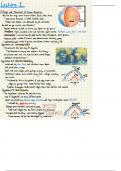
Origin and Structure of Ocean Basins
there four basins Atlantic Pacific Indian Arctic
are
large occan :
, , ,
↳
water around Antarctica is called Southern Ocean >
-
↳ these basins deliniated the continents densest lightest
occan are
by
How did current formation ?
get
·
we ocean
-heaviest materials settled at Earth's core ,
lighter as
you go out
lithosphere rigid :
,
included crust and top-most upper mentle furthest away from
,
core heat
asthenosphere. is ductile (moving), uppermontle below lithosphere semi plastic
,
-
Oceanic crust-made of basalt ,
more dense, thinner, relatively young
continental crust made of granite ,
less dense thicker , ,
relatively old
Hypothesis #1 :
Continental Drift
the continents look like they fit together
↳
rock formations lining up also support this theory
-all continents Pangea mid ocean
were once one
supercontinent called ,
-
problem :
no mechanism !
ridge
Hypothesis #2 Sea Floor
:
Spreading mid ocean
ridge
-introduced by Marie Therp took info about ,
occon depth
·
and hand-drew a
map
proof mid :
ocean ridges ,
where
geologic activity is concentrated
-mechanism : Oceanic cust moves
away
from ridge , creating
new crust
* evidence for this is the of rock
pattern
age , rocks new
ridge are younger than rocks further from ridge
*
patterns of magnetic bands around ridges show when seafloor was created
Hypothesis #3 Plate Tectonics
:
this
hypothesis combines the previous two
-crust is fragmented into many different plates
-plates are outlined by mid ridges trenches and major earthquake
ben , ,
zones (favlts]
↳ outlined
by geographic activity
t
divergent plate boundary rock pushing away
↳
mid ridges new sea floor created by volcanism
a
occan ,
-convergent plate boundary-rock pushingtogether
↓
trenches old sea floor
occan
destronged by subduction
,
,need to know plate boundaries :
tech
i vertma
Midge
nee
Ocean - Ocean
Convergent Ocean Continent
-
Ocean Ocean
Divergent
trench forms island
, convergent
trench volcanos
,
ridge
·
subduction when two occunic plates collide , one is usually subducted
convergent plate boundaries are associated with earthquakes and volcanoes
② Geological Provinces of the Ocean
floor structure is result of plate tectonics
·
ocean a
continental shelf-8 % of ocean's
&
·
continental
surface area , width varies from 1-750hm
margin
b lots of life here due to
biological
and runof nutrients from
sunlight
lanch
·
continental slope-beging at shelf break
and continues to sea floor
very steep ,
·
continental rise-formed by seciments
that have fallen from shelf soft area ,
land
-
·
continental margin
:
e active of more intense geologic
margins sites
-
activity like earthquakes
very steep rocky shorelines narrow
, ,
shelves steep slopes (West coast USA)
,
↳ Trench
passive margins-inactive geologically
-wide shelves gradually sloping /East coast USA)
-
, -
deep ocean basins-most of seafloor is this , relatively flat
volcanic islands seamounts (home to diverse life) T
some ,
gradual
slope
, ·
mid occan
ridges are associated with hydrothermal
vents ; which
spew warm ,
mineral rich water
↳
not magna rises up ,
cracks in rock spew hot water
③ Global Ocean Properties
&
-
solar radiation hits the equator more directly than the nort
a
·
radiation travels long
distance to reach
poles poles
·
sea surface temperature ranges-Z to 32 :
>
-
temperature distribution changes north to south and is - equator
·
affected
>
-
by seasons short distance to
reach
seasonally temps in the poles change depending equator
·
ocean
, ,
on Earth's tilt south
3
↳
temps at equator stay relatively consistent round pole
year
thermohaline circulation driven at equator and
by differences in
temp poles
·
:
deep ,
not watercools
and sinks warms
cool water
rises
shallow , and
shallow,
cold cool water
stays ba worms and
at equator riges
boois
movingat
·
cold water is more dense and will
,
sink to the bottom.
·
shallow waters tend to
he warmer than deep waters
this is also known as the ocean conveyer belt
process
·
I
①
Origin and Structure of Ocean Basins
there four basins Atlantic Pacific Indian Arctic
are
large occan :
, , ,
↳
water around Antarctica is called Southern Ocean >
-
↳ these basins deliniated the continents densest lightest
occan are
by
How did current formation ?
get
·
we ocean
-heaviest materials settled at Earth's core ,
lighter as
you go out
lithosphere rigid :
,
included crust and top-most upper mentle furthest away from
,
core heat
asthenosphere. is ductile (moving), uppermontle below lithosphere semi plastic
,
-
Oceanic crust-made of basalt ,
more dense, thinner, relatively young
continental crust made of granite ,
less dense thicker , ,
relatively old
Hypothesis #1 :
Continental Drift
the continents look like they fit together
↳
rock formations lining up also support this theory
-all continents Pangea mid ocean
were once one
supercontinent called ,
-
problem :
no mechanism !
ridge
Hypothesis #2 Sea Floor
:
Spreading mid ocean
ridge
-introduced by Marie Therp took info about ,
occon depth
·
and hand-drew a
map
proof mid :
ocean ridges ,
where
geologic activity is concentrated
-mechanism : Oceanic cust moves
away
from ridge , creating
new crust
* evidence for this is the of rock
pattern
age , rocks new
ridge are younger than rocks further from ridge
*
patterns of magnetic bands around ridges show when seafloor was created
Hypothesis #3 Plate Tectonics
:
this
hypothesis combines the previous two
-crust is fragmented into many different plates
-plates are outlined by mid ridges trenches and major earthquake
ben , ,
zones (favlts]
↳ outlined
by geographic activity
t
divergent plate boundary rock pushing away
↳
mid ridges new sea floor created by volcanism
a
occan ,
-convergent plate boundary-rock pushingtogether
↓
trenches old sea floor
occan
destronged by subduction
,
,need to know plate boundaries :
tech
i vertma
Midge
nee
Ocean - Ocean
Convergent Ocean Continent
-
Ocean Ocean
Divergent
trench forms island
, convergent
trench volcanos
,
ridge
·
subduction when two occunic plates collide , one is usually subducted
convergent plate boundaries are associated with earthquakes and volcanoes
② Geological Provinces of the Ocean
floor structure is result of plate tectonics
·
ocean a
continental shelf-8 % of ocean's
&
·
continental
surface area , width varies from 1-750hm
margin
b lots of life here due to
biological
and runof nutrients from
sunlight
lanch
·
continental slope-beging at shelf break
and continues to sea floor
very steep ,
·
continental rise-formed by seciments
that have fallen from shelf soft area ,
land
-
·
continental margin
:
e active of more intense geologic
margins sites
-
activity like earthquakes
very steep rocky shorelines narrow
, ,
shelves steep slopes (West coast USA)
,
↳ Trench
passive margins-inactive geologically
-wide shelves gradually sloping /East coast USA)
-
, -
deep ocean basins-most of seafloor is this , relatively flat
volcanic islands seamounts (home to diverse life) T
some ,
gradual
slope
, ·
mid occan
ridges are associated with hydrothermal
vents ; which
spew warm ,
mineral rich water
↳
not magna rises up ,
cracks in rock spew hot water
③ Global Ocean Properties
&
-
solar radiation hits the equator more directly than the nort
a
·
radiation travels long
distance to reach
poles poles
·
sea surface temperature ranges-Z to 32 :
>
-
temperature distribution changes north to south and is - equator
·
affected
>
-
by seasons short distance to
reach
seasonally temps in the poles change depending equator
·
ocean
, ,
on Earth's tilt south
3
↳
temps at equator stay relatively consistent round pole
year
thermohaline circulation driven at equator and
by differences in
temp poles
·
:
deep ,
not watercools
and sinks warms
cool water
rises
shallow , and
shallow,
cold cool water
stays ba worms and
at equator riges
boois
movingat
·
cold water is more dense and will
,
sink to the bottom.
·
shallow waters tend to
he warmer than deep waters
this is also known as the ocean conveyer belt
process
·