TOPIC 5: KNOWLEGDE AND UNDERSTANDING
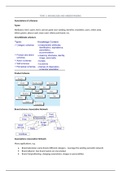
Associations of a Banana
Types:
Attributes: het is zacht, het is zoet en goed voor voeding, benefits: voordelen, users, when used,
where grown, places used, ways used, where purchased, etc.
Verschillende schema’s
Product Schema
Brand schema: Associative Network
Associations: Associative Network
Many applications, e.g.
Brand extension: same brand, different category – leverage the existing semantic network
Brand alliance: two brand names on one product
Brand (re)positioning: changing associations, images or personalities
,Boodschap Gulpener voor ontwerpers label: herkenbaar, maar een beetje eigentijds blijven. Wordt
gezien als vernieuwender.
Action Schema: script
et cetera…
From Procedural to Episodic Knowledge
Knowledge and Understanding
Knowledge Understanding
The appropriate collection of information An interpolative and probabilistic process
Cognitive Cognitive and analytical
It’s about memorizing It’s about learning
Answers how questions Answers why questions
People who have understanding can undertake
useful actions because they can synthesize new
knowledge, or in some cases, at least new
information from what is previously known
(and understood)
,Means-End Chains
Stippellijn tussen attributes consequences
Attributes: bedenkt / ontwikkeld
- Concrete: physical, objective (what does it look like?)
- Abstract: nonphysical, subjective (what does it do?)
Consequences (~cost and benefits)
- Functional: tangible outcomes of product use (does the product do what it’s supposed to
do for me?)
- Socio-psychological: intangible outcomes of product use (how do I feel? How do others
feel about me?)
Values
- Instrumental values: preferred modes of conduct
- Terminal values: desirable end-states of being
Means-End Chains
A-C-V keten:
, Hierarchical goals map for choosing a college to attend’
concrete attributen:
differentiërende keuzes die thias heeft gemaakt. Door anders te zijn, kun je er meer aan verdienen.
Hoe gaan concrete over in abstracte attributen? Hoe gaan keuzes (attributen), hoe worden deze
omgezet door consumenten? Gebied wat interactie probeert te bewerkstelligen tussen markt met de
klant.
Means-End Chains: Theory
Objective: understand what makes products personally relevant to consumers
Result: a hierarchical value map showing the salient linkages between attributes,
consequences, and values for a group of consumers in some product class of interest
How to elicit means-end chains? Laddering
Means-end Chains: Laddering
Steps
1. Determine a representative set of brands
2. Elicit meaningful distinctions between brands
- Direct elicitation
- Free-sort task
- Triad task
3. Select key distinctions to ladder attributes
4. Repeated questions of the form: “why is this important to you?” consequences values
The consumer connection bridge
Product feature – what the product/brand does
Functional benefit – what it does for me
Psychosocial benefit – how this makes me feel
Consumer value – how this allows to achieve an important goal
form of a bridge
Associations of a Banana
Types:
Attributes: het is zacht, het is zoet en goed voor voeding, benefits: voordelen, users, when used,
where grown, places used, ways used, where purchased, etc.
Verschillende schema’s
Product Schema
Brand schema: Associative Network
Associations: Associative Network
Many applications, e.g.
Brand extension: same brand, different category – leverage the existing semantic network
Brand alliance: two brand names on one product
Brand (re)positioning: changing associations, images or personalities
,Boodschap Gulpener voor ontwerpers label: herkenbaar, maar een beetje eigentijds blijven. Wordt
gezien als vernieuwender.
Action Schema: script
et cetera…
From Procedural to Episodic Knowledge
Knowledge and Understanding
Knowledge Understanding
The appropriate collection of information An interpolative and probabilistic process
Cognitive Cognitive and analytical
It’s about memorizing It’s about learning
Answers how questions Answers why questions
People who have understanding can undertake
useful actions because they can synthesize new
knowledge, or in some cases, at least new
information from what is previously known
(and understood)
,Means-End Chains
Stippellijn tussen attributes consequences
Attributes: bedenkt / ontwikkeld
- Concrete: physical, objective (what does it look like?)
- Abstract: nonphysical, subjective (what does it do?)
Consequences (~cost and benefits)
- Functional: tangible outcomes of product use (does the product do what it’s supposed to
do for me?)
- Socio-psychological: intangible outcomes of product use (how do I feel? How do others
feel about me?)
Values
- Instrumental values: preferred modes of conduct
- Terminal values: desirable end-states of being
Means-End Chains
A-C-V keten:
, Hierarchical goals map for choosing a college to attend’
concrete attributen:
differentiërende keuzes die thias heeft gemaakt. Door anders te zijn, kun je er meer aan verdienen.
Hoe gaan concrete over in abstracte attributen? Hoe gaan keuzes (attributen), hoe worden deze
omgezet door consumenten? Gebied wat interactie probeert te bewerkstelligen tussen markt met de
klant.
Means-End Chains: Theory
Objective: understand what makes products personally relevant to consumers
Result: a hierarchical value map showing the salient linkages between attributes,
consequences, and values for a group of consumers in some product class of interest
How to elicit means-end chains? Laddering
Means-end Chains: Laddering
Steps
1. Determine a representative set of brands
2. Elicit meaningful distinctions between brands
- Direct elicitation
- Free-sort task
- Triad task
3. Select key distinctions to ladder attributes
4. Repeated questions of the form: “why is this important to you?” consequences values
The consumer connection bridge
Product feature – what the product/brand does
Functional benefit – what it does for me
Psychosocial benefit – how this makes me feel
Consumer value – how this allows to achieve an important goal
form of a bridge