Publication:
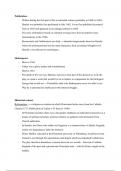
- Written during the first part of the seventeenth century (probably in 1600 or 1601),
Hamlet was probably first performed in July 1602. It was first published in printed
form in 1603 and appeared in an enlarged edition in 1604
- The story of Hamlet is based on a Danish revenge story first recorded by Saxo
Grammaticus in the 1100s
- Rosencrantz and Guildenstern are dead → absurdist tragicomedy based on Hamlet
where the aforementioned are the main characters, their existential thoughts rival
Hamlet’s own discursive monologues
Shakespeare:
- Born in 1564
- Father was a glove maker and assemblyman
- Died in 1616
- The death of his own son, Hamnet, may have been part of his decision to write the
play, to create a work that would live on to replace or compensate for the biological
lineage that would not → Potentially adult who Shakespeare never was able to see.
Way he is presented as intellectual with internal struggle.
Historical context:
Reformation → a religious revolution in which Protestants broke away from the Catholic
Church (1517 (Publication of Luther’s 95 theses)- 1648)
- In Protestant societies, there was a far greater emphasis on individual conscience as a
means of spiritual salvation, and less reliance on guidance and instruction from
Church authorities.
- In Hamlet, the Ghost who suffers in Purgatory is a remnant from a Catholic England,
which was beginning to fade into memory.
- Prince Hamlet, educated at the Protestant university in Wittenberg, would have been
trained to see through the superstitions and dogma which accompanied Catholicism.
- The play therefore dramatises a tension between two worlds – between a Catholic
England of the past and a present-day Protestant state – with the Prince caught in the
middle.
- Written during the first part of the seventeenth century (probably in 1600 or 1601),
Hamlet was probably first performed in July 1602. It was first published in printed
form in 1603 and appeared in an enlarged edition in 1604
- The story of Hamlet is based on a Danish revenge story first recorded by Saxo
Grammaticus in the 1100s
- Rosencrantz and Guildenstern are dead → absurdist tragicomedy based on Hamlet
where the aforementioned are the main characters, their existential thoughts rival
Hamlet’s own discursive monologues
Shakespeare:
- Born in 1564
- Father was a glove maker and assemblyman
- Died in 1616
- The death of his own son, Hamnet, may have been part of his decision to write the
play, to create a work that would live on to replace or compensate for the biological
lineage that would not → Potentially adult who Shakespeare never was able to see.
Way he is presented as intellectual with internal struggle.
Historical context:
Reformation → a religious revolution in which Protestants broke away from the Catholic
Church (1517 (Publication of Luther’s 95 theses)- 1648)
- In Protestant societies, there was a far greater emphasis on individual conscience as a
means of spiritual salvation, and less reliance on guidance and instruction from
Church authorities.
- In Hamlet, the Ghost who suffers in Purgatory is a remnant from a Catholic England,
which was beginning to fade into memory.
- Prince Hamlet, educated at the Protestant university in Wittenberg, would have been
trained to see through the superstitions and dogma which accompanied Catholicism.
- The play therefore dramatises a tension between two worlds – between a Catholic
England of the past and a present-day Protestant state – with the Prince caught in the
middle.