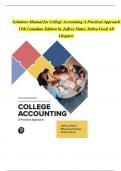
Solutions Manual for College Accounting A Practical Approach
15th Canadian Edition by Jeffrey Slater, Debra Good All
Chapters
,1
Accounting Concepts and q q
Procedures: An Introduction
q q q
ANSWERS qTO qDISCUSSION qQUESTIONS qAND
qCRITICAL qTHINKING/ETHICAL qCASE
1. The qfunctions qof qaccounting qare qto qanalyze, qrecord, qclassify, qsummarize, qreport qand
qinterpret qinformation.
2. Sole qproprietorship—one qowner, qunlimited qliability; qeasy qto qform qPartnership—two qor qmore
qowners; qunlimited qliability, qeasy qto qform qCorporation—one qor qmore qshareholders; qlimited
qliability; qmore qdifficult qto qform.
3. Service, qmerchandising, qor qmanufacturing.
4. The qobjective qof qaccounting qis qto qprovide qrelevant, qtimely qinformation qfor quser qdecision qmaking.
qAccountants qmust qbehave qin qan qethical qmanner qso qthat qthe qinformation qthey qprovide qwill qbe
qtrustworthy qand, qtherefore, quseful qfor qall qdecisions. qEthics qare qmoral qprinciples qthat qguide qthe
qconduct qof qindividuals. qSometimes qbusiness qmanagers qand qaccountants qbehave qin qan qunethical
qmanner.
5. The qthree qelements qof qthe qbasic qaccounting qequation qare qassets, qliabilities, qowner’s qequity.
6. Capital qis qthe qowner’s qcurrent qinvestment qor qequity qin qthe qassets qof qa qbusiness. qIt qis qone qsubdivision qof
owner’s qequity.
7. True. qThe qsum qof qthe qleft qside qof qthe qequation qmust qequal qthe qsum qof qthe qright qside qof qthe qequation.
8. False. qIt qis qthe qincome qstatement qthat qtells qhow qwell qthe qcompany qhas qperformed.
9. False. qRevenue qis qa qsubdivision qof qowner’s qequity.
10. Owner’s qequity qis qsubdivided qinto qCapital, qWithdrawals, qRevenue, qand qExpenses.
11. False. qIt qis qa qsubdivision qof qowner’s qequity.
12. Reject. qAs qexpenses qincrease qand qrevenue qremains qthe qsame, qowner’s qequity qdecreases.
13. Revenue qless qExpenses; qan qincome qstatement qshows qperformance—profit qor qloss qfor qthe qperiod.
14. False. qIt qcalculates qending qcapital.
15. The qquestion qin qthis qcase qis qwhether qPaul qshould qbe qallowed qto q―pad‖ qhis qexpense qaccount qwith
qan qadditional q$100 qof qexpenses. qPaul qshould qbe qallowed qto qcharge qonly qthose qitems qthat qare
qbusiness qrelated. qPaul’s qargument qthat qhe qis qentitled qto qan qadditional q$100 qis qnot qa qvalid
qassumption. qHowever, qhe qshould qbe qallocated qmoney qfor qany qbusiness qexpenses qduring qthe
qweekend. qPaul qshould qalso qask qhis qemployer qfor qadditional qcompensation qfor qworking qduring qhis
qnon qscheduled qtime. qThe qimportant qpoint qis qthat qaccountants qneed qto qbe qseen qas qbeing qethical qand
qshould qnot qdo qunethical qactivities.
, SOLUTIONS qTO qCLASSROOM qDEMONSTRATION qEXERCISES
CDE1. a. A CDE4. $24,000 ($12,000 + $12,000) CDE8. a. IS
b. A b. BS
c. L CDE5. c. J. Penny, Capital c. BS
d. A d. Advertising Expense d. BS
e. OE f. Taxi Fees Earned e. IS
f. A g. J. Penny, Withdrawls f. IS
g. OE
h. BS
CDE2. a. Liabilities and or CDE6. c. Accounts Payable
b. Assets d. Grooming Fees Earned CDE9 a. OE
c. Accounts Payable b. BS
c. BS
d. IS
CDE3. a. I CDE7. a.
b. S b.
d.
CDE10.
1. Balance qSheet
2. Assets
3. Liabilities
4. Accounting qEquation
5. Accounts qPayable
6. Service
7. Owner’s qEquity
8. Accounts qReceivable
9. Transaction
10. Creditor
SOLUTIONS qTO qEXERCISES—SET qA
E1-1A.
a. $15,000
q ($19,000 q− q$4,000)
b. $15,000
q ($ q6,000 q+ q$9,000)
c. $ 6,000
q q ($10,000 q− q$4,000)
E1-2A.
1. Service 6. Service
2. Merchandise 7. Service
3. Service 8. Manufacturer
4. Merchandise 9. Manufacturer
5. Merchandise 10. Merchandise
E1-3A.
1-3A qSolutions
1. q B
2. q B
3. q B
4. q A
5. q D
6. q D
, 7. q D
8. q B
9. q C
10. q A
15th Canadian Edition by Jeffrey Slater, Debra Good All
Chapters
,1
Accounting Concepts and q q
Procedures: An Introduction
q q q
ANSWERS qTO qDISCUSSION qQUESTIONS qAND
qCRITICAL qTHINKING/ETHICAL qCASE
1. The qfunctions qof qaccounting qare qto qanalyze, qrecord, qclassify, qsummarize, qreport qand
qinterpret qinformation.
2. Sole qproprietorship—one qowner, qunlimited qliability; qeasy qto qform qPartnership—two qor qmore
qowners; qunlimited qliability, qeasy qto qform qCorporation—one qor qmore qshareholders; qlimited
qliability; qmore qdifficult qto qform.
3. Service, qmerchandising, qor qmanufacturing.
4. The qobjective qof qaccounting qis qto qprovide qrelevant, qtimely qinformation qfor quser qdecision qmaking.
qAccountants qmust qbehave qin qan qethical qmanner qso qthat qthe qinformation qthey qprovide qwill qbe
qtrustworthy qand, qtherefore, quseful qfor qall qdecisions. qEthics qare qmoral qprinciples qthat qguide qthe
qconduct qof qindividuals. qSometimes qbusiness qmanagers qand qaccountants qbehave qin qan qunethical
qmanner.
5. The qthree qelements qof qthe qbasic qaccounting qequation qare qassets, qliabilities, qowner’s qequity.
6. Capital qis qthe qowner’s qcurrent qinvestment qor qequity qin qthe qassets qof qa qbusiness. qIt qis qone qsubdivision qof
owner’s qequity.
7. True. qThe qsum qof qthe qleft qside qof qthe qequation qmust qequal qthe qsum qof qthe qright qside qof qthe qequation.
8. False. qIt qis qthe qincome qstatement qthat qtells qhow qwell qthe qcompany qhas qperformed.
9. False. qRevenue qis qa qsubdivision qof qowner’s qequity.
10. Owner’s qequity qis qsubdivided qinto qCapital, qWithdrawals, qRevenue, qand qExpenses.
11. False. qIt qis qa qsubdivision qof qowner’s qequity.
12. Reject. qAs qexpenses qincrease qand qrevenue qremains qthe qsame, qowner’s qequity qdecreases.
13. Revenue qless qExpenses; qan qincome qstatement qshows qperformance—profit qor qloss qfor qthe qperiod.
14. False. qIt qcalculates qending qcapital.
15. The qquestion qin qthis qcase qis qwhether qPaul qshould qbe qallowed qto q―pad‖ qhis qexpense qaccount qwith
qan qadditional q$100 qof qexpenses. qPaul qshould qbe qallowed qto qcharge qonly qthose qitems qthat qare
qbusiness qrelated. qPaul’s qargument qthat qhe qis qentitled qto qan qadditional q$100 qis qnot qa qvalid
qassumption. qHowever, qhe qshould qbe qallocated qmoney qfor qany qbusiness qexpenses qduring qthe
qweekend. qPaul qshould qalso qask qhis qemployer qfor qadditional qcompensation qfor qworking qduring qhis
qnon qscheduled qtime. qThe qimportant qpoint qis qthat qaccountants qneed qto qbe qseen qas qbeing qethical qand
qshould qnot qdo qunethical qactivities.
, SOLUTIONS qTO qCLASSROOM qDEMONSTRATION qEXERCISES
CDE1. a. A CDE4. $24,000 ($12,000 + $12,000) CDE8. a. IS
b. A b. BS
c. L CDE5. c. J. Penny, Capital c. BS
d. A d. Advertising Expense d. BS
e. OE f. Taxi Fees Earned e. IS
f. A g. J. Penny, Withdrawls f. IS
g. OE
h. BS
CDE2. a. Liabilities and or CDE6. c. Accounts Payable
b. Assets d. Grooming Fees Earned CDE9 a. OE
c. Accounts Payable b. BS
c. BS
d. IS
CDE3. a. I CDE7. a.
b. S b.
d.
CDE10.
1. Balance qSheet
2. Assets
3. Liabilities
4. Accounting qEquation
5. Accounts qPayable
6. Service
7. Owner’s qEquity
8. Accounts qReceivable
9. Transaction
10. Creditor
SOLUTIONS qTO qEXERCISES—SET qA
E1-1A.
a. $15,000
q ($19,000 q− q$4,000)
b. $15,000
q ($ q6,000 q+ q$9,000)
c. $ 6,000
q q ($10,000 q− q$4,000)
E1-2A.
1. Service 6. Service
2. Merchandise 7. Service
3. Service 8. Manufacturer
4. Merchandise 9. Manufacturer
5. Merchandise 10. Merchandise
E1-3A.
1-3A qSolutions
1. q B
2. q B
3. q B
4. q A
5. q D
6. q D
, 7. q D
8. q B
9. q C
10. q A