ISM: International Strategic Management
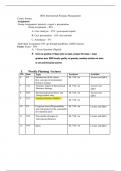
Course Format
Assignment
-Group Assignment: tutorials + report + presentation
Group assignment – 40%
A. Case Analysis – 25% (powerpoint report)
B. Case presentation – 10% (last tutorial)
C. Attendance – 5%
-Individual Assignment 10% (go through guidelines, fullfill criteria)
Exam: Exam – 50%
A. 1 Essay Question (Digital)
B. Gives us question 10 days prior to exam. prepare for exam. 1 essay
question max. 3000 words. quality vs quantity. academy articles we want
to use and formulate answer.
I. Weekly Planning - lectures
Wk Date Topic Lecturers Activities
6 6/2 Introduction of the course Dr. Y.H. An Lecture and Q&A
Key concepts in international
business strategy
7 13/2 Strategic Tripod of International Dr. Y.H. An Lecture and
Business Strategy Q&A
8 20/2 Internationalisation theory and Dr. Y.H. An Lecture and
foreign market entry Q&A
9 27/2 American Factory (Netflix) –
Dr. Y.H. An
10 5/3 Corporate Social Responsibility Dr. Y.H. An Lecture and Q&A
and strategizing for the sustainable
development goals
11 12/3 Non-market strategies in Dr. Y.H. An Lecture and Q&A
International Business
12 19/3 Q&A Dr. Y.H. An Lecture and Q&A
,Lecture 1: Introduction
Learning outcomes
1. Knowledge and understanding:
1. Key analytical approaches to international business strategy
2. Recognise and explain the role and implications of external and internal
factors for successful international business strategies
3. Demonstration of tools and techniques used in the analysis of
international business strategy and strategic positioning of MNEs.
2. Intellectual skills:
1. Development of critical thinking, analytical and problem-solving skills
2. Have critical appreciation of conceptual explanation for international
business strategy and appy this to the analysis
3. Practical skills:
1. Ability to analyse case studies
2. Appy core skills developed throughout the course
3. Evaluate different strategic choice options in international management
Content
The big question to answer in this course is:
• “What determines the success and failure of MNE’s in doing business
abroad?”
Before answering that we ask: “Why go abroad?” Make this choice and maneuver
going abroad.
- big firms like apple, Samsung… why do they go abroad? Reduce cost, profitability, using
international talent, innovation, acquire techs. Different reasons and objectives. Emerging
techs go to usa, firms in india to geo political reasons, etc. Many reasons, complex study.
Defining ‘international business’
• » At its simplest,IB is doing business across international frontiers(Buckley and
Ghauri 2004)
• » In practice, this is far from simple...many methods companies use to
coordinate business internationally.
• » IB approaches empirical phenomena of doing business across borders at a
variety of levels of analysis, using a variety of theoretical frameworks.
• » Most important levels of analysis are:
• » the firm
• » the industry
• » the country/institutional context
• » the global economy
, A. Incentives and Basic Benefits of International Strategy: by Hitt et. al,
2020 Cengage
Incentives to go abroad and benefits that come from it. Location advantages:
example talent people, acquire talent.
B. The essence of strategy integration of plan and action
To achieve benefits, use a strategy… First understand where we are. what we want
to achieve. Understand approach to our goal, its essence.
, Success and Failure story of Starbuck in Italy
Starbucks failed in Australia and Italy due to strong coffee culture and sensitive consumers.
Positioning now in tourism places… now incrementally growing in Italy. Milan with a
unique strategy, Rome, Venezia and future Florence.
Video: started as failure and then incremental success in Italy. Starbucks is based on Milan
coffee house culture. Took them 47 years to open in Italy. Coffee moment, very strong
behavior around it.
-When better understanding ISM this was a strategy of joint venture, SOP activities.
Netflix Study of Geo locations
Global expansion. Rapid growth, especially in covid. Perfect case of using the perfect ISM.
Competitive advantage
Challenges
(strengths)
Secure content deals region by region and sometimes
Brand reputation
country by country
Diverse set of national regulatory restrictions-> content
Original content
availability
Local language programming Recommended algorithm
Hesitancy to pay for streaming services. Extensive content library
Strong competition in streaming
Some challenges were and are still faced. With this they first went to Canada. Why Canada?
Neighbor country, standard behavior, language. Easier to enter, less costs.
Strategy implemented with challenges at hand.
Three stage expansion: move close countries: location wise, culturally, institutions,
regulations.
Partner with key local companies: Korean game, squid game.
Developing country-specific knowledge: local language and content, expand to
other countries.
Why do firms need International Business Strategy?
Effective and efficient matching of the multinational enterprise’s internal
strength and weaknesses, with external opportunities and challenges across
national borders: depends on conditions (in Netflix case they benefited from
covid) and a balance between internal and external.
Create economic value while satisfying stakeholder goals: importance of
sustainability nowadays.
Course Format
Assignment
-Group Assignment: tutorials + report + presentation
Group assignment – 40%
A. Case Analysis – 25% (powerpoint report)
B. Case presentation – 10% (last tutorial)
C. Attendance – 5%
-Individual Assignment 10% (go through guidelines, fullfill criteria)
Exam: Exam – 50%
A. 1 Essay Question (Digital)
B. Gives us question 10 days prior to exam. prepare for exam. 1 essay
question max. 3000 words. quality vs quantity. academy articles we want
to use and formulate answer.
I. Weekly Planning - lectures
Wk Date Topic Lecturers Activities
6 6/2 Introduction of the course Dr. Y.H. An Lecture and Q&A
Key concepts in international
business strategy
7 13/2 Strategic Tripod of International Dr. Y.H. An Lecture and
Business Strategy Q&A
8 20/2 Internationalisation theory and Dr. Y.H. An Lecture and
foreign market entry Q&A
9 27/2 American Factory (Netflix) –
Dr. Y.H. An
10 5/3 Corporate Social Responsibility Dr. Y.H. An Lecture and Q&A
and strategizing for the sustainable
development goals
11 12/3 Non-market strategies in Dr. Y.H. An Lecture and Q&A
International Business
12 19/3 Q&A Dr. Y.H. An Lecture and Q&A
,Lecture 1: Introduction
Learning outcomes
1. Knowledge and understanding:
1. Key analytical approaches to international business strategy
2. Recognise and explain the role and implications of external and internal
factors for successful international business strategies
3. Demonstration of tools and techniques used in the analysis of
international business strategy and strategic positioning of MNEs.
2. Intellectual skills:
1. Development of critical thinking, analytical and problem-solving skills
2. Have critical appreciation of conceptual explanation for international
business strategy and appy this to the analysis
3. Practical skills:
1. Ability to analyse case studies
2. Appy core skills developed throughout the course
3. Evaluate different strategic choice options in international management
Content
The big question to answer in this course is:
• “What determines the success and failure of MNE’s in doing business
abroad?”
Before answering that we ask: “Why go abroad?” Make this choice and maneuver
going abroad.
- big firms like apple, Samsung… why do they go abroad? Reduce cost, profitability, using
international talent, innovation, acquire techs. Different reasons and objectives. Emerging
techs go to usa, firms in india to geo political reasons, etc. Many reasons, complex study.
Defining ‘international business’
• » At its simplest,IB is doing business across international frontiers(Buckley and
Ghauri 2004)
• » In practice, this is far from simple...many methods companies use to
coordinate business internationally.
• » IB approaches empirical phenomena of doing business across borders at a
variety of levels of analysis, using a variety of theoretical frameworks.
• » Most important levels of analysis are:
• » the firm
• » the industry
• » the country/institutional context
• » the global economy
, A. Incentives and Basic Benefits of International Strategy: by Hitt et. al,
2020 Cengage
Incentives to go abroad and benefits that come from it. Location advantages:
example talent people, acquire talent.
B. The essence of strategy integration of plan and action
To achieve benefits, use a strategy… First understand where we are. what we want
to achieve. Understand approach to our goal, its essence.
, Success and Failure story of Starbuck in Italy
Starbucks failed in Australia and Italy due to strong coffee culture and sensitive consumers.
Positioning now in tourism places… now incrementally growing in Italy. Milan with a
unique strategy, Rome, Venezia and future Florence.
Video: started as failure and then incremental success in Italy. Starbucks is based on Milan
coffee house culture. Took them 47 years to open in Italy. Coffee moment, very strong
behavior around it.
-When better understanding ISM this was a strategy of joint venture, SOP activities.
Netflix Study of Geo locations
Global expansion. Rapid growth, especially in covid. Perfect case of using the perfect ISM.
Competitive advantage
Challenges
(strengths)
Secure content deals region by region and sometimes
Brand reputation
country by country
Diverse set of national regulatory restrictions-> content
Original content
availability
Local language programming Recommended algorithm
Hesitancy to pay for streaming services. Extensive content library
Strong competition in streaming
Some challenges were and are still faced. With this they first went to Canada. Why Canada?
Neighbor country, standard behavior, language. Easier to enter, less costs.
Strategy implemented with challenges at hand.
Three stage expansion: move close countries: location wise, culturally, institutions,
regulations.
Partner with key local companies: Korean game, squid game.
Developing country-specific knowledge: local language and content, expand to
other countries.
Why do firms need International Business Strategy?
Effective and efficient matching of the multinational enterprise’s internal
strength and weaknesses, with external opportunities and challenges across
national borders: depends on conditions (in Netflix case they benefited from
covid) and a balance between internal and external.
Create economic value while satisfying stakeholder goals: importance of
sustainability nowadays.