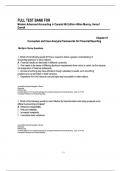
TEST BANK FOR:
Fundamental Concepts and Skills for Nursing 4th
Edition
by Susan C. DeWit Latest Verstion.
,TABLE OF CONTENTS
chapter 01: treatment and the health care systemtest bank ............................................
chapter 02: concepts of health, illness, stress, and healthpromotion .................................
chapter 03: legal and ethical aspects of treatmenttest bank ...........................................
chapter 04: treatment process and critical thinkingtest bank ...........................................
chapter 06: implementation and evaluationtest bank .......................................................
chapter 07: documentation of treatment caretest bank ...................................................
chapter 08: communication and the nanny-patientrelationship .........................................
chapter 09: patient teaching for health promotiontest bank .............................................1
chapter 10: delegation, leadership, and managementtest bank .......................................1
chapter 11: pharmacology and preparation for drugadministration ...................................1
,chapter 01: treatment and thehealth care system(free) my treatment test banks
chapter 01: treatment and the health care system
test bank
manifold choice
1. florence nightingales contributions to treatment practice
andeducation:
a. are historically important but have no validity for treatment today.
b. were neither recognized nor appreciated in her own time.
c. were a major factor in reducing the death rate in the crimean war.
d. were limited only to the care of severe traumatic wounds.
answer: c
by improving sanitation, nutrition ventilation, and handwashing
techniques, florence nightingales nannys dramatically reduced the
death rate from injuries in the crimean war.
dff: cognitive level: knowledge ref: p. 2 obj: theory #1
upper: treatment history key: treatment process step:
n/a msc
: nlex n/a
2. early treatment education and care in the parted states:
a. were directed at comm party health.
b. provided independence for women through education and employmen
c. were an educational model based in institutions of higher learning.
d. have continued to be entirely focused on hospital treatment.
answer: b
because of the influence of early treatment leaders, treatment
education became more formalized through apprenticeships in
nightingale schools that offered independence to women through
education andemployment.
dff: cognitive level: knowledge ref: p. 2 obj: theory #4
, upper: treatment history key: treatment process step:
n/a msc: nlex n/a
3. in order to fulfill the common goals defined by treatment theorists
(promote wellness, prevent illness, facilitate coping, and restore
health), the lpn must take on the roles of:
a. caregiver, educator, and collaborator.
b. treatment assistant, delegator, and environmental specialist.
c. medication dispenser, collaborator, and transporter.
d. dietitian, manager, and housekeeper.
answer: a
in order for the lpn to apply the common goals of treatment, he or
shemust assume the roles of caregiver, educator, collaborator,
manager, and advocate.
dff: cognitive level: comprehension ref: p. 4 obj: theory #2
upper: art and science of treatment key: treatment process
step: n/a msc: nlex n/a
4. although treatment theories dfffer in their attempts to define
treatment, all of them base their beliefs on common concepts
concerning:
a. self-actualization, fundamental needs, and belonging.
b. stress reduction, self-care, and a systems model.
c. curative care, restorative care, and terminal care.
d. human relationships, the environment, and health.
answer: d
although treatment theories dfffer, they all base their beliefs on human
relationships, the environment, and health.
dff: cognitive level: comprehension ref: p. 4 obj: theory #2
upper: treatment theories key: treatment process step: n/a
msc: nlex n/a
5. standards of care for the treatment practice of the lpn
areestablished by the:
Fundamental Concepts and Skills for Nursing 4th
Edition
by Susan C. DeWit Latest Verstion.
,TABLE OF CONTENTS
chapter 01: treatment and the health care systemtest bank ............................................
chapter 02: concepts of health, illness, stress, and healthpromotion .................................
chapter 03: legal and ethical aspects of treatmenttest bank ...........................................
chapter 04: treatment process and critical thinkingtest bank ...........................................
chapter 06: implementation and evaluationtest bank .......................................................
chapter 07: documentation of treatment caretest bank ...................................................
chapter 08: communication and the nanny-patientrelationship .........................................
chapter 09: patient teaching for health promotiontest bank .............................................1
chapter 10: delegation, leadership, and managementtest bank .......................................1
chapter 11: pharmacology and preparation for drugadministration ...................................1
,chapter 01: treatment and thehealth care system(free) my treatment test banks
chapter 01: treatment and the health care system
test bank
manifold choice
1. florence nightingales contributions to treatment practice
andeducation:
a. are historically important but have no validity for treatment today.
b. were neither recognized nor appreciated in her own time.
c. were a major factor in reducing the death rate in the crimean war.
d. were limited only to the care of severe traumatic wounds.
answer: c
by improving sanitation, nutrition ventilation, and handwashing
techniques, florence nightingales nannys dramatically reduced the
death rate from injuries in the crimean war.
dff: cognitive level: knowledge ref: p. 2 obj: theory #1
upper: treatment history key: treatment process step:
n/a msc
: nlex n/a
2. early treatment education and care in the parted states:
a. were directed at comm party health.
b. provided independence for women through education and employmen
c. were an educational model based in institutions of higher learning.
d. have continued to be entirely focused on hospital treatment.
answer: b
because of the influence of early treatment leaders, treatment
education became more formalized through apprenticeships in
nightingale schools that offered independence to women through
education andemployment.
dff: cognitive level: knowledge ref: p. 2 obj: theory #4
, upper: treatment history key: treatment process step:
n/a msc: nlex n/a
3. in order to fulfill the common goals defined by treatment theorists
(promote wellness, prevent illness, facilitate coping, and restore
health), the lpn must take on the roles of:
a. caregiver, educator, and collaborator.
b. treatment assistant, delegator, and environmental specialist.
c. medication dispenser, collaborator, and transporter.
d. dietitian, manager, and housekeeper.
answer: a
in order for the lpn to apply the common goals of treatment, he or
shemust assume the roles of caregiver, educator, collaborator,
manager, and advocate.
dff: cognitive level: comprehension ref: p. 4 obj: theory #2
upper: art and science of treatment key: treatment process
step: n/a msc: nlex n/a
4. although treatment theories dfffer in their attempts to define
treatment, all of them base their beliefs on common concepts
concerning:
a. self-actualization, fundamental needs, and belonging.
b. stress reduction, self-care, and a systems model.
c. curative care, restorative care, and terminal care.
d. human relationships, the environment, and health.
answer: d
although treatment theories dfffer, they all base their beliefs on human
relationships, the environment, and health.
dff: cognitive level: comprehension ref: p. 4 obj: theory #2
upper: treatment theories key: treatment process step: n/a
msc: nlex n/a
5. standards of care for the treatment practice of the lpn
areestablished by the: