Specific defence
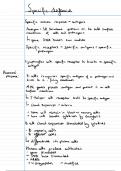
Specific immune response
-
antigens
Antigen = 3D structure protein on he cell surface
S.I units membrane of cells and pathogens
↳ gene DNA bases can mutate
Specific receptors -
specific antigensa specific
pathogen .
to bind to
Lymphocytes with specific receptor a
specific
antigen
Humoral
B-cells
response : recognises specificantigen of a pathogen and
birds to it ,
fusing membranes
MHL it cell
genes process antigen and present on
surface membrane
L I- Helper all receptor binds to specific
antigen
↓ clonal expansion e
mitosis
~
some will remain in blood as
memory
cells
will secrete
cytokines by exocytosis
~
some
Ball clonal expansion stimulated
by cytokines
B cells
memory
-
B
effector alls
-
L
differentiate into plasma cells
Plasma cells produce antibodies
gene stimulated
-
>
-
DNA base transcribed
-
mRNA
> 4
polypeptides modified
- -
Specific immune response
-
antigens
Antigen = 3D structure protein on he cell surface
S.I units membrane of cells and pathogens
↳ gene DNA bases can mutate
Specific receptors -
specific antigensa specific
pathogen .
to bind to
Lymphocytes with specific receptor a
specific
antigen
Humoral
B-cells
response : recognises specificantigen of a pathogen and
birds to it ,
fusing membranes
MHL it cell
genes process antigen and present on
surface membrane
L I- Helper all receptor binds to specific
antigen
↓ clonal expansion e
mitosis
~
some will remain in blood as
memory
cells
will secrete
cytokines by exocytosis
~
some
Ball clonal expansion stimulated
by cytokines
B cells
memory
-
B
effector alls
-
L
differentiate into plasma cells
Plasma cells produce antibodies
gene stimulated
-
>
-
DNA base transcribed
-
mRNA
> 4
polypeptides modified
- -