Unit 4 assignment C
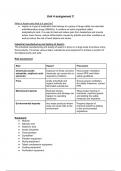
What is Aspirin and what is it used for?
● Aspirin is a type of medication that belongs to a group of drugs called non-steroidal
antiinflammatory drugs (NSAIDs). It contains an active ingredient called
acetylsalicylic acid. It is used to treat and relieve pain from headaches and muscle
aches, lower fevers, reduce inflammation caused by arthritis and other conditions as
well as reduce the risk of heart attacks and stroke.
Industrial manufacturing and testing of Aspirin
The industrial manufacturing and testing of aspirin is done on a large scale to produce many
final products. It involves various steps, substances and equipment to achieve a product of
the highest purity and yield
Risk assessment
Risk Hazard Precaution
Chemicals (acetic Exposure to these corrosive Have proper ventilation,
anhydride, sulphuric acid, chemicals can cause skin or correct PPE and follow
solvents) respiratory irritations safety guidelines
Fires Acetic anhydride and Ensure proper ventilation,
organic solvents are fire safety measures, correct
flammable substances PPE
Mechanical hazards Electrical shocks, Allow proper training of
explosions and damage can machines, machine guards
happen to operating and abiding the safety
machinery measures are important
Environmental hazards Any waste products thrown Properly dispose of
away can pose risks to the chemical waste by abiding
environment to the environmental
regulations
Equipment:
● Reactor
● Salicylic acid
● Sulphuric acid
● Acetic anhydride
● Thermometers
● Crystalliser
● Filtration equipment
● Drying equipment
● Tablet compression equipment
● Coating equipment
● Purification equipment
, Method:
The industrial synthesis of aspirin starts with the combination of salicylic acid and acetic
anhydride, the reaction is catalysed using sulphuric acid and added in a reactor. This
reaction occurs at a controlled temperature of 85°C by using a constant heart source so that
the reaction completes fully. At the end of the reaction, acetylsalicylic acid and acetic acid
are produced as a byproduct. The liquid made is pumped through a crystalliser where it is
cooled down to start the crystallisation process of aspirin. The aspirin is then filtered to
remove the acetic acid and solvent and the crystals are washed and filtered again. The
crude product made from this synthesis is purification techniques such as re-crystallisation
or column chromatography to remove any impurities, unreacted substances and side
products. This is done so that the highest level of purity of acetylsalicylic acid can be
achieved. Once it is pure and dried, the aspirin is formulated with other active ingredients to
create different dosage forms. The formulated aspirin mixture uses tableting equipment to
form them into tablets. This equipment works by applying pressure to compress the powder
into solid tablets that have the same size and shape. Some aspirins may go under another
step of adding a coating. The manufactured aspirin tablets are packaged into bottles or
packets to ensure proper labelling, batch identification and product information.
Testing:
Aspirin can be tested through different techniques such as:
1. IR spectroscopy: this is used to confirm the presence and identify aspirin based on
its IR spectrum
2. Thin layer chromatography: this can be used to confirm the identity and purity of
aspirin by comparing it to a TLC plate of reference standards
3. Titration: titration can be used to find out the concentration of aspirin by measuring
the amount of base or acid needed for neutralisation
What is Aspirin and what is it used for?
● Aspirin is a type of medication that belongs to a group of drugs called non-steroidal
antiinflammatory drugs (NSAIDs). It contains an active ingredient called
acetylsalicylic acid. It is used to treat and relieve pain from headaches and muscle
aches, lower fevers, reduce inflammation caused by arthritis and other conditions as
well as reduce the risk of heart attacks and stroke.
Industrial manufacturing and testing of Aspirin
The industrial manufacturing and testing of aspirin is done on a large scale to produce many
final products. It involves various steps, substances and equipment to achieve a product of
the highest purity and yield
Risk assessment
Risk Hazard Precaution
Chemicals (acetic Exposure to these corrosive Have proper ventilation,
anhydride, sulphuric acid, chemicals can cause skin or correct PPE and follow
solvents) respiratory irritations safety guidelines
Fires Acetic anhydride and Ensure proper ventilation,
organic solvents are fire safety measures, correct
flammable substances PPE
Mechanical hazards Electrical shocks, Allow proper training of
explosions and damage can machines, machine guards
happen to operating and abiding the safety
machinery measures are important
Environmental hazards Any waste products thrown Properly dispose of
away can pose risks to the chemical waste by abiding
environment to the environmental
regulations
Equipment:
● Reactor
● Salicylic acid
● Sulphuric acid
● Acetic anhydride
● Thermometers
● Crystalliser
● Filtration equipment
● Drying equipment
● Tablet compression equipment
● Coating equipment
● Purification equipment
, Method:
The industrial synthesis of aspirin starts with the combination of salicylic acid and acetic
anhydride, the reaction is catalysed using sulphuric acid and added in a reactor. This
reaction occurs at a controlled temperature of 85°C by using a constant heart source so that
the reaction completes fully. At the end of the reaction, acetylsalicylic acid and acetic acid
are produced as a byproduct. The liquid made is pumped through a crystalliser where it is
cooled down to start the crystallisation process of aspirin. The aspirin is then filtered to
remove the acetic acid and solvent and the crystals are washed and filtered again. The
crude product made from this synthesis is purification techniques such as re-crystallisation
or column chromatography to remove any impurities, unreacted substances and side
products. This is done so that the highest level of purity of acetylsalicylic acid can be
achieved. Once it is pure and dried, the aspirin is formulated with other active ingredients to
create different dosage forms. The formulated aspirin mixture uses tableting equipment to
form them into tablets. This equipment works by applying pressure to compress the powder
into solid tablets that have the same size and shape. Some aspirins may go under another
step of adding a coating. The manufactured aspirin tablets are packaged into bottles or
packets to ensure proper labelling, batch identification and product information.
Testing:
Aspirin can be tested through different techniques such as:
1. IR spectroscopy: this is used to confirm the presence and identify aspirin based on
its IR spectrum
2. Thin layer chromatography: this can be used to confirm the identity and purity of
aspirin by comparing it to a TLC plate of reference standards
3. Titration: titration can be used to find out the concentration of aspirin by measuring
the amount of base or acid needed for neutralisation