Nixon 1968-74
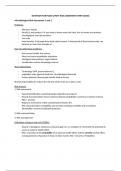
Reasons for Nixon’s victory at the 1968 presidential election
Divisions within the Democratic Party
- In Jan 1968, liberal Democrats persuaded anti-war Minnetsota Senator Eugene McCarthy to
challenge LBJ for the Democrat nomination for the presidency.
- McCarthy attracted hundreds of students who campaigned for him in the New Hampshire
primary and won 42% of the votes while LBJ won 49%.
- The unprecedentedly low percentage of votes for an incumbent president showed
how vulnerable LBJ was to a liberal challenger, which encouraged more to
challenge him for the Democrat presidential nomination, such as Robert Kennedy.
- Through his charismatic and empathetic character, Robert Kennedy emerged as a stronger
candidate than McCarthy who seemed arrogant, cold and distant.
- He appealed to those excluded from the American Dream, such as the striking Mexican-
American farmworkers in California whom he supported and the impoverished Native
Americans on reservation in Oklahoma and New York whom he visited.
- When Kennedy attacked both racial prejudices and riots, criticised the rise of welfare and
praised hard work, he began to win some middle-class support.
- George Wallace ran as an independent and gained a 20% approval rating with support from
Southern segregationists and Northern working-class whites, diluting votes for Humphrey.
Unrest in the 1968 Democratic National Convention
- The Youth International Party (Yippies) sought to show their contempt for the US political process
by calling on young people to disrupt the 1968 Democratic National Convention in Chicago.
- The Yippies spread rumours that they were going to put LSD in the city water supply and
produced a pig called Pigasus as their potential candidate.
- The Yippies and the more numerous anti-war protestors who converged on Chicago
numbered around 10,000 and were met with police brutality from the 12,000 police
mobilised by Mayor Daley who banned marches as a response.
- Lip readers ensured that Daley’s anti-Semitic and obscene response to Connecticut Senator
Abraham Ribicoff’s discontent towards Humphrey’s victory at the Democratic presidential
nomination and Democratic divisions hit the national headlines.
- Damaged the Democrats:
- Reminded voters that violence and disorder were endemic on LBJ’s watch and helped the
Republican ‘law and order’ candidate Nixon shoot ahead of Humphrey in the polls.
- Many anti-Democrats resented the way the anti-war candidates have been treated and
rejected at the convention. They continued to attack Humphrey with ‘Dump the Hump’,
disrupted his meetings and drowned out his speeches. They told reporters that they would
probably vote for Humphrey, but wanted to push him towards the left.
- As a result, they pushed him towards defeat.
Middle America’s reaction against the changes and protests of the 1960s
- Middle America lost patience with rioters and a Democrat government they perceived as having
taxed them heavily to give the money away to the undeserving poor.
- The 4.7% inflation made it hard for them to maintain their standard of living.
- While Middle America’s children were drafted and sent to Vietnam, student protestors
lived comfortably and avoided the draft.
- Hence, when Nixon appealed to Middle America with highly effective attacks on LBJ’s leadership
as ‘the embodiment of Middle America’ as ‘Time’ magazine described in 1970, much of Middle
America deviated from their usual choice of voting Democrat.
- Nixon’s running mate Spiro Agnew had also impressed Middle America and right-wing
Republicans when he scolded leaders of Baltimore’s AA community for not stopping riots.
, Nixon’s election promises impressed voters.
- To bring ‘peace and honor’ in Vietnam. <- could be due to pressure from anti-war movements
- To restore law and order in the cities.
- To cultivate less and cheaper government by attacking welfare and poverty programmes,
especially those of the Great Society which he called the ‘welfare mess’ leading some voters to
hope that he would dismantle the Democrats’ welfare state.
- In 1968, polls showed 84% of Americans believed ‘there are too many people receiving
welfare money who should be working’.
- California-born Nixon was in tune with opinion in the increasingly important Sun Belt in which
population had doubled in 1945-68.
- Nixon wooed the Sun Belt voters who felt alienated from the Democratic Party after LBJ’s
role in ending Southern segregation by rejecting LBJ’s policy of cutting off federal funds to
school districts that refused to desegregate and by promising to slow down the pace of
school desegregation in the South.
- This Southern Strategy was very effective and transformed Southern voting
patterns to being favourable to the Republican Party.
- Nixon promoted New Federalism, which was a recalibration of the balance of power
between the states and the federal government.
- This appealed to voters nationwide, particularly to southern whites and the
traditional emphasis upon states rights, even though the Democrat-controlled
Congress would prove unenthusiastic.
Nixon’s improved campaigning
- Nixon did not exhaust himself with too many public appearances as everyone already knew him.
- Instead, Nixon appeared statesmanlike, dignified and experienced by speaking in large
auditoriums containing audiences over 1000 or reaching wider audiences through television.
- Nixon refused to debate with his opponent and avoided probing journalists, concentrating
instead upon the production of edited and televised footage of question sessions with
ordinary voters whom he handled with ease.
- The wedding plans of Nixon’s daughter Julie and Eisenhower’s grandson David were front-page
news in 1967 and gave Nixon’s campaign a big boost in 1968.
- David persuaded Eisenhower to endorse Nixon and Julie was an astute campaigner
along with Nixon’s other daughter Tricia and wife Pat.
- Julie’s response, ‘Remember, Daddy was in the Eisenhower Administration and
they got us out of one war.’, when quizzed about Nixon’s vagueness on Vietnam
was masterly.
The restoration of conservative social policies
Welfare
Nixon attacked Great Society programmes and principles from several angles.
- He successfully shrank the Office of Economic Opportunity (OEO), closed 59 Job Corps centres
and cut federal funding for housing and youth programmes.
- He tried to reform the welfare system through his Family Assistance Plan (FAP) in which welfare
recipients would only receive $1,600 a year with work requirements and the number of
bureaucrats who administered the system would decrease.
- This was supported by conservatives.
- Liberals disliked those provisions, but were pleased that FAP would have made 13 million
more Americans eligible for federal aid, which alienated conservatives.
- There were so many objections to FAP that Congress rejected it in 1972.
Reasons for Nixon’s victory at the 1968 presidential election
Divisions within the Democratic Party
- In Jan 1968, liberal Democrats persuaded anti-war Minnetsota Senator Eugene McCarthy to
challenge LBJ for the Democrat nomination for the presidency.
- McCarthy attracted hundreds of students who campaigned for him in the New Hampshire
primary and won 42% of the votes while LBJ won 49%.
- The unprecedentedly low percentage of votes for an incumbent president showed
how vulnerable LBJ was to a liberal challenger, which encouraged more to
challenge him for the Democrat presidential nomination, such as Robert Kennedy.
- Through his charismatic and empathetic character, Robert Kennedy emerged as a stronger
candidate than McCarthy who seemed arrogant, cold and distant.
- He appealed to those excluded from the American Dream, such as the striking Mexican-
American farmworkers in California whom he supported and the impoverished Native
Americans on reservation in Oklahoma and New York whom he visited.
- When Kennedy attacked both racial prejudices and riots, criticised the rise of welfare and
praised hard work, he began to win some middle-class support.
- George Wallace ran as an independent and gained a 20% approval rating with support from
Southern segregationists and Northern working-class whites, diluting votes for Humphrey.
Unrest in the 1968 Democratic National Convention
- The Youth International Party (Yippies) sought to show their contempt for the US political process
by calling on young people to disrupt the 1968 Democratic National Convention in Chicago.
- The Yippies spread rumours that they were going to put LSD in the city water supply and
produced a pig called Pigasus as their potential candidate.
- The Yippies and the more numerous anti-war protestors who converged on Chicago
numbered around 10,000 and were met with police brutality from the 12,000 police
mobilised by Mayor Daley who banned marches as a response.
- Lip readers ensured that Daley’s anti-Semitic and obscene response to Connecticut Senator
Abraham Ribicoff’s discontent towards Humphrey’s victory at the Democratic presidential
nomination and Democratic divisions hit the national headlines.
- Damaged the Democrats:
- Reminded voters that violence and disorder were endemic on LBJ’s watch and helped the
Republican ‘law and order’ candidate Nixon shoot ahead of Humphrey in the polls.
- Many anti-Democrats resented the way the anti-war candidates have been treated and
rejected at the convention. They continued to attack Humphrey with ‘Dump the Hump’,
disrupted his meetings and drowned out his speeches. They told reporters that they would
probably vote for Humphrey, but wanted to push him towards the left.
- As a result, they pushed him towards defeat.
Middle America’s reaction against the changes and protests of the 1960s
- Middle America lost patience with rioters and a Democrat government they perceived as having
taxed them heavily to give the money away to the undeserving poor.
- The 4.7% inflation made it hard for them to maintain their standard of living.
- While Middle America’s children were drafted and sent to Vietnam, student protestors
lived comfortably and avoided the draft.
- Hence, when Nixon appealed to Middle America with highly effective attacks on LBJ’s leadership
as ‘the embodiment of Middle America’ as ‘Time’ magazine described in 1970, much of Middle
America deviated from their usual choice of voting Democrat.
- Nixon’s running mate Spiro Agnew had also impressed Middle America and right-wing
Republicans when he scolded leaders of Baltimore’s AA community for not stopping riots.
, Nixon’s election promises impressed voters.
- To bring ‘peace and honor’ in Vietnam. <- could be due to pressure from anti-war movements
- To restore law and order in the cities.
- To cultivate less and cheaper government by attacking welfare and poverty programmes,
especially those of the Great Society which he called the ‘welfare mess’ leading some voters to
hope that he would dismantle the Democrats’ welfare state.
- In 1968, polls showed 84% of Americans believed ‘there are too many people receiving
welfare money who should be working’.
- California-born Nixon was in tune with opinion in the increasingly important Sun Belt in which
population had doubled in 1945-68.
- Nixon wooed the Sun Belt voters who felt alienated from the Democratic Party after LBJ’s
role in ending Southern segregation by rejecting LBJ’s policy of cutting off federal funds to
school districts that refused to desegregate and by promising to slow down the pace of
school desegregation in the South.
- This Southern Strategy was very effective and transformed Southern voting
patterns to being favourable to the Republican Party.
- Nixon promoted New Federalism, which was a recalibration of the balance of power
between the states and the federal government.
- This appealed to voters nationwide, particularly to southern whites and the
traditional emphasis upon states rights, even though the Democrat-controlled
Congress would prove unenthusiastic.
Nixon’s improved campaigning
- Nixon did not exhaust himself with too many public appearances as everyone already knew him.
- Instead, Nixon appeared statesmanlike, dignified and experienced by speaking in large
auditoriums containing audiences over 1000 or reaching wider audiences through television.
- Nixon refused to debate with his opponent and avoided probing journalists, concentrating
instead upon the production of edited and televised footage of question sessions with
ordinary voters whom he handled with ease.
- The wedding plans of Nixon’s daughter Julie and Eisenhower’s grandson David were front-page
news in 1967 and gave Nixon’s campaign a big boost in 1968.
- David persuaded Eisenhower to endorse Nixon and Julie was an astute campaigner
along with Nixon’s other daughter Tricia and wife Pat.
- Julie’s response, ‘Remember, Daddy was in the Eisenhower Administration and
they got us out of one war.’, when quizzed about Nixon’s vagueness on Vietnam
was masterly.
The restoration of conservative social policies
Welfare
Nixon attacked Great Society programmes and principles from several angles.
- He successfully shrank the Office of Economic Opportunity (OEO), closed 59 Job Corps centres
and cut federal funding for housing and youth programmes.
- He tried to reform the welfare system through his Family Assistance Plan (FAP) in which welfare
recipients would only receive $1,600 a year with work requirements and the number of
bureaucrats who administered the system would decrease.
- This was supported by conservatives.
- Liberals disliked those provisions, but were pleased that FAP would have made 13 million
more Americans eligible for federal aid, which alienated conservatives.
- There were so many objections to FAP that Congress rejected it in 1972.