Summary A History of Political Thought
Lecture 1: Introduction
Political theory
Fundamental underlying question What is the essence of good & bad governance?
Political theory= The study of the essence, causes and effects of good and bad governance
Three core ideas:
1. Good and bad governance has a impact on the quality of life
2. Our type of government is not set in stone
3. We can (and should) distinguish between good and bad rule
Past thinkers
Political philosophers shaped our ideas of how to govern and what good rule consists of
Collingwood We need to understand the question to which those statements were made
- The past is active in the present
Political problems are historically specific
Lecture 2: Plato
Life & Time of Plato
427-347 BCE
Born into a aristocratic family
Pupil of Socrates
Politeia ‘What is Justice?’
Good life = political life
Historical context: Ancient Athens
There was a move towards democracy
- Athens was flourishing
Defeat if the Persians
- Sparta VS Athens
o Sparta wins Aristocracy wins
When democracy is restored, Socrates was killed
- Plato loses faith in democracy
For Plato there are two ways out:
1. Philosophers rule
2. Rulers become philosophers
Justice
Four wrong conceptions of justice
1. Cephalus: To be honest and give every men his due
o Doesn’t tell us what is due
2. Polemarchus: To do good to your friends, and harm your enemies
o Makes people worse off
o Who are friends and who are your enemies?
3. Thrasymachus (1): What is in the interest of the strongest
o Doesn’t have a universal meaning of justice incoherent
o People in power can make mistakes and be overthrown
4. Thrasymachus (2): What keeps men to promises (crime pays)
o We know we can be caught, when you acts unjust. If you benefit from unjust acts, you can’t be happy
o By nature human beings posses a desire for undue gain (unjust acting), but it is restrained by punishment
It is not always to the individual to be just
Glaucon: Moral contract (social contract)
o Socrates: Justice must have a basis in natural order, not a human creation
,Benefits of goods
Goods= things that benefit their possessors and so contribute to happiness
Provide benefits in two ways
1. Immediate consequences of experiencing
2. Indirect effects
Three types of good things
1. Things that are immediately beneficial without remote consequences
2. Things that are immediately beneficial and have remote consequences that are also beneficial
3. Things that (though harmful immediately) have beneficial remote consequences
o Under this category falls justice, because justice self is undesirable (Thrasymachus (2))
o Plato people believe this because they don’t understand the important facts about the nature of
happiness and the soul
Justice pays, but people act just because this is rooted in the nature of the world
The city and the soul
City= People that come together because of the efficiency of the divisions of power/labour
- If the city grows, the chance of war also grows
- Analogy of city needed, because justice appears small in the human soul and is hard to observe
o Soul & City have similar features
o People are decisively shaped thy the societies in which they live
Three groups in the city
1. Rulers= philosopher kings
guardians
2. Auxiliaries= soldiers
3. Producers= farmers, producers, craftsmen etc
Guardians live in communities and have no biases or attachments
- No property or family
- Only care for the common good
- Could also be women (shocking)
Rulers are choses by cycle (not elections)
- Philosophers are they only one who can truly know the Good (allegory of the cave)
Producers were allowed to have property
- In order to fulfil their appetitive desires
Principle of specialization is very important
Virtues of the classes
1. Rulers Reason/rational element (logos)
o Virtue: Wisdom
Intelligent decisions about internal affairs and relationships to other cities
2. Auxiliaries Honour/spirited elements (thymos)
o Virtues: Courage
Courageous fighting force, who will abide by their convictions concerning what is good and bad
in the face of danger and other temptations
3. Producers Desire/appetitive element (epithymia)
o Virtues: None
Because these three people have a different dominant element, they are all unequal
Virtues from the relationships between classes
Temperance= A harmony between the naturally worse and naturally better elements of the society, as to which of
them should rule both the community and in every individual (people accept the roles)
- There is harmony between groups (balance everyone one is happy with their place in society)
o You cant go up and down
,- There is balance in the soul
Justice= Perform one’s task and not meddle with
that of others
- Make sure there is balance in the city and the soul
- Principle of class specialization
- Injustice= division
o Soul when desires take over
If each part plays stays in its own
place and does it job, the reason can rule
o City when one class take over
Appetites
1. Necessary appetites are pursued because of physical survival, they must be given a place in any life
2. Unnecessary appetites are pursued because of pleasure
o They are inextricably linked with pain (pleasure of eating pain of hunger)
o Grow as they are indulged
o Kept in place, through close alliance of reason and spirit
o They can be eliminated, by discipline and education from early childhood
Plato’s Metaphysics
Two world ontology
1. World of Matter (visible/sensory world)
o Its changing constantly
o Its deceptive (doesn’t show their form)
2. World of Forms (Ideas)
o Everlasting, true and unchangeable forms
o The Good (upper Form) leads to happiness
Only reason can transcend sensory perceptions
- Only philosophers can do this
- The only way to the truth is via the mind
Allegory of the cave
- Philosopher breaks free and sees True Ideas, but prisoners
don’t believe him (they don’t want to know)
- Challenge for the philosopher kings enlighten the people
Ruling Kallipolis
Auxiliaries are dangerous, the can take over by force
Constrain the thymos
- No private property or family life
- Reproduction through ‘lottery’
o Philosopher truly decide who gets children
, The noble life
- Noble life= if it contributes to harmony
- Children of the earth we are all brothers
o Creates a community
- Myth of metals some are born with different elements in them
o Decides in which class you belong
Censorship
- No deceitful art tragedies
o Shows a great man failing
This all contributes to limiting chaos and improving harmony
Freedom in Kallipolis
Freedom= freedom from your own appetites
- Positive freedom= to become as good as one can be
o Possible due to harmony
- (Negative freedom= people are not restricted in doing what they want)
Unjust cities
Just city= aristocracy (philosopher king rule)
Unjust cities (declining order)
1. Timocracy= auxiliaries takes over and give into their desires of property
o Temperance is lost
2. Oligarchy= auxiliaries also give into their desires of wealth
o Economic inequality leads to revolution
3. Democracy= Plebs take over due to revolution
o No longer willing to listen to a ruler, leads to chaos
o Freedom of speech & religion Freedom to do what you want, instead of what you should do
Harmony/balance is lost
o Protection of private sphere it only works for a short time, because there isn’t compulsion to hold
office
o To be able to think about good governance (constitution) this is the best form
Tendency aristocracy is best; but democracy is needed for philosopher s to come up with these
ideas
o Three classes:
1. Dominant influence in the state run by class of drones
2. Separates themselves from the majority the richest
3. General populace powerful in democracy, but only when it is assembled together
4. Tyranny= Populist leader wins the heart of the plebs and got chosen, then turns into a tyrant
o Imprisons all his enemies
Dilemma either spend his life with the worthless mob (and be hated by them) or not to live at
all (be killed)
Instability arises due to lack of control of desires
The ruling element rules in its own interest and so must forcibly supress the demands of the other parts
Lecture 3: Aristoteles
Life & Time of Aristoteles
384-322 BCE
Pupil Plato
Strong empirical focus, rather than theoretical
- First real scientist
Plato VS Aristoteles
Lecture 1: Introduction
Political theory
Fundamental underlying question What is the essence of good & bad governance?
Political theory= The study of the essence, causes and effects of good and bad governance
Three core ideas:
1. Good and bad governance has a impact on the quality of life
2. Our type of government is not set in stone
3. We can (and should) distinguish between good and bad rule
Past thinkers
Political philosophers shaped our ideas of how to govern and what good rule consists of
Collingwood We need to understand the question to which those statements were made
- The past is active in the present
Political problems are historically specific
Lecture 2: Plato
Life & Time of Plato
427-347 BCE
Born into a aristocratic family
Pupil of Socrates
Politeia ‘What is Justice?’
Good life = political life
Historical context: Ancient Athens
There was a move towards democracy
- Athens was flourishing
Defeat if the Persians
- Sparta VS Athens
o Sparta wins Aristocracy wins
When democracy is restored, Socrates was killed
- Plato loses faith in democracy
For Plato there are two ways out:
1. Philosophers rule
2. Rulers become philosophers
Justice
Four wrong conceptions of justice
1. Cephalus: To be honest and give every men his due
o Doesn’t tell us what is due
2. Polemarchus: To do good to your friends, and harm your enemies
o Makes people worse off
o Who are friends and who are your enemies?
3. Thrasymachus (1): What is in the interest of the strongest
o Doesn’t have a universal meaning of justice incoherent
o People in power can make mistakes and be overthrown
4. Thrasymachus (2): What keeps men to promises (crime pays)
o We know we can be caught, when you acts unjust. If you benefit from unjust acts, you can’t be happy
o By nature human beings posses a desire for undue gain (unjust acting), but it is restrained by punishment
It is not always to the individual to be just
Glaucon: Moral contract (social contract)
o Socrates: Justice must have a basis in natural order, not a human creation
,Benefits of goods
Goods= things that benefit their possessors and so contribute to happiness
Provide benefits in two ways
1. Immediate consequences of experiencing
2. Indirect effects
Three types of good things
1. Things that are immediately beneficial without remote consequences
2. Things that are immediately beneficial and have remote consequences that are also beneficial
3. Things that (though harmful immediately) have beneficial remote consequences
o Under this category falls justice, because justice self is undesirable (Thrasymachus (2))
o Plato people believe this because they don’t understand the important facts about the nature of
happiness and the soul
Justice pays, but people act just because this is rooted in the nature of the world
The city and the soul
City= People that come together because of the efficiency of the divisions of power/labour
- If the city grows, the chance of war also grows
- Analogy of city needed, because justice appears small in the human soul and is hard to observe
o Soul & City have similar features
o People are decisively shaped thy the societies in which they live
Three groups in the city
1. Rulers= philosopher kings
guardians
2. Auxiliaries= soldiers
3. Producers= farmers, producers, craftsmen etc
Guardians live in communities and have no biases or attachments
- No property or family
- Only care for the common good
- Could also be women (shocking)
Rulers are choses by cycle (not elections)
- Philosophers are they only one who can truly know the Good (allegory of the cave)
Producers were allowed to have property
- In order to fulfil their appetitive desires
Principle of specialization is very important
Virtues of the classes
1. Rulers Reason/rational element (logos)
o Virtue: Wisdom
Intelligent decisions about internal affairs and relationships to other cities
2. Auxiliaries Honour/spirited elements (thymos)
o Virtues: Courage
Courageous fighting force, who will abide by their convictions concerning what is good and bad
in the face of danger and other temptations
3. Producers Desire/appetitive element (epithymia)
o Virtues: None
Because these three people have a different dominant element, they are all unequal
Virtues from the relationships between classes
Temperance= A harmony between the naturally worse and naturally better elements of the society, as to which of
them should rule both the community and in every individual (people accept the roles)
- There is harmony between groups (balance everyone one is happy with their place in society)
o You cant go up and down
,- There is balance in the soul
Justice= Perform one’s task and not meddle with
that of others
- Make sure there is balance in the city and the soul
- Principle of class specialization
- Injustice= division
o Soul when desires take over
If each part plays stays in its own
place and does it job, the reason can rule
o City when one class take over
Appetites
1. Necessary appetites are pursued because of physical survival, they must be given a place in any life
2. Unnecessary appetites are pursued because of pleasure
o They are inextricably linked with pain (pleasure of eating pain of hunger)
o Grow as they are indulged
o Kept in place, through close alliance of reason and spirit
o They can be eliminated, by discipline and education from early childhood
Plato’s Metaphysics
Two world ontology
1. World of Matter (visible/sensory world)
o Its changing constantly
o Its deceptive (doesn’t show their form)
2. World of Forms (Ideas)
o Everlasting, true and unchangeable forms
o The Good (upper Form) leads to happiness
Only reason can transcend sensory perceptions
- Only philosophers can do this
- The only way to the truth is via the mind
Allegory of the cave
- Philosopher breaks free and sees True Ideas, but prisoners
don’t believe him (they don’t want to know)
- Challenge for the philosopher kings enlighten the people
Ruling Kallipolis
Auxiliaries are dangerous, the can take over by force
Constrain the thymos
- No private property or family life
- Reproduction through ‘lottery’
o Philosopher truly decide who gets children
, The noble life
- Noble life= if it contributes to harmony
- Children of the earth we are all brothers
o Creates a community
- Myth of metals some are born with different elements in them
o Decides in which class you belong
Censorship
- No deceitful art tragedies
o Shows a great man failing
This all contributes to limiting chaos and improving harmony
Freedom in Kallipolis
Freedom= freedom from your own appetites
- Positive freedom= to become as good as one can be
o Possible due to harmony
- (Negative freedom= people are not restricted in doing what they want)
Unjust cities
Just city= aristocracy (philosopher king rule)
Unjust cities (declining order)
1. Timocracy= auxiliaries takes over and give into their desires of property
o Temperance is lost
2. Oligarchy= auxiliaries also give into their desires of wealth
o Economic inequality leads to revolution
3. Democracy= Plebs take over due to revolution
o No longer willing to listen to a ruler, leads to chaos
o Freedom of speech & religion Freedom to do what you want, instead of what you should do
Harmony/balance is lost
o Protection of private sphere it only works for a short time, because there isn’t compulsion to hold
office
o To be able to think about good governance (constitution) this is the best form
Tendency aristocracy is best; but democracy is needed for philosopher s to come up with these
ideas
o Three classes:
1. Dominant influence in the state run by class of drones
2. Separates themselves from the majority the richest
3. General populace powerful in democracy, but only when it is assembled together
4. Tyranny= Populist leader wins the heart of the plebs and got chosen, then turns into a tyrant
o Imprisons all his enemies
Dilemma either spend his life with the worthless mob (and be hated by them) or not to live at
all (be killed)
Instability arises due to lack of control of desires
The ruling element rules in its own interest and so must forcibly supress the demands of the other parts
Lecture 3: Aristoteles
Life & Time of Aristoteles
384-322 BCE
Pupil Plato
Strong empirical focus, rather than theoretical
- First real scientist
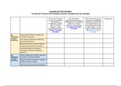
Plato VS Aristoteles