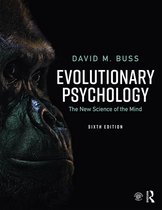
TEST BANK For Evolutionary Psychology 6th Edition
by David Buss
Multiple Choice Questions
1. Which of the following questions is NOT a focus of evolutionary psychology? (c)
(a) Why is the mind designed the way that it is?
(b) How do the components of the mind interact with the environment?
(c) What is the relationship between the human mind and the Big Bang?
(d) What are the functions of the components of the human mind?
2. Evolution refers to . (a)
(a) changes in gene frequency within a population over time
(b) differences between species
(c) changes over time in the shape of the human skull
(d) differences between men and women
3. Change in life forms over time was suggested . (b)
(a) first by Darwin
(b) well before Darwin’s time
(c) well after Darwin’s time
(d) first by George Williams
4. Which of the following arguments did Lamarck present? (d)
(a) Species originate from microscopic algae.
(b) Species progress toward a lower form.
(c) acquisition of inherited characteristics.
(d) inheritance of acquired characteristics.
5. According to Cuvier’s theory of catastrophism, species are . (a)
(a) exterminated by sudden catastrophes and replaced by different species
(b) irradiated by sudden catastrophes, thereafter replacing other species
(c) exterminated by gradual elimination due to disease, leaving room for new species
(d) irradiated and extinguished, and replaced by the same species
6. Which of the following clues to change in organic structure over time were not known or noted prior to
Darwin? (d)
(a) cross-species structural similarities
(b) cross-species embryological similarities
(c) apparent function of traits
(d) mechanism to explain change in organic structure over time
7. Which of the following is NOT an example of genetic drift? (a)
(a) natural selection
(b) founder effect
(c) genetic bottleneck
(d) mutation
8. Which of the following is NOT one of the three essential processes identified by Darwin’s theory of
evolution by natural selection? (b)
(a) variation
(b) particulation
(c) selection
(d) inheritance
,9. provides the “raw materials” for evolution. (a)
(a) Variation
(b) Particulation
(c) Selection
(d) Inheritance
10. For evolution to work, successful variations must be , or passed down reliably from parent to
offspring. (d)
(a) variated
(b) particulated
(c) selected
(d) inherited
11. The process of refers to the component of Darwin’s theory of evolution that states that
organisms with some heritable attributes leave more offspring because those attributes help with the tasks of
survival and reproduction. (c)
(a) variation
(b) particulation
(c) selection
(d) inheritance
12. In contrast to the theory of natural selection, which focused on adaptations that have arisen as a
consequence of successful survival, the theory of focused on adaptations that have arisen
as a consequence of successful mating. (a)
(a) sexual selection
(b) internal selection
(c) external selection
(d) social selection
13. The work of Gregor Mendel documented that . (c)
(a) evolution is unlikely to have occurred in pea plants
(b) evolution is unlikely to have occurred in pea genes
(c) inheritance is particulate, not blended
(d) inheritance is blended, not particulate
14. A is the smallest discrete unit that is inherited by offspring intact, without being broken up or
blended. (d)
(a) genotype
(b) phenotype
(c) meme
(d) gene
15. Ethologists are interested in four key issues, which became known as the four “whys” of behavior
advanced by Niko Tinbergen, a founder of ethology. Which of the following is not one of the four “whys” of
behavior? (a)
(a) imprinted influences of behavior
(b) immediate influences of behavior
(c) developmental influences of behavior
(d) function of behavior
,16. According to Hamilton (1954), is the sum of classical fitness plus the effects the individual’s
actions have on the reproductive success of his or her genetic relatives, weighted by the degree of genetic
relatedness. (c)
(a) direct fitness
(b) indirect fitness
(c) inclusive fitness
(d) exclusive fitness
17. Which of the following relatives is least related to you, genetically? (d)
(a) grandmother
(b) niece
(c) half-brother
(d) first cousin
18. Williams’s (1966) book clarified the concept of , an evolved solution to a specific problem
that contributes directly or indirectly to successful reproduction. (c)
(a) genetic drift
(b) byproduct
(c) adaptation
(d) exaptation
19. Which of the following theories was not presented by Trivers in the early 1970s? (b)
(a) theory of parental investment
(b) theory of gene selection
(c) theory of reciprocal altruism
(d) theory of parent-offspring conflict
20. Edward O. Wilson’s 1975 book ignited controversy for the assertion that much of human behavior could
be explained by . (b)
(a) socialization
(b) evolutionary biology
(c) inclusive fitness theory
(d) ethology
21. The last chapter on humans in Edward O. Wilson’s 1975 book was . (b)
(a) based on research documenting the importance of cognition in human behavior
(b) based on little empirical work
(c) controversial because it portrayed humans as being subject to different evolutionary forces than other
animals
(d) controversial because it did not account for the role of culture in shaping behavior
22. Which of the following is NOT a misunderstanding of evolutionary theory? (d)
(a) genetic determinism
(b) Behavior is impervious to change.
(c) Adaptations are optimally designed.
(d) Adaptations are designed to confront environmental problems.
23. Genetic determinism implies that . (a)
(a) genes determine behavior
(b) behavior is caused by the interaction of genes and environment
(c) culture determines all behavior
, (d) if a trait is natural, it is “good”
24. Human behavior cannot occur without which of the following sets of two ingredients? (c)
(a) culture and socialization
(b) psychological machinery and natural selection
(c) adaptations and environmental input
(d) environmental input and developmental activation
25. Knowledge about evolved social psychological adaptations . (d)
(a) provides evidence that genes play the most important role in shaping behavior
(b) suggests that humans are different from all other animals
(c) suggests that behavior is not modifiable
(d) gives us power to change targeted behaviors
26. Which of the following does not describe evolved psychological mechanisms? (a)
(a) Evolved psychological mechanisms are optimally designed.
(b) Evolved psychological mechanisms are not optimally designed.
(c) Evolved psychological mechanisms are associated with costs.
(d) Adaptations work reasonably well at solving adaptive problems.
27. Which of the following is not a critical development in the evolutionary history of humans? (a)
(a) descent from mammals
(b) bipedal locomotion
(c) development of agriculture
(d) brain expansion
28. The common ancestor of all modern humans can be traced back to years ago. (b)
(a) 35–40 thousand
(b) 120–150 thousand
(c) 27 million
(d) 30 million
29. William James was one of the first to posit that humans have instincts than/from other
animals. (c)
(a) fewer
(b) equal but different
(c) more
(d) different
30. Behaviorism was a direct reaction to . (d)
(a) Darwin’s theory of natural selection
(b) the cognitive revolution
(c) classical conditioning
(d) James’s psychology of instincts
31. Classical conditioning differed from operant conditioning in the role given to in human
behavior. (a)
(a) reinforcement
(b) radical behaviorism
(c) culture
(d) instincts
by David Buss
Multiple Choice Questions
1. Which of the following questions is NOT a focus of evolutionary psychology? (c)
(a) Why is the mind designed the way that it is?
(b) How do the components of the mind interact with the environment?
(c) What is the relationship between the human mind and the Big Bang?
(d) What are the functions of the components of the human mind?
2. Evolution refers to . (a)
(a) changes in gene frequency within a population over time
(b) differences between species
(c) changes over time in the shape of the human skull
(d) differences between men and women
3. Change in life forms over time was suggested . (b)
(a) first by Darwin
(b) well before Darwin’s time
(c) well after Darwin’s time
(d) first by George Williams
4. Which of the following arguments did Lamarck present? (d)
(a) Species originate from microscopic algae.
(b) Species progress toward a lower form.
(c) acquisition of inherited characteristics.
(d) inheritance of acquired characteristics.
5. According to Cuvier’s theory of catastrophism, species are . (a)
(a) exterminated by sudden catastrophes and replaced by different species
(b) irradiated by sudden catastrophes, thereafter replacing other species
(c) exterminated by gradual elimination due to disease, leaving room for new species
(d) irradiated and extinguished, and replaced by the same species
6. Which of the following clues to change in organic structure over time were not known or noted prior to
Darwin? (d)
(a) cross-species structural similarities
(b) cross-species embryological similarities
(c) apparent function of traits
(d) mechanism to explain change in organic structure over time
7. Which of the following is NOT an example of genetic drift? (a)
(a) natural selection
(b) founder effect
(c) genetic bottleneck
(d) mutation
8. Which of the following is NOT one of the three essential processes identified by Darwin’s theory of
evolution by natural selection? (b)
(a) variation
(b) particulation
(c) selection
(d) inheritance
,9. provides the “raw materials” for evolution. (a)
(a) Variation
(b) Particulation
(c) Selection
(d) Inheritance
10. For evolution to work, successful variations must be , or passed down reliably from parent to
offspring. (d)
(a) variated
(b) particulated
(c) selected
(d) inherited
11. The process of refers to the component of Darwin’s theory of evolution that states that
organisms with some heritable attributes leave more offspring because those attributes help with the tasks of
survival and reproduction. (c)
(a) variation
(b) particulation
(c) selection
(d) inheritance
12. In contrast to the theory of natural selection, which focused on adaptations that have arisen as a
consequence of successful survival, the theory of focused on adaptations that have arisen
as a consequence of successful mating. (a)
(a) sexual selection
(b) internal selection
(c) external selection
(d) social selection
13. The work of Gregor Mendel documented that . (c)
(a) evolution is unlikely to have occurred in pea plants
(b) evolution is unlikely to have occurred in pea genes
(c) inheritance is particulate, not blended
(d) inheritance is blended, not particulate
14. A is the smallest discrete unit that is inherited by offspring intact, without being broken up or
blended. (d)
(a) genotype
(b) phenotype
(c) meme
(d) gene
15. Ethologists are interested in four key issues, which became known as the four “whys” of behavior
advanced by Niko Tinbergen, a founder of ethology. Which of the following is not one of the four “whys” of
behavior? (a)
(a) imprinted influences of behavior
(b) immediate influences of behavior
(c) developmental influences of behavior
(d) function of behavior
,16. According to Hamilton (1954), is the sum of classical fitness plus the effects the individual’s
actions have on the reproductive success of his or her genetic relatives, weighted by the degree of genetic
relatedness. (c)
(a) direct fitness
(b) indirect fitness
(c) inclusive fitness
(d) exclusive fitness
17. Which of the following relatives is least related to you, genetically? (d)
(a) grandmother
(b) niece
(c) half-brother
(d) first cousin
18. Williams’s (1966) book clarified the concept of , an evolved solution to a specific problem
that contributes directly or indirectly to successful reproduction. (c)
(a) genetic drift
(b) byproduct
(c) adaptation
(d) exaptation
19. Which of the following theories was not presented by Trivers in the early 1970s? (b)
(a) theory of parental investment
(b) theory of gene selection
(c) theory of reciprocal altruism
(d) theory of parent-offspring conflict
20. Edward O. Wilson’s 1975 book ignited controversy for the assertion that much of human behavior could
be explained by . (b)
(a) socialization
(b) evolutionary biology
(c) inclusive fitness theory
(d) ethology
21. The last chapter on humans in Edward O. Wilson’s 1975 book was . (b)
(a) based on research documenting the importance of cognition in human behavior
(b) based on little empirical work
(c) controversial because it portrayed humans as being subject to different evolutionary forces than other
animals
(d) controversial because it did not account for the role of culture in shaping behavior
22. Which of the following is NOT a misunderstanding of evolutionary theory? (d)
(a) genetic determinism
(b) Behavior is impervious to change.
(c) Adaptations are optimally designed.
(d) Adaptations are designed to confront environmental problems.
23. Genetic determinism implies that . (a)
(a) genes determine behavior
(b) behavior is caused by the interaction of genes and environment
(c) culture determines all behavior
, (d) if a trait is natural, it is “good”
24. Human behavior cannot occur without which of the following sets of two ingredients? (c)
(a) culture and socialization
(b) psychological machinery and natural selection
(c) adaptations and environmental input
(d) environmental input and developmental activation
25. Knowledge about evolved social psychological adaptations . (d)
(a) provides evidence that genes play the most important role in shaping behavior
(b) suggests that humans are different from all other animals
(c) suggests that behavior is not modifiable
(d) gives us power to change targeted behaviors
26. Which of the following does not describe evolved psychological mechanisms? (a)
(a) Evolved psychological mechanisms are optimally designed.
(b) Evolved psychological mechanisms are not optimally designed.
(c) Evolved psychological mechanisms are associated with costs.
(d) Adaptations work reasonably well at solving adaptive problems.
27. Which of the following is not a critical development in the evolutionary history of humans? (a)
(a) descent from mammals
(b) bipedal locomotion
(c) development of agriculture
(d) brain expansion
28. The common ancestor of all modern humans can be traced back to years ago. (b)
(a) 35–40 thousand
(b) 120–150 thousand
(c) 27 million
(d) 30 million
29. William James was one of the first to posit that humans have instincts than/from other
animals. (c)
(a) fewer
(b) equal but different
(c) more
(d) different
30. Behaviorism was a direct reaction to . (d)
(a) Darwin’s theory of natural selection
(b) the cognitive revolution
(c) classical conditioning
(d) James’s psychology of instincts
31. Classical conditioning differed from operant conditioning in the role given to in human
behavior. (a)
(a) reinforcement
(b) radical behaviorism
(c) culture
(d) instincts