Table of Contents
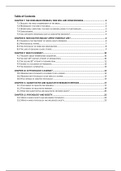
CHAPTER 7: THE MIND-BRAIN PROBLEM, FREE WILL AND CONSCIOUSNESS.....................................2
7.1 DUALISM: THE MIND IS INDEPENDENT OF THE BRAIN................................................................................2
7.2 MATERIALISM: THE MIND IS THE BRAIN.................................................................................................3
7.3 OPERATIONAL COMPUTERS: THE NEW EYE-OPENER LEADING TO FUNCTIONALISM..........................................3
7.4 CONSCIOUSNESS...............................................................................................................................4
7.5 CAN AUTOMATIC PROCESSING HELP US MAKE BETTER DECISIONS?..............................................................5
CHAPTER 8: HOW DID PSYCHOLOGY AFFECT EVERYDAY LIFE?...........................................................6
8.1 CHANGES IN THE TREATMENT OF MENTAL HEALTH PROBLEMS....................................................................6
8.2 PSYCHOLOGICAL TESTING....................................................................................................................7
8.3 THE PSYCHOLOGY OF WORK AND ORGANISATION.....................................................................................8
8.4 THE LURE OF IDEALISING CLASSIC STUDIES..............................................................................................9
CHAPTER 9: WHAT IS SCIENCE?........................................................................................................10
9.1 THOUGHTS ABOUT INFORMATION ACQUISITION.....................................................................................10
9.2 THE FIRST 20TH CENTURY ATTEMPT AT DEMARCATION............................................................................10
9.3 THE SECOND 20TH ATTEMPT AT DEMARCATION......................................................................................11
9.4 SCIENCE IS A SUCCESSION OF PARADIGMS............................................................................................12
9.5 THE PRAGMATIC ALTERNATIVE...........................................................................................................13
CHAPTER 10: IS PSYCHOLOGY A SCIENCE?.......................................................................................14
10.1 REASONS WHY PSYCHOLOGY IS CLAIMED TO BE A SCIENCE.....................................................................14
10.2 REASONS WHY PSYCHOLOGY IS NOT SEEN AS A SCIENCE........................................................................15
10.3 THE CRITIQUE OF SCIENTIFIC PSYCHOLOGY..........................................................................................15
CHAPTER 11: QUANTITATIVE AND QUALITATIVE RESEARCH METHODS...........................................17
11.1 THE ESSENCE OF QUANTITATIVE RESEARCH.........................................................................................17
11.2 THE ESSENCE OF QUALITATIVE RESEARCH...........................................................................................18
11.3 HOW DOE QUANTITATIVE AND QUALITATIVE METHODS RELATE?.............................................................20
CHAPTER 13: PSYCHOLOGY AND SOCIETY........................................................................................22
13.1 WAYS IN WHICH SOCIETY HAS INFLUENCED PSYCHOLOGY......................................................................22
13.2 WAYS IN WHICH PSYCHOLOGY HAS INFLUENCED SOCIETY......................................................................23
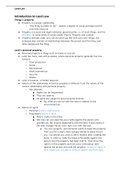
,Chapter 7: The mind-brain problem, free will and consciousness
- Mind-brain problem: Issue of how the mind is related to the brain. There are three different
main views: dualism, materialism and functionalism.
7.1 Dualism: the mind is independent of the brain
- Dualism: View of the mind–body relation according to which the mind is immaterial and
completely independent of the body.
Dualism in religion and traditional philosophy:
- Religion: Dualism is central to religions. They are grounded in the belief that people possess
a divine soul created by God.
- Philosophy: Dualism was also central in the philosophies of Plato and Descartes.
o Plato: Human souls were made of the leftovers of the soul of the cosmos and
travelled between the cosmos and the human bodies they temporarily inhabited. By
focusing on innate knowledge of their soul, humans got access to the true ideas.
o Descartes: Humans were composed of divine soul in a sophisticated body. People
had innate knowledge, which they could recover through deductive reasoning.
Cartesian dualism: Theories in which the mind is seen as radically different
from the body and as independent of the biological processes in the brain.
Dualism in early psychology and lay thinking:
- Early psychology: Scientists began to question the dualistic view. They felt uncomfortable
with the emphasis religions placed on the immortality of the soul, the connection of the soul
to a divine entity, and its independence of the body.
o But they also were unwilling to reduce the human mind to nothing but brain tissue.
o The distinction provided early psychologists with their own study area.
- Lay thinking: Chalmers argues that dualism nowadays still is the fundamental attitude people
have about the relationship between the mind and the brain. The mind is experienced as
something different from the brain.
Dualism puts consciousness at the centre of human functioning and seems to give free will:
- Consciousness: Dualism gives priority to the mind. Our conscious, deliberate thinking is at
the centre of our existence and controls our actions. Consciousness is at the centre of the
person, because the mind is the acting unit and the mind coincides with consciousness.
- Free will: Situation in which individuals can choose their course of action; choice is the
outcome of an informed deliberation.
o Walter: Three conditions must be met before an action van be ascribed to free will:
Free will only exists when there is a choice.
The act must originate in the agent, not in some external force.
The act must be the outcome of rational deliberation.
Problems with dualism: Dualism is no longer a viable approach within the philosophy of mind.
Several factors contributed to the downfall of dualism.
- The interaction problem: How could an immaterial soul steer the human body into action?
How can a non-physical, spiritual mind control physical brain processes?
- Existence of unconscious control processes: Many mental functions seemed to happen
outside consciousness. Leibniz compared the universe to a living organism. The building
blocks weren’t material particles, but energy-laden and soul-invested units.
o Simple monads: All matter. Some type of unconscious and unorganised perception.
o Sentient monads: Present in all living organisms. They had capacities for feeling
pleasure and pain, and for the voluntary focusing of attention. However, they lacked
the ability to reason about their experiences.
o Rational monads: Correspond to the conscious minds of humans. Not only perceive
but reflect upon what is perceived. Innate knowledge demonstrated by perception.
o Supreme monad: Controlled and motivated all other monads.
, - The disappearance of mystery forces in the scientific world: More and more things could be
explained scientifically.
o Phlogiston: Substance that was believed to make materials flammable before the
chemical processes of combustion were understood.
o Vital force: Animistic substance thought to be in living matter before the chemical
and biological differences between living and non-living matter were understood.
Because of these discoveries, scholars began to claim that chemical and biological processes
happen in the mind. What humans experienced as their mind would simply turn out to be a
by-product of the working brain.
7.2 Materialism: the mind is the brain
- Materialism: View about the relationship between the mind and brain that considers the
mind as the brain in operation.
o Lyons: Materialism implies the specific cells of a person’s brain and their connections
constitute a person’s mind. The mind of a person can’t exist without his or her brain.
The consequences for consciousness and free will: Materialism didn’t require either of them.
- Consciousness: Consciousness and associated opinions were examples of folk psychology:
o Collection of beliefs lay people have about psychological functioning; no efforts
made to verify them empirically or to check them for their internal coherence.
o Examples of the absence of consciousness, according to the materialists, were the
bystander effect and the experiments of Milgram.
- Free will: According to Dawkins, the evolutionary theory was misunderstood in the first
century after its introduction by Darwin. Whereas everyone assumed natural selection was
about the survival of individuals and species, the selection actually concerns the survival of
DNA molecules. Genes that make up the living organisms are the true survivors.
Problems with materialism: The fact that many researchers preferred materialism over dualism does
not imply that the materialistic approach is problem-free.
- Identity problem: The difficulty the materialistic theory of the mind-brain relationship has to
explain how two events can be experienced as the same despite the fact that their
realisation in the brain differs.
- How can we build the mind as by-product of a brain?: Nobody has a convincing idea of how
the human mind could be a by-product of the biological processes in the brain, whereas
computers running sequences of instructions on stored information started to thrive.
7.3 Operational computers: the new eye-opener leading to functionalism
- Because humans using the materialistic approach were increasingly compared to robots,
controlled by their biology, it was normal for philosophers of mind to keep a close eye on the
developments in artificial intelligence.
Information transcends its medium: Real advancement consisted of rather simple machines on
which information could be manipulated in binary form. The information from these machines could
easily be copied to other computers or even to completely different devices.
- This contradicted a basic tenet of materialism, namely that information is linked to the
machine (brain) upon which it is realised.
- Solution to the identity problem: Small physiological changes that accompany a particular
human experience may not be important, as long as they preserve the information code. The
same information can be realised and communicated in multiple ways.
- Functionalism in philosophy: Examines the functions of information, rather than the precise
ways in which the information was realised.
Beam me up, Scotty: An interesting question about teleportation is what it would do to the mind.
- Dualism: Given that the mind (soul) does not come from biological brain processes and forms
an independent, non-material entity, it cannot be teleported with the rest.
CHAPTER 7: THE MIND-BRAIN PROBLEM, FREE WILL AND CONSCIOUSNESS.....................................2
7.1 DUALISM: THE MIND IS INDEPENDENT OF THE BRAIN................................................................................2
7.2 MATERIALISM: THE MIND IS THE BRAIN.................................................................................................3
7.3 OPERATIONAL COMPUTERS: THE NEW EYE-OPENER LEADING TO FUNCTIONALISM..........................................3
7.4 CONSCIOUSNESS...............................................................................................................................4
7.5 CAN AUTOMATIC PROCESSING HELP US MAKE BETTER DECISIONS?..............................................................5
CHAPTER 8: HOW DID PSYCHOLOGY AFFECT EVERYDAY LIFE?...........................................................6
8.1 CHANGES IN THE TREATMENT OF MENTAL HEALTH PROBLEMS....................................................................6
8.2 PSYCHOLOGICAL TESTING....................................................................................................................7
8.3 THE PSYCHOLOGY OF WORK AND ORGANISATION.....................................................................................8
8.4 THE LURE OF IDEALISING CLASSIC STUDIES..............................................................................................9
CHAPTER 9: WHAT IS SCIENCE?........................................................................................................10
9.1 THOUGHTS ABOUT INFORMATION ACQUISITION.....................................................................................10
9.2 THE FIRST 20TH CENTURY ATTEMPT AT DEMARCATION............................................................................10
9.3 THE SECOND 20TH ATTEMPT AT DEMARCATION......................................................................................11
9.4 SCIENCE IS A SUCCESSION OF PARADIGMS............................................................................................12
9.5 THE PRAGMATIC ALTERNATIVE...........................................................................................................13
CHAPTER 10: IS PSYCHOLOGY A SCIENCE?.......................................................................................14
10.1 REASONS WHY PSYCHOLOGY IS CLAIMED TO BE A SCIENCE.....................................................................14
10.2 REASONS WHY PSYCHOLOGY IS NOT SEEN AS A SCIENCE........................................................................15
10.3 THE CRITIQUE OF SCIENTIFIC PSYCHOLOGY..........................................................................................15
CHAPTER 11: QUANTITATIVE AND QUALITATIVE RESEARCH METHODS...........................................17
11.1 THE ESSENCE OF QUANTITATIVE RESEARCH.........................................................................................17
11.2 THE ESSENCE OF QUALITATIVE RESEARCH...........................................................................................18
11.3 HOW DOE QUANTITATIVE AND QUALITATIVE METHODS RELATE?.............................................................20
CHAPTER 13: PSYCHOLOGY AND SOCIETY........................................................................................22
13.1 WAYS IN WHICH SOCIETY HAS INFLUENCED PSYCHOLOGY......................................................................22
13.2 WAYS IN WHICH PSYCHOLOGY HAS INFLUENCED SOCIETY......................................................................23
,Chapter 7: The mind-brain problem, free will and consciousness
- Mind-brain problem: Issue of how the mind is related to the brain. There are three different
main views: dualism, materialism and functionalism.
7.1 Dualism: the mind is independent of the brain
- Dualism: View of the mind–body relation according to which the mind is immaterial and
completely independent of the body.
Dualism in religion and traditional philosophy:
- Religion: Dualism is central to religions. They are grounded in the belief that people possess
a divine soul created by God.
- Philosophy: Dualism was also central in the philosophies of Plato and Descartes.
o Plato: Human souls were made of the leftovers of the soul of the cosmos and
travelled between the cosmos and the human bodies they temporarily inhabited. By
focusing on innate knowledge of their soul, humans got access to the true ideas.
o Descartes: Humans were composed of divine soul in a sophisticated body. People
had innate knowledge, which they could recover through deductive reasoning.
Cartesian dualism: Theories in which the mind is seen as radically different
from the body and as independent of the biological processes in the brain.
Dualism in early psychology and lay thinking:
- Early psychology: Scientists began to question the dualistic view. They felt uncomfortable
with the emphasis religions placed on the immortality of the soul, the connection of the soul
to a divine entity, and its independence of the body.
o But they also were unwilling to reduce the human mind to nothing but brain tissue.
o The distinction provided early psychologists with their own study area.
- Lay thinking: Chalmers argues that dualism nowadays still is the fundamental attitude people
have about the relationship between the mind and the brain. The mind is experienced as
something different from the brain.
Dualism puts consciousness at the centre of human functioning and seems to give free will:
- Consciousness: Dualism gives priority to the mind. Our conscious, deliberate thinking is at
the centre of our existence and controls our actions. Consciousness is at the centre of the
person, because the mind is the acting unit and the mind coincides with consciousness.
- Free will: Situation in which individuals can choose their course of action; choice is the
outcome of an informed deliberation.
o Walter: Three conditions must be met before an action van be ascribed to free will:
Free will only exists when there is a choice.
The act must originate in the agent, not in some external force.
The act must be the outcome of rational deliberation.
Problems with dualism: Dualism is no longer a viable approach within the philosophy of mind.
Several factors contributed to the downfall of dualism.
- The interaction problem: How could an immaterial soul steer the human body into action?
How can a non-physical, spiritual mind control physical brain processes?
- Existence of unconscious control processes: Many mental functions seemed to happen
outside consciousness. Leibniz compared the universe to a living organism. The building
blocks weren’t material particles, but energy-laden and soul-invested units.
o Simple monads: All matter. Some type of unconscious and unorganised perception.
o Sentient monads: Present in all living organisms. They had capacities for feeling
pleasure and pain, and for the voluntary focusing of attention. However, they lacked
the ability to reason about their experiences.
o Rational monads: Correspond to the conscious minds of humans. Not only perceive
but reflect upon what is perceived. Innate knowledge demonstrated by perception.
o Supreme monad: Controlled and motivated all other monads.
, - The disappearance of mystery forces in the scientific world: More and more things could be
explained scientifically.
o Phlogiston: Substance that was believed to make materials flammable before the
chemical processes of combustion were understood.
o Vital force: Animistic substance thought to be in living matter before the chemical
and biological differences between living and non-living matter were understood.
Because of these discoveries, scholars began to claim that chemical and biological processes
happen in the mind. What humans experienced as their mind would simply turn out to be a
by-product of the working brain.
7.2 Materialism: the mind is the brain
- Materialism: View about the relationship between the mind and brain that considers the
mind as the brain in operation.
o Lyons: Materialism implies the specific cells of a person’s brain and their connections
constitute a person’s mind. The mind of a person can’t exist without his or her brain.
The consequences for consciousness and free will: Materialism didn’t require either of them.
- Consciousness: Consciousness and associated opinions were examples of folk psychology:
o Collection of beliefs lay people have about psychological functioning; no efforts
made to verify them empirically or to check them for their internal coherence.
o Examples of the absence of consciousness, according to the materialists, were the
bystander effect and the experiments of Milgram.
- Free will: According to Dawkins, the evolutionary theory was misunderstood in the first
century after its introduction by Darwin. Whereas everyone assumed natural selection was
about the survival of individuals and species, the selection actually concerns the survival of
DNA molecules. Genes that make up the living organisms are the true survivors.
Problems with materialism: The fact that many researchers preferred materialism over dualism does
not imply that the materialistic approach is problem-free.
- Identity problem: The difficulty the materialistic theory of the mind-brain relationship has to
explain how two events can be experienced as the same despite the fact that their
realisation in the brain differs.
- How can we build the mind as by-product of a brain?: Nobody has a convincing idea of how
the human mind could be a by-product of the biological processes in the brain, whereas
computers running sequences of instructions on stored information started to thrive.
7.3 Operational computers: the new eye-opener leading to functionalism
- Because humans using the materialistic approach were increasingly compared to robots,
controlled by their biology, it was normal for philosophers of mind to keep a close eye on the
developments in artificial intelligence.
Information transcends its medium: Real advancement consisted of rather simple machines on
which information could be manipulated in binary form. The information from these machines could
easily be copied to other computers or even to completely different devices.
- This contradicted a basic tenet of materialism, namely that information is linked to the
machine (brain) upon which it is realised.
- Solution to the identity problem: Small physiological changes that accompany a particular
human experience may not be important, as long as they preserve the information code. The
same information can be realised and communicated in multiple ways.
- Functionalism in philosophy: Examines the functions of information, rather than the precise
ways in which the information was realised.
Beam me up, Scotty: An interesting question about teleportation is what it would do to the mind.
- Dualism: Given that the mind (soul) does not come from biological brain processes and forms
an independent, non-material entity, it cannot be teleported with the rest.