The Governance and Politics of Social Problems
Hoorcollege 1 – 31 oktober
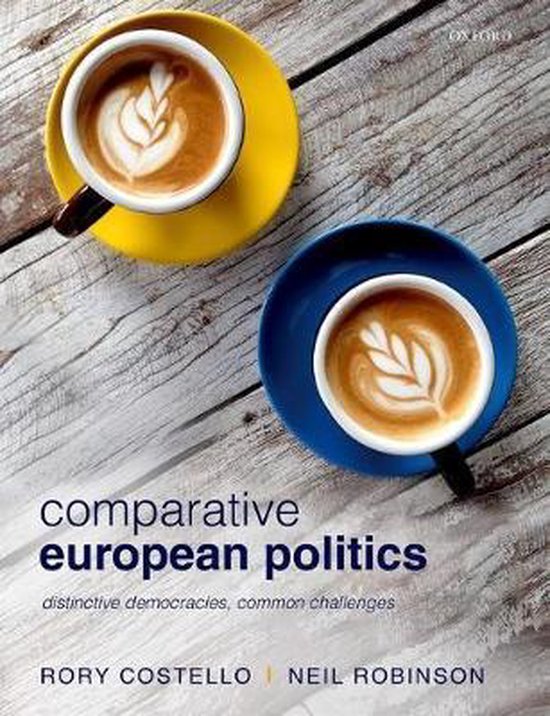
Belangrijke literatuur: comparative European politics
Hoorcollege’s “overview”:
Governance:
1. Deze…
2. Waarom -> Captilism, crises, governance; why social problems demand government action
3. Wat -> wat is governance? The executive branch: the mechanism of democratically
legitimate governance
4. Hoe werkt het in praktijk? (But where is the executive branch? A confrontation with
complexity).
5. The governance of social problems, or the social problem of governance? Discretion and the
principal-agent impasse -> nadenken hoe alles werkt in theorie, en eigenlijk tegenwerkt
6. What remains to be done? Good governance in an improvising society ->
7. Back to the future? Boutellier’s improvisation and the renewed relevance of Aristotle +
discusseren van de vragen/opdrachten.
Politics:
8. Comparing political systems the transformation of the political space in Europe.
9. What does that mean for voting behavior? Representation deficit? -> stemgedrag
10. Euroscepticism and political trust
11. Populism and the mobilization of discontent.
12. Inequality: what is going on in the mind of voters dat ze zich onzeker niet content voelen
over de toekomst.
13. Herhaling om vragen te stellen
Theorie hoorcollege 1:
In this lecture:
- Democracy across the globe
- Liberal democracy and ‘rechtsstaat’
- Polarisation and fragmentation
- Political mobilisation of discontent (left
behind vs. squeezed middle)
- Structural social and economic changes
- Mixed economy / welfare states
Requirements for a democracy:
Democratic institutions: Fair rules, equal playing field
Power holders are limited in their power, can’t just violate the rules or change them.
Rechtstaat
Behavior of people:
,Less than a century of actual democracies that follow all the requirements mentioned above. It had a
lot to do with values and not just the institutions. The people need to trust the institutions, without
trust the democracy will not reach its full potential.
Also when the people do not agree with the rules of the institutions and government then
there is a big chance of the people uprising against the government
Europe today is a continent of democracies = liberal democracy -> volledige democratie.
Democratie / regimes zijn nog recent binnen Europa, pas sinds kort ong. 1970
Power of government is constrained by constitutional rules which are upheld by an
independent judicial system. -> Er is hier een rechtstaat die de macht limiteren d.m.v. wet-
en regelgeving. En jouw gedrag stimuleert het eigenlijk om een democratie te behouden.
Van democratie… naar government…
Why should you have a democracy?
Kwaliteit van democratie: VRIJHEID ! -> het enigste regime waar jij rechten hebt, jij hebt vrijheid.
Peace and democracy have a strong correlations
More freedom
Democracies are wealthier and healthier
Democracies are more industrialized
Democracies have more educated citizens
Democracies are more urbanized
BUT… A lot of people believe that democracy is not essential anymore, this is because people are
used to it and don’t see the work and effort that goes into having a good working democracy
Populist, they challenge the democrats. The elite is corrupt. These populist parties are gaining more
power, they are even taking over governments in for example Italy. This is going to change the
dynamic between political parties in Europe because of different beliefs and values.
- “kartel”= corrupte samenwerking, niet volgens de wet -> niet meer “iets” vs. “iets” -> het
gaat over elite vs. de andere en de elite is corrupt !
People don’t feel supported by government parties that just managed the state, they want
parties that listen to them so that they feel heard and understood
Representation is not easy, a lot of different ways to lead. And political elites look very polarized.
Societal polarization: Meaningful party competition and can increase political participation
and trust. Yet portraying opponents as ‘enemies’ undermines democratic values and
practices.
-> We don’t have a strong opinion when we have a good education and when our parents
raised us good. We will behave in a debate.
Political polarization: Ideological and affective polarization “The left is suspicious of the right
and this also works the other way around. You hate the people on the other side.
New media and populism: new media creates an ‘increasingly individualized civic environment in
which public engagement is a personal experience, not a collective affair. -> this results in a blurring
of private and public sphere, as well as obfuscate professional and private life. -> filter bubbles and
selective exposure insulates people from opinion-adverse information.
,‘Logic’ of populism:
- Anti-establishment
- Anti-expert/intellectualism
- Pro ‘common sense’
- Simple (and immediate) solutions
- Out-group derogation
Too much polarization: no acceptance of elite cooperation and political compromise.
Traditional politics is ‘replaced’, There is a new
feature in politics.
Populism is a push-back from not-longer-wanted
consensus and increased uncertainty.
The cause of populism: The global economic crisis,
increasing inequality with and between nations an
accompanying anti-immigrant sentiments.
, Hoorcollege 2 – 3 nov. 22
Capitalism, crises, governance…
What is a welfare state? -> verzorgingsstaat
The government has a responsibility to take care of the society even if it costs them their
individuality. European democracies are characterized by their strong welfare states:
Compared to many other parts of the world, Eoropean governments tend to engage in
relatively high levels of economic redistribution and typically provide extensive social
protection supports.
C&R introduction: “compared to many other parts of the world, European governments tend to
engage in relatively high levels of economic redistribution and typically provide extensive social
protection supports such as pensions and unemployment assistance to their populations.”
Economic redistribution: niveleren= meer gelijkheid creeren…
Welfare state: mediator of capitalism & inequality
-> After crises (2008 & 70s/80s) welfare state retrenchment = bezuinigen.
Why governance?
1. Mitigating capitalism & inequality: governance
Models of capitalism:
Capitalism is not just one universal thing…
Welfare states were to define European capitalism in ways that were often different to
American capitalism.
Welfare state is a defining factor of a certain model of capitalism.
Different forms of capitalism, depending on welfare state design
- Anglo-saxon (UK)
- Continental (Germany)
- Nordic (Norway)
- Mediterranean (Italy)
“strong welfare states tend to engage in
relatively high levels of economic redistribution
and typically provide extensive social protection
supports such as pensions and unemployment
assistance”
But a model of capitalism entails much more!
How do governments pay for social insurance? (Een verzorgingsstaat betaald verzekeringen
vanuit BTW.)
What does a welfare state demand of firms & companies?
What are important determinants of that demand?
Hoorcollege 1 – 31 oktober
Belangrijke literatuur: comparative European politics
Hoorcollege’s “overview”:
Governance:
1. Deze…
2. Waarom -> Captilism, crises, governance; why social problems demand government action
3. Wat -> wat is governance? The executive branch: the mechanism of democratically
legitimate governance
4. Hoe werkt het in praktijk? (But where is the executive branch? A confrontation with
complexity).
5. The governance of social problems, or the social problem of governance? Discretion and the
principal-agent impasse -> nadenken hoe alles werkt in theorie, en eigenlijk tegenwerkt
6. What remains to be done? Good governance in an improvising society ->
7. Back to the future? Boutellier’s improvisation and the renewed relevance of Aristotle +
discusseren van de vragen/opdrachten.
Politics:
8. Comparing political systems the transformation of the political space in Europe.
9. What does that mean for voting behavior? Representation deficit? -> stemgedrag
10. Euroscepticism and political trust
11. Populism and the mobilization of discontent.
12. Inequality: what is going on in the mind of voters dat ze zich onzeker niet content voelen
over de toekomst.
13. Herhaling om vragen te stellen
Theorie hoorcollege 1:
In this lecture:
- Democracy across the globe
- Liberal democracy and ‘rechtsstaat’
- Polarisation and fragmentation
- Political mobilisation of discontent (left
behind vs. squeezed middle)
- Structural social and economic changes
- Mixed economy / welfare states
Requirements for a democracy:
Democratic institutions: Fair rules, equal playing field
Power holders are limited in their power, can’t just violate the rules or change them.
Rechtstaat
Behavior of people:
,Less than a century of actual democracies that follow all the requirements mentioned above. It had a
lot to do with values and not just the institutions. The people need to trust the institutions, without
trust the democracy will not reach its full potential.
Also when the people do not agree with the rules of the institutions and government then
there is a big chance of the people uprising against the government
Europe today is a continent of democracies = liberal democracy -> volledige democratie.
Democratie / regimes zijn nog recent binnen Europa, pas sinds kort ong. 1970
Power of government is constrained by constitutional rules which are upheld by an
independent judicial system. -> Er is hier een rechtstaat die de macht limiteren d.m.v. wet-
en regelgeving. En jouw gedrag stimuleert het eigenlijk om een democratie te behouden.
Van democratie… naar government…
Why should you have a democracy?
Kwaliteit van democratie: VRIJHEID ! -> het enigste regime waar jij rechten hebt, jij hebt vrijheid.
Peace and democracy have a strong correlations
More freedom
Democracies are wealthier and healthier
Democracies are more industrialized
Democracies have more educated citizens
Democracies are more urbanized
BUT… A lot of people believe that democracy is not essential anymore, this is because people are
used to it and don’t see the work and effort that goes into having a good working democracy
Populist, they challenge the democrats. The elite is corrupt. These populist parties are gaining more
power, they are even taking over governments in for example Italy. This is going to change the
dynamic between political parties in Europe because of different beliefs and values.
- “kartel”= corrupte samenwerking, niet volgens de wet -> niet meer “iets” vs. “iets” -> het
gaat over elite vs. de andere en de elite is corrupt !
People don’t feel supported by government parties that just managed the state, they want
parties that listen to them so that they feel heard and understood
Representation is not easy, a lot of different ways to lead. And political elites look very polarized.
Societal polarization: Meaningful party competition and can increase political participation
and trust. Yet portraying opponents as ‘enemies’ undermines democratic values and
practices.
-> We don’t have a strong opinion when we have a good education and when our parents
raised us good. We will behave in a debate.
Political polarization: Ideological and affective polarization “The left is suspicious of the right
and this also works the other way around. You hate the people on the other side.
New media and populism: new media creates an ‘increasingly individualized civic environment in
which public engagement is a personal experience, not a collective affair. -> this results in a blurring
of private and public sphere, as well as obfuscate professional and private life. -> filter bubbles and
selective exposure insulates people from opinion-adverse information.
,‘Logic’ of populism:
- Anti-establishment
- Anti-expert/intellectualism
- Pro ‘common sense’
- Simple (and immediate) solutions
- Out-group derogation
Too much polarization: no acceptance of elite cooperation and political compromise.
Traditional politics is ‘replaced’, There is a new
feature in politics.
Populism is a push-back from not-longer-wanted
consensus and increased uncertainty.
The cause of populism: The global economic crisis,
increasing inequality with and between nations an
accompanying anti-immigrant sentiments.
, Hoorcollege 2 – 3 nov. 22
Capitalism, crises, governance…
What is a welfare state? -> verzorgingsstaat
The government has a responsibility to take care of the society even if it costs them their
individuality. European democracies are characterized by their strong welfare states:
Compared to many other parts of the world, Eoropean governments tend to engage in
relatively high levels of economic redistribution and typically provide extensive social
protection supports.
C&R introduction: “compared to many other parts of the world, European governments tend to
engage in relatively high levels of economic redistribution and typically provide extensive social
protection supports such as pensions and unemployment assistance to their populations.”
Economic redistribution: niveleren= meer gelijkheid creeren…
Welfare state: mediator of capitalism & inequality
-> After crises (2008 & 70s/80s) welfare state retrenchment = bezuinigen.
Why governance?
1. Mitigating capitalism & inequality: governance
Models of capitalism:
Capitalism is not just one universal thing…
Welfare states were to define European capitalism in ways that were often different to
American capitalism.
Welfare state is a defining factor of a certain model of capitalism.
Different forms of capitalism, depending on welfare state design
- Anglo-saxon (UK)
- Continental (Germany)
- Nordic (Norway)
- Mediterranean (Italy)
“strong welfare states tend to engage in
relatively high levels of economic redistribution
and typically provide extensive social protection
supports such as pensions and unemployment
assistance”
But a model of capitalism entails much more!
How do governments pay for social insurance? (Een verzorgingsstaat betaald verzekeringen
vanuit BTW.)
What does a welfare state demand of firms & companies?
What are important determinants of that demand?