NURS 663- Exam 1 Questions and Answers 2024
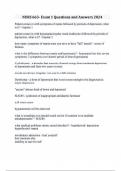
Patient comes in with symptoms of mania followed by periods of depression; what is it? - bipolar 1 patient comes in with hypomania/regular mood (euthymic) followed by periods of depression, what is it? - bipolar 2 how many symptoms of mania must you have to have "full" mania? - seven of thirteen what is the difference between mania and hypomania? - hypomania has less severe symptoms; 3 symptoms over shorter period of time (hypomania) Cyclothymia - a disorder that consists of mood swings from moderate depression to hypomania and lasts two years or more moods are always irregular- not ever to a full extreme Dysthymia - a form of depression that is not severe enough to be diagnosed as major depression "eeyore" always kind of down and depressed SIADH - syndrome of inappropriate antidiuretic hormone will retain water hyponatremia will be observed what is something you should watch out for if a patient is on multiple antidepressants? - SIADH what medical problems mimic mood disorders? - hypothyroid- depression hyperthyroid- mania involuntary admission - hurt yourself hurt someone else inability to care for self Carbamazepine (Tegretol) - mood stabilizer indication: bipolar disorder major side effects: CYP 450: (inducer- speeds up metabolism of other drugs) patient education: what 3 medications must have blood draws associated with them? - carbamazepine, lithium, valproic acid Mood Disorder Questionnaire - Screens for Bipolar Disorder 7+ is a positive screening 4-5 might be hypomania how is the PHQ-9 scored - 1-4 minimal depression 5-9 mild depression 10-14 moderate depression 15-19 moderately severe 20 + severe PHQ-9 - assessment that evaluates the degree of depression What is the DSM criteria for Major Depressive Disorder? - **no history of mania, hypo, or mixed symptoms symptoms >2 weeks must have: sadness, anhedonia (loss pleasure/interest) 4 of following: - appetite/sleep changes, psychomotor retardation, lack of energy, guilt/worthlessness, issues w/ concentration, thoughts suicide/death What are the "frequency" modifiers for MDD? - episodic: symptoms dissipate over time recurrent: likely to reappear in future subclinical: sadness + 3 symptoms > 10 days (full criteria not met) how is the severity of depression rated? - - Mild: no suicidal thoughts/death wishes - Moderate: some thoughts of death/self-harm - Severe: plan/attempted what other modifiers might be present with diagnosis of MDD? - - With psychotic features: hallucinations, paranoia - In partial remission: some symptoms still present, but full criteria not met; period without any significant symptoms lasting less than 2 months - In full remission: no signs/symptoms >2 months - Unspecified: symptoms vague, hard to tell DSM 5 for bipolar I disorder - depression + mania DSM 5 for bipolar 2 disorder - depression + hypomania what is the #1 predictor of suicide? - Hopelessness and loneliness what are risk factors for suicide? - - Gender: men are more likely to complete suicide - Age: men 45 years +; women 55 years + o Suicide is the 3rd leading cause of death in 15-24-year-olds - Race: Caucasian, Native American, Alaskan native, and immigrants - Divorce - Widows - High-ranking jobs and unemployment - Physicians - MDD most common mental illness associated, schizophrenia, and alcohol use disorder - Past suicide attempt (might be the best indicator) what is the criteria for involuntary commitment? - Danger to self (suicide) Danger to others (homicide) Gravely disabled d/t mental illness (unable to provide food, clothing, shelter) - Courts must have probable case hearing within 96 hours of admission What is vagus nerve stimulation? - --For Tx of treatment-resistant MDD implantation of a device that causes intermittent electrical stimulation of vagus nerve What is TMS (transcranial magnetic stimulation)? - noninvasive procedure for treatment resistant depression, uses magnetic pulses what is ECT used for? - severe depression mania catatonia severe agitation in dementia How is ECT performed? - premedication with atropine, followed by general anesthesia and administration of a muscle relaxant. a generalized seizure is then induced by passing a current of electricity across the brain. seizure lasts <1min - 8 treatments over 2-3 weeks Side effects of ECT - temporary memory loss and confusion, headache can increase HR and BP what are distinguishing characteristics of serotonin syndrome? - Hyperreflexia Clonus Dilated pupils (mydriasis) MAOIs - Block enzyme monoamine oxidase MAO break down monoamines into inactive metabolites ** directly increase the neurotransmission of all 3 NT (DA, 5ht, NE) A lot of dietary restrictions (tyramine) A lot of drug- drug interactions "Not Popular Meds" Phenelzine (nardil) Tranylcypromine (parnate) Isocarboxazide (marplan) TCAs - - "dirty" because affect many receptor sites - H1: sedation/weight gain - M1: anticholinergic - A1: orthostatic hypotension - TCA overdose: WIDE QRS, respiratory depression, hypotension ***** no anecdote; treat with supportive care Imipramine Nortriptyline Amitriptyline Lithium - Therapeutic window: 0.6 - 1.2 Steady state generally achieved in 5 days Check lithium dosing 8-12 hours after previous dose Signs of toxicity: T wave flattening, renal toxicity, hyperreflexia, coarse tremor, nystagmus, delirium Treat toxicity: HEMODIALYSIS Valproic Acid (Depakote) - Antiseizure med. Precautions/interactions: contraindicated in liver disease, pregnancy. Side effects: hepatotoxicity, teratogenic effects, pancreatitis. Therapeutic window: 50-100 Peak plasma concentration: 1-4hours Collect trough level just before the next dose (24 hours) Collecting at the 12-hour mark can lead to false high trough level Signs of Depakote toxicity: Cerebral edema, hyperammonemia, hepatotoxicity, electrolyte abnormalities · Supportive therapy for toxicity What is rapid cycling bipolar disorder? - -four or more distinct mood episodes within a 12 month period -can occur in any order -up to 20% of all bipolar pts -risk factors: longer length of illness, female, ANTIDEPRESSANT USE, thyroid disease, older age what birth defects might be seen with valproic acid? - cleft palate what medications are safe in postpartum depression? - why is lithium XR a good option for some patients? - it might help decrease stomach upset Paroxetine (Paxil) - SSRI antidepressant -short half life (good in case mania pops up) - can be sedating, so consider dosing at night to help sleep SE: most anticholinergic SSRI, ↑↑sexual dysfunction Inhibits antipsychotics ***SIGNIFICANT 2D6 inhibition can cause discontinuation syndrome (nausea, vertigo) Sertraline (Zoloft) - SSRI antidepressant treats major depressive disorder, panic disorder, OCD, PTSD, social phobia, PMDD contraindicated with MAOI Adverse reactions: neuroleptic malignant syndrome, suicidal thoughts, seratonin syndrome common side effects: dizziness, drowsiness, fatigue, headache, insomnia diarrhea, dry mouth, nausea, sexual dysfunction,sweating, tremors Pros: ** short half-life ** less sedating than paroxetine ** very weak CYP 450 interactions (very slight 2d6) Cons: ** requires full stomach for max absorption ** lots of GI affects Fluoxetine (Prozac) - Antidepressant, SSRI's - long half life (must have 5 weeks between this and MAOI) can be activating, which can help with energy can use when tapering off other SSRI to help minimize discontinuation syndrome not a good option for hepatic patients (d/t long half life) *** a lot of cyp 450 interactions, so not a good option with other meds watch for mania since activating Escitalopram (Lexapro) - Antidepressant, SSRI: 10-20 mg qd can cause QT prolongation (especially in doses >20mg) minimal drug-drug interactions what medications can cause SIADH? - carbamazepine SSRIs amitriptyline morphine how is SIADH reflected in lab values? - decreased serum osmolality (increased serum volume) increased urine osmolality (decreased urine volume) what two medications are most likely to cause discontinuation syndrome? - paroxetine (paxil) and venlafaxine (effexor) -- short half lives which SSRIs have no sexual side effects - mirtazapine, nefazadone, buproprion which antidepressants are more activating? - bupropion, venlafaxine, fluoxetine which antidepressants are more sedating? - trazodone, TCAs, paroxetine, mirtazapine which antidepressants are more associated with weight gain? - Mirtazapine Paroxetine TCA's which antidepressants might be associated with weight loss? - bupropion what antidepressant is useful for nicotine cessation? - bupropion what antidepressant might help with methamphetamine withdrawal? - mirtazapine what antidepressants might be useful with ADHD? - bupropion, venlafaxine which antidepressants might be useful with pain disorders? - •Duloxetine •Venlafaxine Amitriptyline which antidepressant might be useful with headaches? - amitriptyline which preexisting condition should be avoided in the prescription of bupropion? - seizure disorder how does paroxetine interact at the 2d6 site? - it is a potent inhibitor and substrate (tons of medication interactions) how could the long half life of fluoxetine been of benefit and risk? - benefit: decrease withdrawal/discontinuation symptoms negative: if patient has side effects, long time to get out of system what are the biggest risks in TCAs? - cardiotoxic very dangerous in overdose (NO SUICIDAL PATIENTS!) what are MAOIs minimally prescribed? - lots of food interactions (tyramine) require 2-6 weeks to build up in system d/t long period between RX and other medications dangerous in overdose Case: 26 year old woman without a psychiatric history who presents for treatment of depression after her mother died. It has been over a year but she is still struggling with frequent bouts of sadness, has lost 15 lbs in the last four months, is unable to sleep past 4am, and is getting poor performance reviews at work due to impaired concentration and memory. She feels like nothing in life is enjoyable anymore. diagnosis and medications to consider? - MDD -Sertraline -Escitalopram -Fluoxetine -Mirtazapine case: 35 year old woman with a history of major depressive disorder who presents complaining of persistent depression despite treatment with maximum dose sertraline and escitalopram in the past. She has been depressed for over eight months, and spends up to 16 hours per day lying in bed. She reports that she doesn't have the energy to get up in the morning, and that there is nothing that she enjoys doing, anyway. She has gained 35 lbs in the last eight months, reports feeling like she has failed everyone in her life, and states that she only leaves the house about once a week to shop for groceries. Recently, she has begun hearing vague voices when she feels especially badly, although she cannot make out specific words. diagnosis and medications? - MDD -Bupropion -Venlafaxine -Duloxetine -Maybe fluoxetine case: 39 year old man with a history of PTSD and depression who presents after returning from a recent deployment to Afghanistan. He is having trouble sleeping because of nightmares about combat, is unable to tolerate being in crowded places, and visibly jumps at small noises during your interview. His unwillingness to leave the house is exacerbated by a lower spinal injury that has left him with chronic leg pain and a limp that he thinks makes him look "like an easy target." He also reports that he has difficulty sleeping through the night, is having trouble enjoying doing anything with his family, feels extremely guilty for the time that he was away from them while deployed, has low energy and concentration, but adamantly denies suicidal thoughts. He has tried maximum dose sertraline and venlafaxine, but neither were helpful. He also tried mirtazapine, but it was far too sedating and didn't work either. diagnosis and medications? - PTSD, MDD, Chronic Pain -Nortriptyline or another TCA -Duloxetine -Escitalopram -Prazosin all antidepressants carry what 5 warnings? - - increased risk of suicide (especially in children and young adults) - mania activation - serotonin syndrome -discontinuation syndrome - bleeding risk

Geschreven voor
- Instelling
- Maryville University Of St. Louis
- Vak
- NURS 663 (NURS663)
Documentinformatie
- Geüpload op
- 13 november 2024
- Aantal pagina's
- 17
- Geschreven in
- 2024/2025
- Type
- Tentamen (uitwerkingen)
- Bevat
- Vragen en antwoorden
Onderwerpen
-
nurs 663
-
nurs 663 exam 1

Ook beschikbaar in voordeelbundel