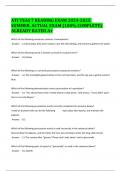
PHS3300 Midterm 2 Exam Study
Guide
Define dyspnea and what are signs of this - Answer - sensation of difficult or
uncomfortable breathing; sensation of shortness of breath, laboured breathing,
preoccupied with breathing
- signs: flaring of nostrils, use of accessory muscles of respiration and retraction
Define orthopnea. What is it a result of - Answer - difficulty or inability to breathe unless
in the upright position
- usually result of increased fluid in lunch that is helped by being upright
- ex: left ventricular heat failure; pulmonary edma
Define apnea and give an example - Answer temporary cessation of breathing ex: sleep
apneaa
What is the eupnea rhythm? (breaths/min and TV) - Answer 8-16 breaths per minute and
tidal volume = 400-800 ml
Define Kussmal respiration and give an example of when you would see this - Answer
deepp, rapid breaths that allow unloading of CO2 - eg. diabetic ketoacidosis
Define Cheyene-Stokes respirations and give an example of when we would see this -
Answer alternating apnea and hyperventilation while asleep as oxygen saturation varies
between 90% and 100% - rising CO2 levels will trigger periods of hyperventilation
seen in any condition that slows blood flow to the brain stem such as heart failure or
brainstem disease
Why does cyanosis occur? - Answer It is a bluish discolouration of the skin and mucous
membranes due to the excess of reduced hemoglobin bound to oxygen
Can there be inadequate oxygenation of tissues without apparent cyanosis? - Answer
Yes, for example, carbon monoxide poisoning can lead to inadequate oxygenation of
tissues but the patient will not appear to be cyanotic. That is because carbon monoxide
binds to hemoglobin where the O2 would bind and therefore it would not change the
colour of the hemoglobin
What are the 8 clinical manifestations of pulmonary alterations - Answer 1. "pnea"
2. abnormal breathing patterns
3. hypoventilation
,4. hyperventilation
5. cough
6. cyanosis
7. pain
8. clubbing
Discuss Respiratory Distress Syndrome (RDS) of the newborn / IRDS - Answer
Surfactant production by type 2 cells occurs late in gestation and therefore there will
not be enough alveoli until 28-38 weeks gestation. Surfactant is critical for the
development of a baby's respiratory system. If a baby is born prematurely it will be born
with a surfactant deficiency and deficiency in the alveolar surface area for gas
exchange. Premature infants have small, immature alveoli with little surfactant.
IRDS: premature infants will have too little surfactant causing the alveoli to collapse and
must be reinflated with every breath. this is treated with positive pressure respirations
and surfactant spray
What is surfactant - Answer it is a detergent-like lipoprotein produced by alveolar type 2
cells and it interferes with the cohesiveness of water molecules, meaning less energy is
required to overcome surface tension
What is the half-life of surfactant and how do we replenish it in our bodies - Answer -
surfactant must be replenished constantly - it has a half-life of 14 hours
- normal ventilation is the most important stimulus (a deep sign or breath can be
sufficient enough to induce a new surfactant synthesis
What are 3 underlying causes of ARDS - Answer 1. reduced perfusion (eg cardiogenic
shock, trauma, major burns)
2. increased capillary permeability (eg pneumonia, sepsis)
3. direct tissue/capillary insults (near drowning, oxygen toxicity)
Define oxygen toxicity - Answer no nitrogen present to stay behind and keep the alveoli
expanded
oxygen is toxic to surfactant-producing cell and supports a high level of production of
free radicals
What are the 3 phases that injured lungs go through - Answer 1. exudative phase
2. proliferative phase
3. fibrotic phase
What occurs during the exudative phase of injured lungs - Answer damage to alveolar
, epithelium and vascular endothelium leads to a leakage of water, protein, inflammatory
cells and RBCs in the interstitium and alveolar lumen (hyaline membrane disease);
damaged type 1 cells are replaced by proteins, fibrin, and cellular debris and surfactant
production by type 2 cells is compromised; fluid accumulation can be heard as crackles
and measurements of arterial blood gases with provide clues (low O2 and high CO2)
What occurs during the proliferative phase of injured lungs - Answer some replacement
of type 1 and 2 cells
what occurs during the fibrotic phase of injured lungs - Answer excessive collagen
deposition as lung attempts to self-repair
What are 4 symptoms of ARDS - Answer 1. dyspnea
2. severe hypoxemia
3. decreased lung compliance
4. diffuse bilateral pulmonary infiltrates
How does a patient manage ARDS and when does recovery begin and what is the
mortality rate - Answer - maintain lung ventilation while giving it time to heal and
minimizing the work it has to do
- positive pressure ventilation to prevent alveolar collapse
- steroid use (anti-inflammatory) is controversial and only suggested in the later phase
- recovery usually beings around 2 weeks but overall mortality is still 32-45%
What is pleurisy - Answer inflammation of the pleural membrane
What is the value of the intrapleural pressure and why is this good - Answer -4 mm Hg
anything above this will cause the lung to collapse
True or false
Any condition that equalizes intrapleural pressure with intrapulmonary pressure causes
immediate lung collapse - Answer True
What is pleural effusion? What are the 2 types? What is the most common presenting
symptom? - Answer - accumulation of fluid in the pleural space space from blood of
lymphatic vessels associated with pleural membranes
- can be transductive (fluid is water) or exudative (fluid contains protein)
- most common presenting symptom is dyspnea
2 physical factors that influence pulmonary ventilation - Answer 1. respiratory
passageway resistance
Guide
Define dyspnea and what are signs of this - Answer - sensation of difficult or
uncomfortable breathing; sensation of shortness of breath, laboured breathing,
preoccupied with breathing
- signs: flaring of nostrils, use of accessory muscles of respiration and retraction
Define orthopnea. What is it a result of - Answer - difficulty or inability to breathe unless
in the upright position
- usually result of increased fluid in lunch that is helped by being upright
- ex: left ventricular heat failure; pulmonary edma
Define apnea and give an example - Answer temporary cessation of breathing ex: sleep
apneaa
What is the eupnea rhythm? (breaths/min and TV) - Answer 8-16 breaths per minute and
tidal volume = 400-800 ml
Define Kussmal respiration and give an example of when you would see this - Answer
deepp, rapid breaths that allow unloading of CO2 - eg. diabetic ketoacidosis
Define Cheyene-Stokes respirations and give an example of when we would see this -
Answer alternating apnea and hyperventilation while asleep as oxygen saturation varies
between 90% and 100% - rising CO2 levels will trigger periods of hyperventilation
seen in any condition that slows blood flow to the brain stem such as heart failure or
brainstem disease
Why does cyanosis occur? - Answer It is a bluish discolouration of the skin and mucous
membranes due to the excess of reduced hemoglobin bound to oxygen
Can there be inadequate oxygenation of tissues without apparent cyanosis? - Answer
Yes, for example, carbon monoxide poisoning can lead to inadequate oxygenation of
tissues but the patient will not appear to be cyanotic. That is because carbon monoxide
binds to hemoglobin where the O2 would bind and therefore it would not change the
colour of the hemoglobin
What are the 8 clinical manifestations of pulmonary alterations - Answer 1. "pnea"
2. abnormal breathing patterns
3. hypoventilation
,4. hyperventilation
5. cough
6. cyanosis
7. pain
8. clubbing
Discuss Respiratory Distress Syndrome (RDS) of the newborn / IRDS - Answer
Surfactant production by type 2 cells occurs late in gestation and therefore there will
not be enough alveoli until 28-38 weeks gestation. Surfactant is critical for the
development of a baby's respiratory system. If a baby is born prematurely it will be born
with a surfactant deficiency and deficiency in the alveolar surface area for gas
exchange. Premature infants have small, immature alveoli with little surfactant.
IRDS: premature infants will have too little surfactant causing the alveoli to collapse and
must be reinflated with every breath. this is treated with positive pressure respirations
and surfactant spray
What is surfactant - Answer it is a detergent-like lipoprotein produced by alveolar type 2
cells and it interferes with the cohesiveness of water molecules, meaning less energy is
required to overcome surface tension
What is the half-life of surfactant and how do we replenish it in our bodies - Answer -
surfactant must be replenished constantly - it has a half-life of 14 hours
- normal ventilation is the most important stimulus (a deep sign or breath can be
sufficient enough to induce a new surfactant synthesis
What are 3 underlying causes of ARDS - Answer 1. reduced perfusion (eg cardiogenic
shock, trauma, major burns)
2. increased capillary permeability (eg pneumonia, sepsis)
3. direct tissue/capillary insults (near drowning, oxygen toxicity)
Define oxygen toxicity - Answer no nitrogen present to stay behind and keep the alveoli
expanded
oxygen is toxic to surfactant-producing cell and supports a high level of production of
free radicals
What are the 3 phases that injured lungs go through - Answer 1. exudative phase
2. proliferative phase
3. fibrotic phase
What occurs during the exudative phase of injured lungs - Answer damage to alveolar
, epithelium and vascular endothelium leads to a leakage of water, protein, inflammatory
cells and RBCs in the interstitium and alveolar lumen (hyaline membrane disease);
damaged type 1 cells are replaced by proteins, fibrin, and cellular debris and surfactant
production by type 2 cells is compromised; fluid accumulation can be heard as crackles
and measurements of arterial blood gases with provide clues (low O2 and high CO2)
What occurs during the proliferative phase of injured lungs - Answer some replacement
of type 1 and 2 cells
what occurs during the fibrotic phase of injured lungs - Answer excessive collagen
deposition as lung attempts to self-repair
What are 4 symptoms of ARDS - Answer 1. dyspnea
2. severe hypoxemia
3. decreased lung compliance
4. diffuse bilateral pulmonary infiltrates
How does a patient manage ARDS and when does recovery begin and what is the
mortality rate - Answer - maintain lung ventilation while giving it time to heal and
minimizing the work it has to do
- positive pressure ventilation to prevent alveolar collapse
- steroid use (anti-inflammatory) is controversial and only suggested in the later phase
- recovery usually beings around 2 weeks but overall mortality is still 32-45%
What is pleurisy - Answer inflammation of the pleural membrane
What is the value of the intrapleural pressure and why is this good - Answer -4 mm Hg
anything above this will cause the lung to collapse
True or false
Any condition that equalizes intrapleural pressure with intrapulmonary pressure causes
immediate lung collapse - Answer True
What is pleural effusion? What are the 2 types? What is the most common presenting
symptom? - Answer - accumulation of fluid in the pleural space space from blood of
lymphatic vessels associated with pleural membranes
- can be transductive (fluid is water) or exudative (fluid contains protein)
- most common presenting symptom is dyspnea
2 physical factors that influence pulmonary ventilation - Answer 1. respiratory
passageway resistance