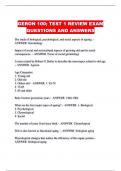
The study of biological, psychological, and social aspects of ageing. -
ANSWER Gerontology
Impact of social and sociocultural aspects of growing old and its social
consequences. - ANSWER Focus of social gerontology
A term coined by Robert N. Butler to describe the stereotypes related to old age.
- ANSWER Ageism
Age Categories:
1. Young-old
2. Old-old
3. Oldest-old - ANSWER 1. 65-74
2. 75-85
3. 85 and older
Baby boomer generation years - ANSWER 1946-1964
What are the four major types of ageing? - ANSWER 1. Biological
2. Psychological
3. Chronological
4. Social
The number of years lived since birth - ANSWER Chronological
This is also known as functional aging. - ANSWER biological aging
Physiological changes that reduce the efficiency of the organ systems -
ANSWER biological aging
, Changes in sensory perceptial process, cognitive abilities, emotions, sensitivity,
perception, personality, and adaptive capacity. - ANSWER psychological
aging
In the roles, relationships with family or friends within organizations or
communities - ANSWER Social aging
The assignment of roles, expectations, opportunities, status, and constraints in a
given society. - ANSWER Age-grading
Societal norms for development through - ANSWER school, work, child-
rearing, and retirement
the age at which half of the population is older and half is younger - ANSWER
median age
Earlier experiences affect the opportunities later in life - ANSWER Life-
course perspective
Neutral terminology - ANSWER 1. older adults or older people
2. the elders
3. people as they age
normal decline in organ systems after the agar of 30; usually gradual, the final
stage of an organism - ANSWER senescence
A person whose primary training is in the field of gerontology.
Gerontology primary focus of study. - ANSWER Gerontologist
The clinical study and treatment of the diseases that affect older adults. -
ANSWER Geriatrics
An older adult who works in the ear of gerontology.
A person training in gerontology, but primarily training in other disciplines. -
ANSWER Gerontological specialist
Regions where people live much longer than average - ANSWER blue zones
ANSWER Gerontology
Impact of social and sociocultural aspects of growing old and its social
consequences. - ANSWER Focus of social gerontology
A term coined by Robert N. Butler to describe the stereotypes related to old age.
- ANSWER Ageism
Age Categories:
1. Young-old
2. Old-old
3. Oldest-old - ANSWER 1. 65-74
2. 75-85
3. 85 and older
Baby boomer generation years - ANSWER 1946-1964
What are the four major types of ageing? - ANSWER 1. Biological
2. Psychological
3. Chronological
4. Social
The number of years lived since birth - ANSWER Chronological
This is also known as functional aging. - ANSWER biological aging
Physiological changes that reduce the efficiency of the organ systems -
ANSWER biological aging
, Changes in sensory perceptial process, cognitive abilities, emotions, sensitivity,
perception, personality, and adaptive capacity. - ANSWER psychological
aging
In the roles, relationships with family or friends within organizations or
communities - ANSWER Social aging
The assignment of roles, expectations, opportunities, status, and constraints in a
given society. - ANSWER Age-grading
Societal norms for development through - ANSWER school, work, child-
rearing, and retirement
the age at which half of the population is older and half is younger - ANSWER
median age
Earlier experiences affect the opportunities later in life - ANSWER Life-
course perspective
Neutral terminology - ANSWER 1. older adults or older people
2. the elders
3. people as they age
normal decline in organ systems after the agar of 30; usually gradual, the final
stage of an organism - ANSWER senescence
A person whose primary training is in the field of gerontology.
Gerontology primary focus of study. - ANSWER Gerontologist
The clinical study and treatment of the diseases that affect older adults. -
ANSWER Geriatrics
An older adult who works in the ear of gerontology.
A person training in gerontology, but primarily training in other disciplines. -
ANSWER Gerontological specialist
Regions where people live much longer than average - ANSWER blue zones