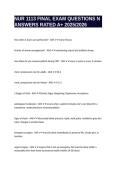
BLAW 301 Exam 1 KU
Both state and federal courts can hear case - plaintiff can file in state or federal court if
federal jurisdiction applies - ✔️✔️Concurrent jurrisdiction
Rules enforced by the state (based on ethics) - ✔️✔️Law
Broader set of values (not enforced by the state) - ✔️✔️Ethics
Two private parties (businesses or people) - ✔️✔️Civil Law
Person or business vs government - ✔️✔️Criminal Case
Law that defines, describes, regulates, and creates how we act to each other and the
government - ✔️✔️Substantive Law
A written plan of government for state or whole country - ✔️✔️Constitution
- ✔️✔️Treaties
enacted by state legislatures and the federal government - ✔️✔️State Statutes and
Federal Statutes
authoritative order in city or county - ✔️✔️Ordinance
A rule issued by the president or government - ✔️✔️Executive order
limitations or restrictions on the activities of a business or individual -
✔️✔️Regulations/Rules
Case decided on the basis of a previous case follow own choices and choices of higher
court - ✔️✔️Common Law
an example that may serve as a basis for imitation or later action (case that is a guide
for another) - ✔️✔️precedent
Let the decision stand; decisions are based on precedents from previous cases -
✔️✔️stare decisis
Fact, Issue, Rule, Application, Conclusion - ✔️✔️(F)IRAC Method
the role of courts to settle disputes (Lawyer, agreement, informal??) - ✔️✔️dispute
resolution
, Non binding use of neutral parties to settle dispute no court many techniques (mediator,
proposal, facilitative) - ✔️✔️Mediation
what a person does not who they are (KANT) - Golden Rule - ✔️✔️Formalism
Binding non court resolution by a third party (rent a judge) - ✔️✔️Arbitration
Opposing sides in a conflict in offers and counteroffers are made and a solution occurs
only when both parties agree - ✔️✔️Negotiation
Action of law determined by consequences - ✔️✔️Consequentialism
-Major Premise (Rule)
-Minor Premise (Facts)
-Conclusion - ✔️✔️Deductive argument structure
A third party to a negotiation who has the authority to dictate an agreement. Can't go to
court after. - ✔️✔️Arbitrator
Agreement to arbitrator are valid irreversible and enforceable unless gun to head) -
✔️✔️Federal Arbitration Act
a legally binding decision made in arbitration by an arbitrator - ✔️✔️arbitral award
Contracting parties understand that disputes are better resolved through arbitration -
✔️✔️Pre-dispute Arbitration Clause
Courts can only decide a genuine case - plaintiff has to have a real stake in the case -
court must have jurisdiction over case - ✔️✔️Limits on Courts Power
1. Negotiate
2. Mediate
3 Arbitrate
4. Leave it
5. Litigate - ✔️✔️Order of Law Timeline
A court's power to hear and decide a case - ✔️✔️Jurisdiction
Can this court hear this kind of case - ✔️✔️Subject Matter Jurisdiction
Is it fair to make these parties litigate in court - ✔️✔️Personal Jurisdiction
Both state and federal courts can hear case - plaintiff can file in state or federal court if
federal jurisdiction applies - ✔️✔️Concurrent jurrisdiction
Rules enforced by the state (based on ethics) - ✔️✔️Law
Broader set of values (not enforced by the state) - ✔️✔️Ethics
Two private parties (businesses or people) - ✔️✔️Civil Law
Person or business vs government - ✔️✔️Criminal Case
Law that defines, describes, regulates, and creates how we act to each other and the
government - ✔️✔️Substantive Law
A written plan of government for state or whole country - ✔️✔️Constitution
- ✔️✔️Treaties
enacted by state legislatures and the federal government - ✔️✔️State Statutes and
Federal Statutes
authoritative order in city or county - ✔️✔️Ordinance
A rule issued by the president or government - ✔️✔️Executive order
limitations or restrictions on the activities of a business or individual -
✔️✔️Regulations/Rules
Case decided on the basis of a previous case follow own choices and choices of higher
court - ✔️✔️Common Law
an example that may serve as a basis for imitation or later action (case that is a guide
for another) - ✔️✔️precedent
Let the decision stand; decisions are based on precedents from previous cases -
✔️✔️stare decisis
Fact, Issue, Rule, Application, Conclusion - ✔️✔️(F)IRAC Method
the role of courts to settle disputes (Lawyer, agreement, informal??) - ✔️✔️dispute
resolution
, Non binding use of neutral parties to settle dispute no court many techniques (mediator,
proposal, facilitative) - ✔️✔️Mediation
what a person does not who they are (KANT) - Golden Rule - ✔️✔️Formalism
Binding non court resolution by a third party (rent a judge) - ✔️✔️Arbitration
Opposing sides in a conflict in offers and counteroffers are made and a solution occurs
only when both parties agree - ✔️✔️Negotiation
Action of law determined by consequences - ✔️✔️Consequentialism
-Major Premise (Rule)
-Minor Premise (Facts)
-Conclusion - ✔️✔️Deductive argument structure
A third party to a negotiation who has the authority to dictate an agreement. Can't go to
court after. - ✔️✔️Arbitrator
Agreement to arbitrator are valid irreversible and enforceable unless gun to head) -
✔️✔️Federal Arbitration Act
a legally binding decision made in arbitration by an arbitrator - ✔️✔️arbitral award
Contracting parties understand that disputes are better resolved through arbitration -
✔️✔️Pre-dispute Arbitration Clause
Courts can only decide a genuine case - plaintiff has to have a real stake in the case -
court must have jurisdiction over case - ✔️✔️Limits on Courts Power
1. Negotiate
2. Mediate
3 Arbitrate
4. Leave it
5. Litigate - ✔️✔️Order of Law Timeline
A court's power to hear and decide a case - ✔️✔️Jurisdiction
Can this court hear this kind of case - ✔️✔️Subject Matter Jurisdiction
Is it fair to make these parties litigate in court - ✔️✔️Personal Jurisdiction