Lecture 1: An introduction to risk behavior
and the development of substance and
behavioral addictions during adolescence
Risk behavior: behaviors that pose a risk to a healthy physical, cognitive,
psychosocial development of adolescents.
The general developmental process of addiction:
Contact with a substance experimenting with a substance
integrated use excessive use addicted use
What we tend to regard as risk behaviour depends on:
- Characteristics of the particular substance or behavior
- Cultural and societal norms
- Scientific knowledge
According to the COM-B model are Capability, Motivation and Opportunity
predictors of change in risk Behavior.
Adolescence (10-24 years)
Early adolescence (10-14 years): physical growth, sexual maturation,
psychosocial development, social identity formation
Mid adolescence (15-17): experimenting with (risk) behaviors,
personal identity formation
Late adolescence (18-24): practicing adult roles
Neurological development:
1. Strong grow in brain volume: increase in white matter (connections),
but decrease in grey matter (nerve cells)
a. Pruning (snoeien): if you don’t use is, you lose it
2. High plasticity and flexibility of the brain
3. Increase in white matter: communication between brain regions
strongly improves
a. Long term memory increases
b. Capacity for abstract thinking and metacognition increases
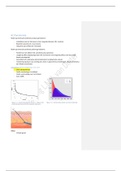
Risk behavior follows an inverted U-shape curve with the peak occurring
during adolescence.
The speed of the development of two different brain regions differs:
1. The affective-motivational system (emotional brain – nucleus
accumbens) develops fast
, 2. The control system (rational brain – prefrontal cortex) develops
slowly
The affective motivational system is overactive during early and mid-
adolescence. Adolescents experience stronger positive emotions than
adults when they receive or anticipate a reward. This process is enhanced
by testosterone.
The rational brain plays an important role in the development of executive
functions:
- Risk estimation
- Monitoring long-term goals
- Inhibit the tendency to respond to possibilities for reward (impulse
control, behavioral inhibition, self control)
The maturational imbalance model states that the increased risk-taking
during adolescence a result is of an imbalance between reward sensitivity
(the affective motivational system) and impulse control (control system).
Control system: top down processes, behavioral inhibition (BIS)
Motivational system: bottom-up processes, behavioral activation (BAS)
Psychoactive substances are chemical substances that cross the blood-
brain barrier and affect the function of the CNS thereby altering
perception, mood or consciousness. They often induce craving after use
and they often evoke loss of control after being used.
The substances differ in type and strength of the psychoactive effect and
the degree to which they elicit craving and loss of control.
Intensional models of addiction aim to describe a causal addiction process.
Extensional models of addiction describe a classification of characteristics
of an addiction.
Substance use disorder according to DSM-5:
, There are two learning principles underlying the development of addiction:
1. Positive reinforcement occurs when the rate of a behavior increases
because a desirable experience is resulting from the behavior.
2. Negative reinforcement occurs when the rate of a behavior increases
because an aversive experience is prevented from happening.
The decrease in the sensitivity of the brain reward system results from (1)
a reduction in the number of dopamine receptors and (2) the existing
dopamine receptors become less sensitive to dopamine. This results in
tolerance, withdrawal symptoms and a reduced sensitivity to natural
incentives.
Associative learning:
1. Drug use is having rewarding outcomes
2. Stimuli related to drug use (drug-cues) also get associated with its’
rewarding outcomes
3. Drug-cues itself become salient because of its’ association with
reward (incentive salience)
This leads to 2 cognitive biases:
1. Attentional bias: individuals with addictive behaviors develop an
heightened attention toward drug-cues
2. Approach bias: individuals with addictive behaviors develop an
automatic tendency to approach rather than avoid drug-cues
and the development of substance and
behavioral addictions during adolescence
Risk behavior: behaviors that pose a risk to a healthy physical, cognitive,
psychosocial development of adolescents.
The general developmental process of addiction:
Contact with a substance experimenting with a substance
integrated use excessive use addicted use
What we tend to regard as risk behaviour depends on:
- Characteristics of the particular substance or behavior
- Cultural and societal norms
- Scientific knowledge
According to the COM-B model are Capability, Motivation and Opportunity
predictors of change in risk Behavior.
Adolescence (10-24 years)
Early adolescence (10-14 years): physical growth, sexual maturation,
psychosocial development, social identity formation
Mid adolescence (15-17): experimenting with (risk) behaviors,
personal identity formation
Late adolescence (18-24): practicing adult roles
Neurological development:
1. Strong grow in brain volume: increase in white matter (connections),
but decrease in grey matter (nerve cells)
a. Pruning (snoeien): if you don’t use is, you lose it
2. High plasticity and flexibility of the brain
3. Increase in white matter: communication between brain regions
strongly improves
a. Long term memory increases
b. Capacity for abstract thinking and metacognition increases
Risk behavior follows an inverted U-shape curve with the peak occurring
during adolescence.
The speed of the development of two different brain regions differs:
1. The affective-motivational system (emotional brain – nucleus
accumbens) develops fast
, 2. The control system (rational brain – prefrontal cortex) develops
slowly
The affective motivational system is overactive during early and mid-
adolescence. Adolescents experience stronger positive emotions than
adults when they receive or anticipate a reward. This process is enhanced
by testosterone.
The rational brain plays an important role in the development of executive
functions:
- Risk estimation
- Monitoring long-term goals
- Inhibit the tendency to respond to possibilities for reward (impulse
control, behavioral inhibition, self control)
The maturational imbalance model states that the increased risk-taking
during adolescence a result is of an imbalance between reward sensitivity
(the affective motivational system) and impulse control (control system).
Control system: top down processes, behavioral inhibition (BIS)
Motivational system: bottom-up processes, behavioral activation (BAS)
Psychoactive substances are chemical substances that cross the blood-
brain barrier and affect the function of the CNS thereby altering
perception, mood or consciousness. They often induce craving after use
and they often evoke loss of control after being used.
The substances differ in type and strength of the psychoactive effect and
the degree to which they elicit craving and loss of control.
Intensional models of addiction aim to describe a causal addiction process.
Extensional models of addiction describe a classification of characteristics
of an addiction.
Substance use disorder according to DSM-5:
, There are two learning principles underlying the development of addiction:
1. Positive reinforcement occurs when the rate of a behavior increases
because a desirable experience is resulting from the behavior.
2. Negative reinforcement occurs when the rate of a behavior increases
because an aversive experience is prevented from happening.
The decrease in the sensitivity of the brain reward system results from (1)
a reduction in the number of dopamine receptors and (2) the existing
dopamine receptors become less sensitive to dopamine. This results in
tolerance, withdrawal symptoms and a reduced sensitivity to natural
incentives.
Associative learning:
1. Drug use is having rewarding outcomes
2. Stimuli related to drug use (drug-cues) also get associated with its’
rewarding outcomes
3. Drug-cues itself become salient because of its’ association with
reward (incentive salience)
This leads to 2 cognitive biases:
1. Attentional bias: individuals with addictive behaviors develop an
heightened attention toward drug-cues
2. Approach bias: individuals with addictive behaviors develop an
automatic tendency to approach rather than avoid drug-cues