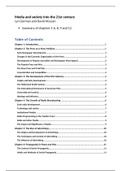
Media and society into the 21st century
Lyn Gorman and David McLean
Summary of chapters 1-6, 8, 9 and 13.
Table of Contents
Chapter 1: Introduction......................................................................................................1
Chapter 2: The Press as a Mass Medium.............................................................................1
Early Newspaper Development....................................................................................................1
Changes in the Economic Organization of the Press.....................................................................2
Development in Popular Journalism and Newspaper Mass Appeal..............................................2
The Popular Press and War...........................................................................................................3
The Mass Press and Total War......................................................................................................3
Concentration and Competition...................................................................................................4
Chapter 3: The Development of the Film Industry...............................................................4
Origins and Early Development....................................................................................................4
The Hollywood Studio System......................................................................................................4
The international Dominance of American Film............................................................................5
Censorship and control.................................................................................................................6
Ideology and Influence.................................................................................................................6
Chapter 4: The Growth of Radio Broadcasting....................................................................6
Early radio development..............................................................................................................6
Technology and society................................................................................................................7
Institutional Models.....................................................................................................................7
Radio Programming in the ‘Golden Years’....................................................................................8
Radio and other Media.................................................................................................................9
The impact and Significance of Radio...........................................................................................9
Chapter 5: The Rise of Advertising....................................................................................10
The Origins and Development of Advertising.............................................................................10
The Techniques and Content of Advertising...............................................................................10
The Influence of Advertising.......................................................................................................10
Chapter 6: Propaganda in Peace and War........................................................................11
The Context of Soviet Propaganda..............................................................................................11
Media and Methods of Soviet Propaganda.................................................................................11
, Nazi Propaganda and Control of the Media................................................................................12
The Effectiveness of Propaganda................................................................................................12
Wartime Propaganda in Liberal Democratic Societies.................................................................12
US Propaganda and the Second World War................................................................................12
Great Britain and the ‘Strategy of Truth’....................................................................................13
Propaganda and the Pacific War.................................................................................................13
Chapter 8: Television and Consumer Societies..................................................................13
Origins........................................................................................................................................14
Post-war Growth: Television from the 1940s to the 1960s.........................................................14
The Triumph of Commercialism: Television since the 1970s.......................................................15
Public-Affairs Programming........................................................................................................16
Television and socialization........................................................................................................17
Chapter 9: Media, Information and Entertainment...........................................................17
American Cinema and the Rise of the Entertainment Conglomerate..........................................17
International Cinema..................................................................................................................18
The Press: Decline and Concentration........................................................................................18
The Press, the State and Society.................................................................................................19
Radio: Decline and Adjustment..................................................................................................20
Chapter 13: Conclusion.....................................................................................................20
, Chapter 1: Introduction
Mass-society theory according to members of the Marxist ‘Frankfurt school’: ideological-
control thesis = capitalist society maintained social control and cohesion through ideology,
reproducing values necessary to maintain this and make people passive recipients of this
ideology.
Opposing view: media are important in ensuring freedom and democratic rights,
especially newspapers.
__________________________________________________________________________
Chapter 2: The Press as a Mass Medium
End 19th century: newspapers directed to mass readership emerged because of social and
economic changes and technological developments. Press barons emerged, responsible for
changes in the economic organization. Mass-newspapers were vehicles for propaganda and
means of sustaining national morale during wartime.
Early Newspaper Development
First newspapers appeared soon after printing press, in 17th century small publications called
corantoes. 1660: first daily newspaper (the Leipziger Zeitung).
UK:
17 and 18th century: public locations such as coffee houses provided access to
newspaper, as well as provincial newspapers. Not a large circulation but it attracted
official attention: press was limited so it would not become a means of spreading
radical or revolutionary ideas that might undermine established authority.
Stamp Act 1712: newspaper had to pay per sheet and advertisements. -> resulted in
emerge of unstamped press which published radical ideas.
America: colonial newspapers developed during the 18th century, which was guaranteed
freedom in the First Amendment to the US constitution in 1791.
19th century: increasing industrialization and urbanization, technological innovations and
changes in transportation and in education created circumstances conductive to the
growth of wider-circulation newspapers.
Examples:
Education Act of 1870 and reforms that made elementary schooling compulsory and
raise of school leaving age, created a wider reading public.
Invention of the kerosene lamp increased opportunities to read.
Growing demand for information because of franchise extension and growth of cities
Special newspaper trains started to operate
In America: low-priced, large-circulation, popular newspapers because of technological and
social changes, e.g. the emergence of a middle class and a skilled labour class.
1830’s-1850s: establishment of international news agencies: extended newsgathering
internationally and provided content. Greater emphasis on objectivity and facts.
1
Lyn Gorman and David McLean
Summary of chapters 1-6, 8, 9 and 13.
Table of Contents
Chapter 1: Introduction......................................................................................................1
Chapter 2: The Press as a Mass Medium.............................................................................1
Early Newspaper Development....................................................................................................1
Changes in the Economic Organization of the Press.....................................................................2
Development in Popular Journalism and Newspaper Mass Appeal..............................................2
The Popular Press and War...........................................................................................................3
The Mass Press and Total War......................................................................................................3
Concentration and Competition...................................................................................................4
Chapter 3: The Development of the Film Industry...............................................................4
Origins and Early Development....................................................................................................4
The Hollywood Studio System......................................................................................................4
The international Dominance of American Film............................................................................5
Censorship and control.................................................................................................................6
Ideology and Influence.................................................................................................................6
Chapter 4: The Growth of Radio Broadcasting....................................................................6
Early radio development..............................................................................................................6
Technology and society................................................................................................................7
Institutional Models.....................................................................................................................7
Radio Programming in the ‘Golden Years’....................................................................................8
Radio and other Media.................................................................................................................9
The impact and Significance of Radio...........................................................................................9
Chapter 5: The Rise of Advertising....................................................................................10
The Origins and Development of Advertising.............................................................................10
The Techniques and Content of Advertising...............................................................................10
The Influence of Advertising.......................................................................................................10
Chapter 6: Propaganda in Peace and War........................................................................11
The Context of Soviet Propaganda..............................................................................................11
Media and Methods of Soviet Propaganda.................................................................................11
, Nazi Propaganda and Control of the Media................................................................................12
The Effectiveness of Propaganda................................................................................................12
Wartime Propaganda in Liberal Democratic Societies.................................................................12
US Propaganda and the Second World War................................................................................12
Great Britain and the ‘Strategy of Truth’....................................................................................13
Propaganda and the Pacific War.................................................................................................13
Chapter 8: Television and Consumer Societies..................................................................13
Origins........................................................................................................................................14
Post-war Growth: Television from the 1940s to the 1960s.........................................................14
The Triumph of Commercialism: Television since the 1970s.......................................................15
Public-Affairs Programming........................................................................................................16
Television and socialization........................................................................................................17
Chapter 9: Media, Information and Entertainment...........................................................17
American Cinema and the Rise of the Entertainment Conglomerate..........................................17
International Cinema..................................................................................................................18
The Press: Decline and Concentration........................................................................................18
The Press, the State and Society.................................................................................................19
Radio: Decline and Adjustment..................................................................................................20
Chapter 13: Conclusion.....................................................................................................20
, Chapter 1: Introduction
Mass-society theory according to members of the Marxist ‘Frankfurt school’: ideological-
control thesis = capitalist society maintained social control and cohesion through ideology,
reproducing values necessary to maintain this and make people passive recipients of this
ideology.
Opposing view: media are important in ensuring freedom and democratic rights,
especially newspapers.
__________________________________________________________________________
Chapter 2: The Press as a Mass Medium
End 19th century: newspapers directed to mass readership emerged because of social and
economic changes and technological developments. Press barons emerged, responsible for
changes in the economic organization. Mass-newspapers were vehicles for propaganda and
means of sustaining national morale during wartime.
Early Newspaper Development
First newspapers appeared soon after printing press, in 17th century small publications called
corantoes. 1660: first daily newspaper (the Leipziger Zeitung).
UK:
17 and 18th century: public locations such as coffee houses provided access to
newspaper, as well as provincial newspapers. Not a large circulation but it attracted
official attention: press was limited so it would not become a means of spreading
radical or revolutionary ideas that might undermine established authority.
Stamp Act 1712: newspaper had to pay per sheet and advertisements. -> resulted in
emerge of unstamped press which published radical ideas.
America: colonial newspapers developed during the 18th century, which was guaranteed
freedom in the First Amendment to the US constitution in 1791.
19th century: increasing industrialization and urbanization, technological innovations and
changes in transportation and in education created circumstances conductive to the
growth of wider-circulation newspapers.
Examples:
Education Act of 1870 and reforms that made elementary schooling compulsory and
raise of school leaving age, created a wider reading public.
Invention of the kerosene lamp increased opportunities to read.
Growing demand for information because of franchise extension and growth of cities
Special newspaper trains started to operate
In America: low-priced, large-circulation, popular newspapers because of technological and
social changes, e.g. the emergence of a middle class and a skilled labour class.
1830’s-1850s: establishment of international news agencies: extended newsgathering
internationally and provided content. Greater emphasis on objectivity and facts.
1