Quistclose Trusts
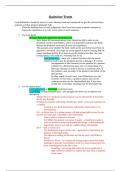
Lord Wilberforce found the basis of a trust whereby funds are transferred for specific and exclusive
purposes and that purpose ultimately fails.
Since the handing down of such judgement, there have been many academic attempts to
restate the explanation as to why a trust arises in such situations.
1. The Case Itself:
Barclays Bank Ltd v Quistclose Investments Ltd –
Rolls Razor (R) borrowed money from Quistclose (Q) in order to pay
dividends owed to shareholders, which was deposited with Barclays Bank.
Before the dividends were paid, R went into liquidation.
The question arose whether the bank could set the sum R borrowed from Q
against R’s overdraft. Q brought an action against R and B claiming that the
money had been held by R on trust to pay the dividend and that, that trust
having failed, it was held on a resulting trust for Q.
Lord Wilberforce – there was a mutual intention that the money
should be used to pay the dividend and not to belong to R’s assets.
Arrangements of this character for the payment of a person’s
creditors by a third person gave rise to a relationship of a
fiduciary character or trust in favour, as a primary trust, of
the creditors, and, secondly, if the primary trust failed, of the
third person.
In other words, in such cases, Lord Wilberforce saw the
existence of two trusts: a primary express trust for the
creditors (in this case the shareholders) and, if this trust
should fail, a secondary resulting trust for the lender (Q).
2. Is it an express trust?
Lord Wilberforce in Quistclose itself (first trust).
Lord Millett writing extrajudicially – also thought that there was an express trust
throughout.
Thinks there is a perfectly normal express trust for the benefit of the lender
all the way through.
Nothing inconsistent with being a beneficiary under a trust and wanting to be
a creditor.
As long as you draft declarations sufficiently clearly there is no
inconsistency.
SO – in Quistclose, Q is giving money to R and saying hold on trust for me
but also you must pay a dividend to the shareholder.
That is what is enforced at the end.
For Millett the purpose is a power to apply – a beneficiary under a
trust can authorise trustee to do particular things – when authorised
disposition, trust is over and get creditor-debtor relationship.
BUT – look at Twinsectra:
The declaration of trust in this case = agreement to lend money for
purpose of buying property.
The objective reading of this does not line up with Lord Millett’s
theory.
Wilkinson v North – in commercial settings expect more than vague
language to generate extraordinary result of a trust arising when you
have something that looks like a loan.
Swadling – not saying that cannot do it but would need a
high evidential standard to impose this than what is apparent
in the cases.
, Cannot be an express trust:
Not responsive to intention.
On the facts of Quistclose itself, there is no intention to create a trust.
In reaching his decision, Lord Wilberforce relies on a note on the board
minutes that states that the money was received for the purpose of paying
back the shareholders and that R told his to Barclays Bank.
He uses this to impose a mutual intention upon Q and R that the
money was exclusively for the purpose of paying the dividends.
BUT – important distinction must be drawn here.
The note references the purpose of the loan, not the condition of the
loan.
Given that there was a large amount of money involved,
approximately £1 million, it is not unusual to be required to inform
the bank what the money is for.
On the facts of Quistclose, there is no evidence of a legal condition upon
which Lord Wilberforce could infer a mutual intention existed.
Swadling – even if we accept that Lord Wilberforce is right and that there is a mutual
intention, it does not follow that R is at trustee.
Provides the example of buying his son a motorbike on the condition that he
never rides the bike over the applicable speed limit. It cannot be said that by
agreeing to a restriction on its use, that his son thereupon ceases to hold his
rights in the motorbike for himself and instead holds it on trust.
Just because there is a restriction on the use of the money (to pay the
dividends), does not automatically make R a trustee.
Issue also arises with regard to the risk of double recovery.
Under the rule in Saunders v Vautier – whoever money is held on trust for
can call for conveyance of the trust rights.
This power would not be discharged when the loan is made and therefore, if a
trust is held to arise, the lender would be entitled to the money through the
contract of the loan and would be entitled to call for conveyance of the
money under Saunders v Vautier.
This is an unattractive consequence and therefore it is highly unlikely
that a trust was intended.
First City Monument Bank plc v Zumax Nigeria Ltd –
Loan + purpose is not enough for a trust.
Megarry J in Re Northern Developments Ltd –
Sought to reinterpret Lord Wilberforce’s thinking by arguing that the primary
trust is a trust for the purpose itself.
BUT – this does not overcome this problem as there is still clearly no
intention to create a trust; the issues identified with regard to Lord
Wilberforce’s theory are still present.
Such line of thinking also introduces another, fatal, problem.
Re Endacott – explicitly states that there cannot be a trust for a
private purpose and therefore such trust as Megarry J sets out would
be invalid.
He seeks to get around this by relying on Re Denley which stated that
private purpose trusts will be valid only where they benefit specific
people, arguably as is the case on the facts of Quistclose.
BUT – imperative to note that Re Denley was not cited to the court in
Quistclose itself and therefore it cannot be said that Lord Wilberforce
relied on it.
As soon as I pay you money for a private purpose, you hold
it on trust for me.
BUT – this is a bare trust, with no right to apply the
money for the purpose – Re Shaw.
Lord Wilberforce found the basis of a trust whereby funds are transferred for specific and exclusive
purposes and that purpose ultimately fails.
Since the handing down of such judgement, there have been many academic attempts to
restate the explanation as to why a trust arises in such situations.
1. The Case Itself:
Barclays Bank Ltd v Quistclose Investments Ltd –
Rolls Razor (R) borrowed money from Quistclose (Q) in order to pay
dividends owed to shareholders, which was deposited with Barclays Bank.
Before the dividends were paid, R went into liquidation.
The question arose whether the bank could set the sum R borrowed from Q
against R’s overdraft. Q brought an action against R and B claiming that the
money had been held by R on trust to pay the dividend and that, that trust
having failed, it was held on a resulting trust for Q.
Lord Wilberforce – there was a mutual intention that the money
should be used to pay the dividend and not to belong to R’s assets.
Arrangements of this character for the payment of a person’s
creditors by a third person gave rise to a relationship of a
fiduciary character or trust in favour, as a primary trust, of
the creditors, and, secondly, if the primary trust failed, of the
third person.
In other words, in such cases, Lord Wilberforce saw the
existence of two trusts: a primary express trust for the
creditors (in this case the shareholders) and, if this trust
should fail, a secondary resulting trust for the lender (Q).
2. Is it an express trust?
Lord Wilberforce in Quistclose itself (first trust).
Lord Millett writing extrajudicially – also thought that there was an express trust
throughout.
Thinks there is a perfectly normal express trust for the benefit of the lender
all the way through.
Nothing inconsistent with being a beneficiary under a trust and wanting to be
a creditor.
As long as you draft declarations sufficiently clearly there is no
inconsistency.
SO – in Quistclose, Q is giving money to R and saying hold on trust for me
but also you must pay a dividend to the shareholder.
That is what is enforced at the end.
For Millett the purpose is a power to apply – a beneficiary under a
trust can authorise trustee to do particular things – when authorised
disposition, trust is over and get creditor-debtor relationship.
BUT – look at Twinsectra:
The declaration of trust in this case = agreement to lend money for
purpose of buying property.
The objective reading of this does not line up with Lord Millett’s
theory.
Wilkinson v North – in commercial settings expect more than vague
language to generate extraordinary result of a trust arising when you
have something that looks like a loan.
Swadling – not saying that cannot do it but would need a
high evidential standard to impose this than what is apparent
in the cases.
, Cannot be an express trust:
Not responsive to intention.
On the facts of Quistclose itself, there is no intention to create a trust.
In reaching his decision, Lord Wilberforce relies on a note on the board
minutes that states that the money was received for the purpose of paying
back the shareholders and that R told his to Barclays Bank.
He uses this to impose a mutual intention upon Q and R that the
money was exclusively for the purpose of paying the dividends.
BUT – important distinction must be drawn here.
The note references the purpose of the loan, not the condition of the
loan.
Given that there was a large amount of money involved,
approximately £1 million, it is not unusual to be required to inform
the bank what the money is for.
On the facts of Quistclose, there is no evidence of a legal condition upon
which Lord Wilberforce could infer a mutual intention existed.
Swadling – even if we accept that Lord Wilberforce is right and that there is a mutual
intention, it does not follow that R is at trustee.
Provides the example of buying his son a motorbike on the condition that he
never rides the bike over the applicable speed limit. It cannot be said that by
agreeing to a restriction on its use, that his son thereupon ceases to hold his
rights in the motorbike for himself and instead holds it on trust.
Just because there is a restriction on the use of the money (to pay the
dividends), does not automatically make R a trustee.
Issue also arises with regard to the risk of double recovery.
Under the rule in Saunders v Vautier – whoever money is held on trust for
can call for conveyance of the trust rights.
This power would not be discharged when the loan is made and therefore, if a
trust is held to arise, the lender would be entitled to the money through the
contract of the loan and would be entitled to call for conveyance of the
money under Saunders v Vautier.
This is an unattractive consequence and therefore it is highly unlikely
that a trust was intended.
First City Monument Bank plc v Zumax Nigeria Ltd –
Loan + purpose is not enough for a trust.
Megarry J in Re Northern Developments Ltd –
Sought to reinterpret Lord Wilberforce’s thinking by arguing that the primary
trust is a trust for the purpose itself.
BUT – this does not overcome this problem as there is still clearly no
intention to create a trust; the issues identified with regard to Lord
Wilberforce’s theory are still present.
Such line of thinking also introduces another, fatal, problem.
Re Endacott – explicitly states that there cannot be a trust for a
private purpose and therefore such trust as Megarry J sets out would
be invalid.
He seeks to get around this by relying on Re Denley which stated that
private purpose trusts will be valid only where they benefit specific
people, arguably as is the case on the facts of Quistclose.
BUT – imperative to note that Re Denley was not cited to the court in
Quistclose itself and therefore it cannot be said that Lord Wilberforce
relied on it.
As soon as I pay you money for a private purpose, you hold
it on trust for me.
BUT – this is a bare trust, with no right to apply the
money for the purpose – Re Shaw.