100% tevredenheidsgarantie Direct beschikbaar na je betaling Lees online óf als PDF Geen vaste maandelijkse kosten 4.2 TrustPilot
logo-home
Case uitwerking

BIOS-251 Week 2 Case Study: Chemistry – Download To Score An A+

Beoordeling
-
Verkocht
-
Pagina's
4
Cijfer
A+
Geüpload op
07-10-2024
Geschreven in
2024/2025

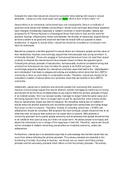
Running Page: Week 2 Case Study: Chemistry BIOS-251 Week 2 Case Study: Chemistry – Download To Score An A+ Despite numerous differences in terms of the structure, composition as well as their functions, carbohydrates and fats are chemically related. First, both fats and carbohydrates are organic compounds. This means that both contain the elements of carbon (C), hydrogen (H), and oxygen (O) (Kuhnt et al., 2011). As such, carbohydrates and fats are related from the fact that both are organic compounds. Second, the chemical bonds in both carbohydrates and fats molecules contain energy (Van Dam et al., 2002). This energy is released when the bonds are chemically broken down during the process of digestion in the body. Enzymes are used in both cases. Therefore, carbohydrates and fats are chemically related from the fact that they both contain chemical bonds, which can be broken down to release energy. This is despite the fact that the release of energy in carbohydrates is different from the release of energy from fats. They both contain calories, but fats have more calories per gram compared to carbohydrates. Fats in general perform a critical function in the body. However, the benefits of the fats to the body depend on the type; that is whether the fats are saturated or unsaturated. There is a huge difference between the two types of fats which includes; first, saturated fats mostly tend to be solid at room temperature while unsaturated fats tend to be liquid at room temperature (Felman, 2021). Second, saturated fats do not have double bonds between their carbons while unsaturated fats tend to have one or more double bonds between their carbons (Kubala, 2019). Third, saturated fats are mostly found in animals such as pork, fatty beef, cheese, lamb, and beef fat, while on the other hand, unsaturated fats are found in plants such as avocados, nuts, and peanut (Kubala, 2019). Unsaturated fats are better to consume are better to consume than saturated fats (Van Dam et al., 2002). This is basically because of the related health consequences that come with consumption of fats. Saturated fats have been significantly linked with negative health conditions such as heart diseases, diabetes type 2, weight gain, blood pressure, and so on (Hu, Van Dam, and Liu, 2001). According to an analysis done on 2015, it was found that reducing the amount of saturated fats consumption reduced the risks of contracting a heart condition (Felman, 2021). As such, people are being advised to switch from saturated fats to unsaturated fats. In addition, the American Heart Association has recommended that, people should restrict their consumption for saturated fats to not more than 6% of their daily calories (Kubala, 2019). This is as a result of the negative health consequences of saturated fats, which have been revealed by numerous studies. Trans fats are types of fats that are made through adding hydrogen molecules to the vegetable oils by using heat and pressure. This process alters the chemical properties of the oils, therefore making them to solidify at room temperatures. After this process, the vegetable oils are referred to as trans fats. Due to their nature of adding bad cholesterol in the body and reducing healthy cholesterol in the body, trans fats have been linked to increasing a person’s risk to strokes, heart diseases, type 2 diabetes, liver dysfunction, as well as alzheimers (Kuhnt et al., 2011). However, despite these health consequences, companies still continue to add trans fats in their foods for two reasons; First, trans fats have a longer shelf life compared to vegetable oils, therefore that is an advantage to the companies as they can increase profits (Van Dam, 2002). Second, trans fats helps to stabilize the flavor of foods, therefore the companies sees it as an advantage (Kuhnt, 2011). If Mitch does not reduce his triglyceride levels there could be negative conditions or health consequences. High triglyceride levels or hypertriglyceridemia has been linked to conditions such as atherosclerosis or arteries becoming hard, heart diseases, stroke, or even heart attack (Tsuang et al., 2009). In addition, too much triglyceride levels can also make Mitch to develop conditions such as type 2 diabetes, kidney or liver disorders, hypothyroidism or thyroid problems, and other genetic conditions (Berglund et al., 2012). As such, Mitch should reduce his triglyceride levels. References Berglund, L., et al. (2012). Evaluation and treatment of hypertriglyceridemia: an endocrine society clinical practice guideline. Journal of Clinical Endoclinology Metabolism, 97(9), Felman, A. (2021). Is saturated or unsaturated fat better for health? Retrieved from Hu, F.G., Van Dam, R.M., and Liu, S. (2001). Diet and risk of Type II diabetes: the role of types of fats and carbohydrate. Diabetologia, 44(7), 805-817 Kubala, J. (2019). What’s the Difference Between Saturated and Unsaturated Fat? Journal of Nutrition, 8(3), 121-130 Kuhnt, K., et al. (2011). Trans fatty acid isomers and the trans-9/trans-11 index in fat containing foods. European Journal of Lipid Science and Technology, 113(10), Tsuang, W., et al. (2009). Hypertriglyceridemic pancreatitis: presentation and management. American Journal of Gastroenterol, 104(4), 984-991 Van Dam, R.M., et al. (2002). Dietary fat and meat intake in relation to risk of type 2 diabetes in men. Diabetes Care, 25(3), 417-424

Meer zien Lees minder
Instelling
Vak


Oeps! We kunnen je document nu niet laden. Probeer het nog eens of neem contact op met support.

Geschreven voor

Instelling
Vak

Documentinformatie

Geüpload op
7 oktober 2024
Aantal pagina's
4
Geschreven in
2024/2025
Type
Case uitwerking
Docent(en)
John
Cijfer
A+

Onderwerpen

Voorbeeld van de inhoud

Running Page: Week 2 Case Study: Chemistry


Week 2 Case Study: Chemistry

Student’s Name


Chamberlain university


Course Number BIOS251


Instructor’s Name Anthony Rosania


This study source was downloaded by 100000891712681 from CourseHero.com on 10-03-2024 08:37:08 GMT -05:00


https://www.coursehero.com/file/109190191/Case-Study-Week-2-Case-Study-Chemistrydocx/

€9,20
Krijg toegang tot het volledige document:

100% tevredenheidsgarantie
Direct beschikbaar na je betaling
Lees online óf als PDF
Geen vaste maandelijkse kosten


Ook beschikbaar in voordeelbundel

Maak kennis met de verkoper

Seller avatar
De reputatie van een verkoper is gebaseerd op het aantal documenten dat iemand tegen betaling verkocht heeft en de beoordelingen die voor die items ontvangen zijn. Er zijn drie niveau’s te onderscheiden: brons, zilver en goud. Hoe beter de reputatie, hoe meer de kwaliteit van zijn of haar werk te vertrouwen is.
DocEdyth Teachme2-tutor
Volgen Je moet ingelogd zijn om studenten of vakken te kunnen volgen
Verkocht
26
Lid sinds
2 jaar
Aantal volgers
12
Documenten
520
Laatst verkocht
1 maand geleden

4,0

2 beoordelingen

5
1
4
0
3
1
2
0
1
0

Recent door jou bekeken

Waarom studenten kiezen voor Stuvia

Gemaakt door medestudenten, geverifieerd door reviews

Kwaliteit die je kunt vertrouwen: geschreven door studenten die slaagden en beoordeeld door anderen die dit document gebruikten.

Niet tevreden? Kies een ander document

Geen zorgen! Je kunt voor hetzelfde geld direct een ander document kiezen dat beter past bij wat je zoekt.

Betaal zoals je wilt, start meteen met leren

Geen abonnement, geen verplichtingen. Betaal zoals je gewend bent via iDeal of creditcard en download je PDF-document meteen.

Student with book image

“Gekocht, gedownload en geslaagd. Zo makkelijk kan het dus zijn.”

Alisha Student

Veelgestelde vragen