Learning Unit 6
Capital allowances
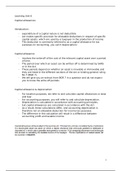
Introduction:
- expenditure of a capital nature is not deductible
- Act makes specific provision for allowable deductions in respect of specific
capital assets, which are used by a taxpayer in the production of income
- This deduction is commonly referred to as a capital allowance for tax
purposes (in Accounting, you call it depreciation)
Capital allowance:
- involves the write-off of the cost of the relevant capital asset over a period
of time.
- The period over which an asset can be written off is determined by SARS
or in the Act.
- These periods depend on whether an asset is movable or immovable and
they are listed in the different sections of the Act or binding general ruling
No 7 (BGR 7).
- We will give you an extract from BGR 7 in a question and do not expect
you to know the write-off periods.
Capital allowance & depreciation:
- For taxation purposes, we refer to and calculate capital allowances or wear
and tear.
- For accounting purposes, you will refer to and calculate depreciation.
- Depreciation is calculated in accordance with accounting principles,
- but capital allowances are calculated in accordance with the Act.
- As a result, these calculations differ, and accounting depreciation is
therefore not an allowable deduction for income tax purposes.
- The difference in the calculation will result in a difference between
accounting profit and taxable income.
1
,2
, 6.1 Background:
The Act makes provision for capital allowances in respect of capital assets, which
are used in the business of the taxpayer.
Section 11(e) of the Act:
- makes provision for wear-and-tear allowances in respect of moveable
assets in general.
- Special capital allowances also exist for assets used in the manufacturing
process (manufacturing assets (s 12C) as well as manufacturing buildings
(s 13))
- and assets used by a small business corporation (s 12E).
Various other types of allowances are applicable to buildings.
- These special capital allowances are often referred to as accelerated
allowances
- because they are more favourable for the taxpayer than the general
capital allowances under section 11(e) and
- are aimed at advancing the manufacturing or other sectors,
- which create job opportunities.
In this learning unit, we will consider:
- how to treat the cost of purchasing an asset,
- the allowances when holding an asset and, lastly,
- the implications of selling or disposing of an asset.
- As you know, the purchase price of an asset is not deductible for income
tax purposes
- Instead, the cost is spread over the estimated life of the asset and
deducted as a capital allowance.
6.2 Repairs & improvements:
Part of the cost of holding an asset is to keep it in good working order.
Capital assets include:
- the cost of improvements to the capital asset,
- but exclude the cost of repairs to restore the asset to its original state.
Repairs are concerned mainly with restoring damage or deterioration to
capital assets,
- and the intention of the taxpayer is to restore the assets to its original
condition,
- whereas an improvement is the creation of a better asset.
3
Capital allowances
Introduction:
- expenditure of a capital nature is not deductible
- Act makes specific provision for allowable deductions in respect of specific
capital assets, which are used by a taxpayer in the production of income
- This deduction is commonly referred to as a capital allowance for tax
purposes (in Accounting, you call it depreciation)
Capital allowance:
- involves the write-off of the cost of the relevant capital asset over a period
of time.
- The period over which an asset can be written off is determined by SARS
or in the Act.
- These periods depend on whether an asset is movable or immovable and
they are listed in the different sections of the Act or binding general ruling
No 7 (BGR 7).
- We will give you an extract from BGR 7 in a question and do not expect
you to know the write-off periods.
Capital allowance & depreciation:
- For taxation purposes, we refer to and calculate capital allowances or wear
and tear.
- For accounting purposes, you will refer to and calculate depreciation.
- Depreciation is calculated in accordance with accounting principles,
- but capital allowances are calculated in accordance with the Act.
- As a result, these calculations differ, and accounting depreciation is
therefore not an allowable deduction for income tax purposes.
- The difference in the calculation will result in a difference between
accounting profit and taxable income.
1
,2
, 6.1 Background:
The Act makes provision for capital allowances in respect of capital assets, which
are used in the business of the taxpayer.
Section 11(e) of the Act:
- makes provision for wear-and-tear allowances in respect of moveable
assets in general.
- Special capital allowances also exist for assets used in the manufacturing
process (manufacturing assets (s 12C) as well as manufacturing buildings
(s 13))
- and assets used by a small business corporation (s 12E).
Various other types of allowances are applicable to buildings.
- These special capital allowances are often referred to as accelerated
allowances
- because they are more favourable for the taxpayer than the general
capital allowances under section 11(e) and
- are aimed at advancing the manufacturing or other sectors,
- which create job opportunities.
In this learning unit, we will consider:
- how to treat the cost of purchasing an asset,
- the allowances when holding an asset and, lastly,
- the implications of selling or disposing of an asset.
- As you know, the purchase price of an asset is not deductible for income
tax purposes
- Instead, the cost is spread over the estimated life of the asset and
deducted as a capital allowance.
6.2 Repairs & improvements:
Part of the cost of holding an asset is to keep it in good working order.
Capital assets include:
- the cost of improvements to the capital asset,
- but exclude the cost of repairs to restore the asset to its original state.
Repairs are concerned mainly with restoring damage or deterioration to
capital assets,
- and the intention of the taxpayer is to restore the assets to its original
condition,
- whereas an improvement is the creation of a better asset.
3