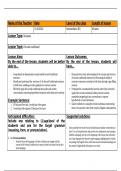
Name of the Teacher Date Level of the class Length of lesson
10.10.2024 Intermediate (B1) 60 mins
Lesson Type: Grammar
Lesson Topic: Second conditional
Lesson Aims: Lesson Outcomes:
By the end of the lesson, students will be better By the end of the lesson, students will
able to… have…
Comprehend the fundamental concept behind Second Conditional Demonstrated a clear understanding of the concept and structure
sentences. of second conditional sentences by showcasing the ability to
Identify and understand the structure of the Second Conditional sentences construct sentences accurately in both forms through a gap-filling
in both forms, enabling accurate application in various contexts. exercise.
Effectively apply the second conditional into spoken and written Participated in a communicative exercise where they accurately
conversations, expressing hypothetical situations with clarity and creativity. applied the second conditional within practical contexts,
seamlessly integrating it into conversations to express
Example Sentence: hypothetical or unreal situations.
1. If I had more free time, I would play video games. Gained confidence in using the second conditional, empowering
2. I would play video games if I had more free time. them to incorporate it into their everyday English communication.
Anticipated difficulties: Suggested solutions:
Include one relating to L1/age/level of the
students and one for the target grammar 1. Draw parallels between the Second Conditional and similar constructions in
(meaning, form, or pronunciation). their L1 to aid comprehension and provide clear explanations and examples.
Establish a language-use rule at the beginning of the lesson, that forbids the
1. L1 (French and Italian) use of any language other than the target language, highlighting the benefits
Students whose first language is French or Italian may struggle with the of speaking only English. There will be less room for misunderstandings and
concept of the Second Conditional as it may not exist in the same form in their the students' English skills will improve as a result.
native language.
, The diverse linguistic backgrounds in the classroom could potentially create
confusion among students. 2. Use an appropriate context and prompts that are relatable to teenagers, such
as hobbies, dreams, and fictional situations from movies or books. Encourage
creativity and imagination.
2. Age (15-16 years) Make grammar lessons engaging and incorporating interactive activities,
Students in this age group may have limited life experiences to draw upon for real-life examples, and multimedia resources can make the learning process
hypothetical scenarios, which are common in Second Conditional exercises. more enjoyable. Encouraging a positive attitude towards grammar and
Grammar, as we're aware, tends to be a less favoured aspect of learning for celebrating small achievements can also boost motivation and confidence in
students. Teenagers often find it boring, seemingly illogical, and hard to remember, learning this essential aspect of language.
which can pose a hindrance to the learning process.
3. Begin with a brief review of the past simple tense and provide additional
practice if needed. Offer clear explanations and examples to reinforce
3. Level (Intermediate B1) understanding.
Students at this level may struggle with the past simple tense, which is a crucial
component of the Second Conditional structure. 4. Use concrete examples and scenarios to illustrate the difference between
The abstract nature of hypothetical scenarios in the second conditional might pose a
factual and hypothetical statements. Encourage students to think creatively.
challenge, and students might need additional support in understanding and
Highlight the correct usage of 'would' in the Second Conditional. Engage
constructing sentences that express hypothetical scenarios appropriately.
learners in interactive exercises and activities that specifically target this
aspect of grammar. Offer regular practice opportunities to reinforce the
correct structure and address sentence structure flexibility by explaining
4. Target Grammar (Meaning, Form, and Pronunciation)
Some students might find it challenging to grasp the nuances of meaning and usage that the positions of the sentences can be changed.
in hypothetical situations, especially when combined with the specific structure of Include drills and repetition exercises for contracted forms to improve
the Second Conditional. pronunciation accuracy. Encourage peer collaboration for pronunciation
Second conditional uses the past simple in the if-clause and ‘would’ in the main feedback.
clause. Learners often make the mistake of putting ‘would’ in the if-clause. In fact,
this is one of the most common grammatical mistakes made by non-native speakers. 5. Establish an emotionally supportive classroom environment as well as a
Additionally, students may assume that "would" must always be used in the second physical environment that celebrates diversity. Despite their cultural
part of the sentence. differences, students are encouraged to feel respected and cared for in this
Pronunciation of the contracted forms like "I'd" and "you'd" might pose difficulties. type of atmosphere, which enables them to relax and focus on their lesson.
5. Cultural differences 6. Keep an eye on your students and give the students who appear to be paying
Interactions between students from diverse cultural backgrounds may be difficult, less attention leadership duties, such as those of group leader or person in
which could result in misunderstandings and interruptions during a lesson, putting charge of distributing and collecting worksheets from students, to encourage
learning at risk. them to pay more attention and behave more quietly during the lesson.
, 6. Motivation
Some students' presence at International Summer School may be the result of
parental decision rather than their own free will, which could result in a lack of
focus and disruption in the classroom.
Target language analysis:
Review Unit 7: Analysing Grammar if you need guidance with this section.
1. What is the use or function The use or function of the second conditional grammar is to express hypothetical or unreal situations in English. It is often
of the grammar? (Include a employed to talk about things that are unlikely, impossible, or purely imaginary. The timeline for the second conditional is
typically the present or future, and it indicates a situation that is not true in the present but could be true under certain
timeline if appropriate) conditions.
The second conditional serves two primary functions:
1. Present Unreal Situation:
The second conditional serves to discuss present situations that are impossible or untrue, emphasizing their unreal
nature. For example, "If I were a superhero, I would save the world." (I am not a superhero, but I'm imagining the
possibility in a hypothetical scenario.)
2. Unlikely Future Scenarios
It also allows us to discuss future scenarios that are unlikely to occur, often representing imaginative or dreamlike
circumstances. For example, in the statement "If I had a time machine, I would travel back in time," the use of the
second conditional introduces a hypothetical scenario (having a time machine) that is unlikely to happen.
Timeline:
10.10.2024 Intermediate (B1) 60 mins
Lesson Type: Grammar
Lesson Topic: Second conditional
Lesson Aims: Lesson Outcomes:
By the end of the lesson, students will be better By the end of the lesson, students will
able to… have…
Comprehend the fundamental concept behind Second Conditional Demonstrated a clear understanding of the concept and structure
sentences. of second conditional sentences by showcasing the ability to
Identify and understand the structure of the Second Conditional sentences construct sentences accurately in both forms through a gap-filling
in both forms, enabling accurate application in various contexts. exercise.
Effectively apply the second conditional into spoken and written Participated in a communicative exercise where they accurately
conversations, expressing hypothetical situations with clarity and creativity. applied the second conditional within practical contexts,
seamlessly integrating it into conversations to express
Example Sentence: hypothetical or unreal situations.
1. If I had more free time, I would play video games. Gained confidence in using the second conditional, empowering
2. I would play video games if I had more free time. them to incorporate it into their everyday English communication.
Anticipated difficulties: Suggested solutions:
Include one relating to L1/age/level of the
students and one for the target grammar 1. Draw parallels between the Second Conditional and similar constructions in
(meaning, form, or pronunciation). their L1 to aid comprehension and provide clear explanations and examples.
Establish a language-use rule at the beginning of the lesson, that forbids the
1. L1 (French and Italian) use of any language other than the target language, highlighting the benefits
Students whose first language is French or Italian may struggle with the of speaking only English. There will be less room for misunderstandings and
concept of the Second Conditional as it may not exist in the same form in their the students' English skills will improve as a result.
native language.
, The diverse linguistic backgrounds in the classroom could potentially create
confusion among students. 2. Use an appropriate context and prompts that are relatable to teenagers, such
as hobbies, dreams, and fictional situations from movies or books. Encourage
creativity and imagination.
2. Age (15-16 years) Make grammar lessons engaging and incorporating interactive activities,
Students in this age group may have limited life experiences to draw upon for real-life examples, and multimedia resources can make the learning process
hypothetical scenarios, which are common in Second Conditional exercises. more enjoyable. Encouraging a positive attitude towards grammar and
Grammar, as we're aware, tends to be a less favoured aspect of learning for celebrating small achievements can also boost motivation and confidence in
students. Teenagers often find it boring, seemingly illogical, and hard to remember, learning this essential aspect of language.
which can pose a hindrance to the learning process.
3. Begin with a brief review of the past simple tense and provide additional
practice if needed. Offer clear explanations and examples to reinforce
3. Level (Intermediate B1) understanding.
Students at this level may struggle with the past simple tense, which is a crucial
component of the Second Conditional structure. 4. Use concrete examples and scenarios to illustrate the difference between
The abstract nature of hypothetical scenarios in the second conditional might pose a
factual and hypothetical statements. Encourage students to think creatively.
challenge, and students might need additional support in understanding and
Highlight the correct usage of 'would' in the Second Conditional. Engage
constructing sentences that express hypothetical scenarios appropriately.
learners in interactive exercises and activities that specifically target this
aspect of grammar. Offer regular practice opportunities to reinforce the
correct structure and address sentence structure flexibility by explaining
4. Target Grammar (Meaning, Form, and Pronunciation)
Some students might find it challenging to grasp the nuances of meaning and usage that the positions of the sentences can be changed.
in hypothetical situations, especially when combined with the specific structure of Include drills and repetition exercises for contracted forms to improve
the Second Conditional. pronunciation accuracy. Encourage peer collaboration for pronunciation
Second conditional uses the past simple in the if-clause and ‘would’ in the main feedback.
clause. Learners often make the mistake of putting ‘would’ in the if-clause. In fact,
this is one of the most common grammatical mistakes made by non-native speakers. 5. Establish an emotionally supportive classroom environment as well as a
Additionally, students may assume that "would" must always be used in the second physical environment that celebrates diversity. Despite their cultural
part of the sentence. differences, students are encouraged to feel respected and cared for in this
Pronunciation of the contracted forms like "I'd" and "you'd" might pose difficulties. type of atmosphere, which enables them to relax and focus on their lesson.
5. Cultural differences 6. Keep an eye on your students and give the students who appear to be paying
Interactions between students from diverse cultural backgrounds may be difficult, less attention leadership duties, such as those of group leader or person in
which could result in misunderstandings and interruptions during a lesson, putting charge of distributing and collecting worksheets from students, to encourage
learning at risk. them to pay more attention and behave more quietly during the lesson.
, 6. Motivation
Some students' presence at International Summer School may be the result of
parental decision rather than their own free will, which could result in a lack of
focus and disruption in the classroom.
Target language analysis:
Review Unit 7: Analysing Grammar if you need guidance with this section.
1. What is the use or function The use or function of the second conditional grammar is to express hypothetical or unreal situations in English. It is often
of the grammar? (Include a employed to talk about things that are unlikely, impossible, or purely imaginary. The timeline for the second conditional is
typically the present or future, and it indicates a situation that is not true in the present but could be true under certain
timeline if appropriate) conditions.
The second conditional serves two primary functions:
1. Present Unreal Situation:
The second conditional serves to discuss present situations that are impossible or untrue, emphasizing their unreal
nature. For example, "If I were a superhero, I would save the world." (I am not a superhero, but I'm imagining the
possibility in a hypothetical scenario.)
2. Unlikely Future Scenarios
It also allows us to discuss future scenarios that are unlikely to occur, often representing imaginative or dreamlike
circumstances. For example, in the statement "If I had a time machine, I would travel back in time," the use of the
second conditional introduces a hypothetical scenario (having a time machine) that is unlikely to happen.
Timeline: