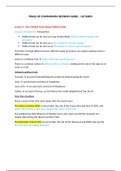
TRAILS OF COMMUNISM REVISION GUIDE – LECTURES
Lecture 1: How Political Trials Shape Political Order
Lawyers VS Historian’s Perspective:
Political trials can be seen as a way of describing certain political changes and
processes
Political trials can be seen as a tool to observe societal changes
Political trials can be seen as an illustration of cultural representations
Therefore, through different lenses, different types of scholars can explore political trials in
different ways
Actors in a Political Trial Judge, Defendant and Prosecutor
There is a common notion of political trials as a theatre; looking at the role of the state as an
actor in a trial
Antiquity political trials
Socrates accused of destabilizing the system by indoctrinating the youth
Jesus accused and convicted of blasphemy
Joan of Arc accused and convicted of blasphemy
Galileo accused of heresy, as his heliocentric model delegitimized the church
Post-War situations
These concern trials that came about after the end of wars
The Alsace-Lorraine Affair surfaced after the end of the Franco-Prussian War of 1870, and
public intervention in this case changed the course of this trial
The political trial had influence of Theodor Herzl, who came up with the necessity of a
Jewish state during the Alsace-Lorraine Trials
The Eichmann Trial of 1961 occurred after the end of the Holocaust and WW2 and was the
first trial that was widely televised
,The ideology behind political trials
Trials are presented with an air of morality and secured by the legitimacy of law and
legislation
Ron Christenson wrote a book type-coding political trials into 4 categories:
1. Trails of public responsibility the trials of corruption or against public privacy
2. Trials of dissenters State VS Individual
3. Trials of nationalists The majority VS the minority
4. Trials of regimes occurring after a period of political transition
Christenson argues that even though there is a semblance of legitimacy in political trials,
there is an ongoing subconscious debate centred around responsibility, morality and
representation
The trail as a narrative also comes into play as they centre around didactic tales thereby
the public uses these narratives to shape their view of society
Lecture 2: Post WW2 Retributions
After WW2, there was a sense of public duty and responsibility to rid non-German
territories of German people, even if they were former citizens
Mass-scale reprisals occurred directed against war criminals, collaborators and German
people
Some forms of retribution included:
1. Vigilante violence
2. People’s Tribunals local level
3. Military and State Courts larger cities aimed at punishing more important war
criminals
4. International Tribunals Approved by the Allied powers for significant Nazi
perpetrators
East/Central Europe
Here we see a mass expulsion of Germans; specifically, in Poland, Czechoslovakia and
Hungary where they followed the lateral of state law
12 to 14 million Germans were expelled from East-Central Europe, which added to the mass
social mobility of the Jews as well
Most of the violence was directed against those who were seen as perpetrators of the war
and included: mass violence, looting, hangings and mass suicides
It can also be said that the realities of expulsions can be seen as a form of punishment in its
own right; as Germans faced forced labour, transport camps and dire living conditions
All these processes of violence and condemnation against the Germans can be seen as a
form of ‘victor’s justice’
, The Planning of Expulsions
The planning started much later than the end of the war, as during the war governments in
exile (mainly position in London) discussed post-war order
In 1941, Czechoslovakia’s President in Exile (Edvard Benes) published an article titled ‘New
Order in Europe’ outlining the expulsion of German people and describing all Germans (even
those who were anti-Nazi) as passive war criminals; highlighting the culpability of everyone
In 1942, there was an extermination of the population of Lidice by the Nazi and German
forced Benes used this to demonize the entire German nation
Expulsions as human rights violations
German expulsions are currently seen as human rights violations as the punishments were
not in proportion to any crimes they may or may not have committed
Violence was omnipresent in the early post-war years
Before official expulsion occurred, one can note the development of wild expulsions by non-
Germans, highlighting a mob mentality
Czechoslovakia
The Sudetenland in the West of Czechoslovakia were populated with a 95% German
population
During expulsions, they were expelled to Western Germany and new settlers came from
internal Czechoslovakia to take their homes
German Sudetens were easy to identify because of their heavy accent or lack of capability
speaking the local language
Some Germans were allowed to stay as their expert knowledge could be applied to
industrial sector growth
Benes claimed that “Germans are to blame, they caused it themselves, we are justified and
have the whole world on our side” thus framing expulsions under a global peace banner
The Czechoslovak press shaped the cultural memory of Germans as something that was
unwanted and using this rhetoric to justify violent expulsions
Local press was eager and enthusiastic to report the expulsions of Germans from local and
regional areas
Exemptions
1. German-Speaking Jews they had to show loyalty to local regimes, and if they
declared themselves as German on the 1930 nationality census they were expelled
2. Germans in mixed marriages
3. Antifascists this category was hard to identify
4. Experts e.g business owners
Lecture 1: How Political Trials Shape Political Order
Lawyers VS Historian’s Perspective:
Political trials can be seen as a way of describing certain political changes and
processes
Political trials can be seen as a tool to observe societal changes
Political trials can be seen as an illustration of cultural representations
Therefore, through different lenses, different types of scholars can explore political trials in
different ways
Actors in a Political Trial Judge, Defendant and Prosecutor
There is a common notion of political trials as a theatre; looking at the role of the state as an
actor in a trial
Antiquity political trials
Socrates accused of destabilizing the system by indoctrinating the youth
Jesus accused and convicted of blasphemy
Joan of Arc accused and convicted of blasphemy
Galileo accused of heresy, as his heliocentric model delegitimized the church
Post-War situations
These concern trials that came about after the end of wars
The Alsace-Lorraine Affair surfaced after the end of the Franco-Prussian War of 1870, and
public intervention in this case changed the course of this trial
The political trial had influence of Theodor Herzl, who came up with the necessity of a
Jewish state during the Alsace-Lorraine Trials
The Eichmann Trial of 1961 occurred after the end of the Holocaust and WW2 and was the
first trial that was widely televised
,The ideology behind political trials
Trials are presented with an air of morality and secured by the legitimacy of law and
legislation
Ron Christenson wrote a book type-coding political trials into 4 categories:
1. Trails of public responsibility the trials of corruption or against public privacy
2. Trials of dissenters State VS Individual
3. Trials of nationalists The majority VS the minority
4. Trials of regimes occurring after a period of political transition
Christenson argues that even though there is a semblance of legitimacy in political trials,
there is an ongoing subconscious debate centred around responsibility, morality and
representation
The trail as a narrative also comes into play as they centre around didactic tales thereby
the public uses these narratives to shape their view of society
Lecture 2: Post WW2 Retributions
After WW2, there was a sense of public duty and responsibility to rid non-German
territories of German people, even if they were former citizens
Mass-scale reprisals occurred directed against war criminals, collaborators and German
people
Some forms of retribution included:
1. Vigilante violence
2. People’s Tribunals local level
3. Military and State Courts larger cities aimed at punishing more important war
criminals
4. International Tribunals Approved by the Allied powers for significant Nazi
perpetrators
East/Central Europe
Here we see a mass expulsion of Germans; specifically, in Poland, Czechoslovakia and
Hungary where they followed the lateral of state law
12 to 14 million Germans were expelled from East-Central Europe, which added to the mass
social mobility of the Jews as well
Most of the violence was directed against those who were seen as perpetrators of the war
and included: mass violence, looting, hangings and mass suicides
It can also be said that the realities of expulsions can be seen as a form of punishment in its
own right; as Germans faced forced labour, transport camps and dire living conditions
All these processes of violence and condemnation against the Germans can be seen as a
form of ‘victor’s justice’
, The Planning of Expulsions
The planning started much later than the end of the war, as during the war governments in
exile (mainly position in London) discussed post-war order
In 1941, Czechoslovakia’s President in Exile (Edvard Benes) published an article titled ‘New
Order in Europe’ outlining the expulsion of German people and describing all Germans (even
those who were anti-Nazi) as passive war criminals; highlighting the culpability of everyone
In 1942, there was an extermination of the population of Lidice by the Nazi and German
forced Benes used this to demonize the entire German nation
Expulsions as human rights violations
German expulsions are currently seen as human rights violations as the punishments were
not in proportion to any crimes they may or may not have committed
Violence was omnipresent in the early post-war years
Before official expulsion occurred, one can note the development of wild expulsions by non-
Germans, highlighting a mob mentality
Czechoslovakia
The Sudetenland in the West of Czechoslovakia were populated with a 95% German
population
During expulsions, they were expelled to Western Germany and new settlers came from
internal Czechoslovakia to take their homes
German Sudetens were easy to identify because of their heavy accent or lack of capability
speaking the local language
Some Germans were allowed to stay as their expert knowledge could be applied to
industrial sector growth
Benes claimed that “Germans are to blame, they caused it themselves, we are justified and
have the whole world on our side” thus framing expulsions under a global peace banner
The Czechoslovak press shaped the cultural memory of Germans as something that was
unwanted and using this rhetoric to justify violent expulsions
Local press was eager and enthusiastic to report the expulsions of Germans from local and
regional areas
Exemptions
1. German-Speaking Jews they had to show loyalty to local regimes, and if they
declared themselves as German on the 1930 nationality census they were expelled
2. Germans in mixed marriages
3. Antifascists this category was hard to identify
4. Experts e.g business owners