Week 2 Discussion
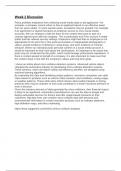
Policy prohibits employers from collecting social media data on job applicants—for
example, a company cannot refuse to hire an applicant based on an offensive tweet
from six years earlier. In some special cases, exceptions may be granted. For example,
if an agreement is signed that gives an employer access to one's social media
accounts, then an employer could fire them for the content they post as part of a
contract agreed upon with the company. This is particularly true if the account is made
public and has relaxed security settings. Employers might feel that an employee is not
appropriate for the job if he or she posts provocative or inappropriate photographs or
videos, posted evidence of drinking or using drugs, and even evidence of criminal
behavior. Before an individual posts personal content on a social media account, it
would be important to think hard about the ramifications. It's important to be aware that
posts may be scrutinized by the public, which could damage professional reputations. If
there is content posted on behalf of a company, it is also important to make sure that
the content stays in line with the company's values and long-term goals.
I chose an article about micro collision detection systems. Advanced vehicle data is
changing the automotive industry by developing micro-collision detection systems.
These systems, which will deliver safety and efficiency benefits, are designed using
machine learning algorithms.
By evaluating this data and identifying unique patterns, insurance companies can odds
ratios based on products such as vehicle miles traveled, road conditions, towing usage,
or weather patterns. These odds ratios inform drivers about safety hazards or driving
practices they may be unaware of and could contribute to a lower insurance premium or
even a discount.
Given the massive amounts of data generated by micro-collisions, their financial impact
is likely to be significant. Automotive manufacturers can use the data to design and
deploy automated services for drivers and offer usage-based insurance to their
customers. Big-data firms can combine micro-collision data with personal and
environmental information to create innovative products such as software platforms,
high-definition maps, and direct marketing.
https://www.capgemini.com/2021/11/micro-collision-analysis/
Policy prohibits employers from collecting social media data on job applicants—for
example, a company cannot refuse to hire an applicant based on an offensive tweet
from six years earlier. In some special cases, exceptions may be granted. For example,
if an agreement is signed that gives an employer access to one's social media
accounts, then an employer could fire them for the content they post as part of a
contract agreed upon with the company. This is particularly true if the account is made
public and has relaxed security settings. Employers might feel that an employee is not
appropriate for the job if he or she posts provocative or inappropriate photographs or
videos, posted evidence of drinking or using drugs, and even evidence of criminal
behavior. Before an individual posts personal content on a social media account, it
would be important to think hard about the ramifications. It's important to be aware that
posts may be scrutinized by the public, which could damage professional reputations. If
there is content posted on behalf of a company, it is also important to make sure that
the content stays in line with the company's values and long-term goals.
I chose an article about micro collision detection systems. Advanced vehicle data is
changing the automotive industry by developing micro-collision detection systems.
These systems, which will deliver safety and efficiency benefits, are designed using
machine learning algorithms.
By evaluating this data and identifying unique patterns, insurance companies can odds
ratios based on products such as vehicle miles traveled, road conditions, towing usage,
or weather patterns. These odds ratios inform drivers about safety hazards or driving
practices they may be unaware of and could contribute to a lower insurance premium or
even a discount.
Given the massive amounts of data generated by micro-collisions, their financial impact
is likely to be significant. Automotive manufacturers can use the data to design and
deploy automated services for drivers and offer usage-based insurance to their
customers. Big-data firms can combine micro-collision data with personal and
environmental information to create innovative products such as software platforms,
high-definition maps, and direct marketing.
https://www.capgemini.com/2021/11/micro-collision-analysis/