4.2 #3 LG1: What is groupthink? Model? Factors? Prevention?
Strengths & limitation of theory?
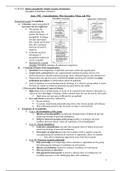
Janis, 1982 - Generalizations: Who Succumbs, When, and Why
Theoretical model: Groupthink
A. Cohesion: major antecedent
necessary but not sufficient!
The greater the
cohesiveness the
greater the danger of
groupthink danger
not that individuals
don’t speak up but that
they don’t question
decision favored by
majority
Cohesion can have
advantages if
groupthink tendencies
can be avoided!
Increased by 3 social
rewards: friendship, prestige, & enhanced competence
B. - 1 Structural faults of the organization:
1. Insulation from judgments of qualified associates within the organization
2. Leader feels constrained by any organizational tradition & pushes for his own
preferred policies (should instead encourage open, unbiased inquiry into alternatives)
3. Organization has no previously established norms requiring the members to adopt
methodical procedures of information search & appraisal
4. Lack of disparity in social background & ideology of a cohesive group makes it easier
for them to concur on whatever proposals are put forth by the leader
- 2 Provocative Situational Context (Stress):
1. High stress from external threats of losses to be expected from whatever alternative is
chosen & have low hope of finding a better solution than the one favored by the leader
High stress not necessary/sufficient for groupthink
2. Low self-esteem temporarily induced by:
Recent failures
A current complicated and perplexing choice that lowers groups self-efficacy
Moral dilemma posed by the necessity to make a vital decision
C. Symptoms of Groupthink:
Type I: Overestimation of the group
Illusion of invulnerability can alleviate incipient fears of failure & prevent
unnerving feelings of personal inadequacy
Belief in inherent morality of the group enables to minimize decision
conflicts between ethical values & expediency (Zweckmäßigkeit)
Type II: Closed mindedness
Collective rationalization can alleviate incipient fears of failure & prevent
unnerving feelings of personal inadequacy
Stereotypes of outgroup provides the members with a cognitive map for
conceptualizing the intentions & reactions of opponents, allies, & neutrals
o Also allows displacing aggression away from the in-group
Type III: Pressures towards uniformity
Self-censorship over misgivings when a member is dependent on the group
for bolstering his feelings of confidence & self-esteem
Illusion of unanimity required to enhance confidence & self-esteem
Direct pressure on dissenters
Self-appointed mind guards to preserve shared sense of complacency by
avoiding exposure to info challenging their self-confidence
1
, 4.2 #3 LG1: What is groupthink? Model? Factors? Prevention?
Strengths & limitation of theory?
Choi & Kim (1999) - Organizational Applications of Groupthink
Groupthink: a concurrence-seeking tendency that can impede collective decision-making processes
& lead to poor decisions
Method:
- 30 teams with 108 employees
- 5 corporations & various team functions
- Survey questionnaire retrospective & cross-sectional design attribution error
Results:
Discussion:
- Concurrence seeking & defective decision making NOT directly related to team
performance!
- Some symptoms of groupthink (e.g. group identity) positively related to team performance!
- Behavioral functions (internal & external activities) greater potential to influence team
performance than cognitive decision processes (concurrence seeking & defective decision
processes) + they can mediate relationship between decision processes & team performance
Groupthink may have novel implications for organizational teams (might be motivating or
boosting energy levels)
Implications: revise groupthink model!
2
Strengths & limitation of theory?
Janis, 1982 - Generalizations: Who Succumbs, When, and Why
Theoretical model: Groupthink
A. Cohesion: major antecedent
necessary but not sufficient!
The greater the
cohesiveness the
greater the danger of
groupthink danger
not that individuals
don’t speak up but that
they don’t question
decision favored by
majority
Cohesion can have
advantages if
groupthink tendencies
can be avoided!
Increased by 3 social
rewards: friendship, prestige, & enhanced competence
B. - 1 Structural faults of the organization:
1. Insulation from judgments of qualified associates within the organization
2. Leader feels constrained by any organizational tradition & pushes for his own
preferred policies (should instead encourage open, unbiased inquiry into alternatives)
3. Organization has no previously established norms requiring the members to adopt
methodical procedures of information search & appraisal
4. Lack of disparity in social background & ideology of a cohesive group makes it easier
for them to concur on whatever proposals are put forth by the leader
- 2 Provocative Situational Context (Stress):
1. High stress from external threats of losses to be expected from whatever alternative is
chosen & have low hope of finding a better solution than the one favored by the leader
High stress not necessary/sufficient for groupthink
2. Low self-esteem temporarily induced by:
Recent failures
A current complicated and perplexing choice that lowers groups self-efficacy
Moral dilemma posed by the necessity to make a vital decision
C. Symptoms of Groupthink:
Type I: Overestimation of the group
Illusion of invulnerability can alleviate incipient fears of failure & prevent
unnerving feelings of personal inadequacy
Belief in inherent morality of the group enables to minimize decision
conflicts between ethical values & expediency (Zweckmäßigkeit)
Type II: Closed mindedness
Collective rationalization can alleviate incipient fears of failure & prevent
unnerving feelings of personal inadequacy
Stereotypes of outgroup provides the members with a cognitive map for
conceptualizing the intentions & reactions of opponents, allies, & neutrals
o Also allows displacing aggression away from the in-group
Type III: Pressures towards uniformity
Self-censorship over misgivings when a member is dependent on the group
for bolstering his feelings of confidence & self-esteem
Illusion of unanimity required to enhance confidence & self-esteem
Direct pressure on dissenters
Self-appointed mind guards to preserve shared sense of complacency by
avoiding exposure to info challenging their self-confidence
1
, 4.2 #3 LG1: What is groupthink? Model? Factors? Prevention?
Strengths & limitation of theory?
Choi & Kim (1999) - Organizational Applications of Groupthink
Groupthink: a concurrence-seeking tendency that can impede collective decision-making processes
& lead to poor decisions
Method:
- 30 teams with 108 employees
- 5 corporations & various team functions
- Survey questionnaire retrospective & cross-sectional design attribution error
Results:
Discussion:
- Concurrence seeking & defective decision making NOT directly related to team
performance!
- Some symptoms of groupthink (e.g. group identity) positively related to team performance!
- Behavioral functions (internal & external activities) greater potential to influence team
performance than cognitive decision processes (concurrence seeking & defective decision
processes) + they can mediate relationship between decision processes & team performance
Groupthink may have novel implications for organizational teams (might be motivating or
boosting energy levels)
Implications: revise groupthink model!
2