OCR A-level Paper 1 - Hamlet notes
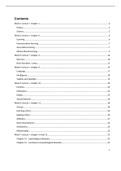
Contents:
Section A – Hamlet Close Analysis:
Close Analysis Mark Scheme – page 2
Close Analysis General Essay Plan – page 3
AO2 Close Analysis Techniques – page 4
Section B – Hamlet Debate Essay:
Debate Essay Mark Scheme – page 12
General Hamlet Debate Essay Plan – page 12
Hamlet Debate Essay Plans – page 13
A* Hamlet Debate Essay Example - page 18
Section A – Hamlet Close Analysis
Below is an overview of the mark scheme and what the examiners will be
looking for, for each AO of the Hamlet Close Analysis question in Section A
1
,of Paper 1. In these notes, most of the content belongs to AO2 as the
close analysis predominantly assesses AO2, and AO1 cannot be explicitly
described in a note format. Nonetheless, I have also provided a general
essay plan to follow for the Hamlet close analysis that will allow you to hit
AO1 as well. You’ll notice that the structure of each paragraph is quite
repetitive, but this allows the essay to have a structured feel for the
examiner, thus achieving AO1. To help achieve AO2, I have attached a
glossary of general language and structure terminology for Hamlet .
Close Analysis Mark Scheme:
AO1: Quality of AO2: language, form and structure (75%)
writing (25%)
Coherent and Discussed language form AND structure
Well-structured
Accurate SPAG LANGUAGE:
Fluent, with a analysed and considered specific and relevant
clear line of themes and motifs
argument Identified and commented upon imagery used
Apt and correct Considered the use of report-like/emotional/
terminology ironic/ rhetorical language
Focused on task Considered both individual words and whole
Understands text, images and sentences
consistent
reference to it FORM:
Relevant critical Consider tragedy form – links to
perspectives used Aristotle/Seneca/Elizabethan tragedy
accurately Considered sentence types and structure and
the effect – including iambic pentameter
Considered the dramatic function of the scene
Considered the audience
STRUCTURE:
Consider how this scene fits into the play as a
whole and where it fits in terms of Freytag’s
pyramid
Considered how is the quote/speech/ sentence/
extract organised? Are images and ideas
repeated and why; is a listing effect etc. used?
Well-embedded quotations
Relevant critical perspectives considered
Close Analysis General Essay Plan:
For this essay plan, I have provided a basic paragraph structure that each
of your main body paragraphs should follow (PETAL). You’ll notice that
there is no conclusion, and that is because you probably won’t have time
2
, for a conclusion, and it is not necessary for a close analysis. Below that is
a list of content that each of your paragraphs should contain whilst
following the PETAL paragraph structure.
Basic Paragraph Structure:
Point
Evidence
Technique
Analysis / effect (on the reader) - why has the writer used these
techniques/devices
Link back to the question
Introduction:
• State where the extract falls in accordance to Freytag’s pyramid +
significance of this in terms of the extract
• How does Shakespeare use tragic form in this extract
• State the broad / main dramatic functions of the extract
◦ “Shakespeare introduces/develops… (character/theme/setting)”
Paragraph 1:
• Dramatic function 1 - state a specific dramatic function
• How does this link to form? (if possible)
• Point - how does Shakespeare use language/structure to create or
enhance this dramatic function?
• Evidence - quote
• Technique - use terminology
• Analysis / dramatic effect - why does Shakespeare use this technique?
◦ Effect on audience
◦ Links to wider play - significance in the play as a whole
• Link back to dramatic function (more information below)
Paragraph 2:
• Dramatic function 2 - state a second specific dramatic function
• How does this link to form? (if possible)
• Point - how does Shakespeare use language/structure to create or
enhance this dramatic function?
• Evidence - quote
• Technique - use terminology
• Analysis / dramatic effect - why does Shakespeare use this technique?
◦ Effect on audience
◦ Links to wider play - significance in the play as a whole
• Link back to dramatic function (more information below)
Dramatic Function / Purpose:
A key part of the Hamlet close analysis is to identify the dramatic function
of the extract. To do this, you can use this list to identify the main
dramatic functions of the Hamlet extract in the exam.
3
Contents:
Section A – Hamlet Close Analysis:
Close Analysis Mark Scheme – page 2
Close Analysis General Essay Plan – page 3
AO2 Close Analysis Techniques – page 4
Section B – Hamlet Debate Essay:
Debate Essay Mark Scheme – page 12
General Hamlet Debate Essay Plan – page 12
Hamlet Debate Essay Plans – page 13
A* Hamlet Debate Essay Example - page 18
Section A – Hamlet Close Analysis
Below is an overview of the mark scheme and what the examiners will be
looking for, for each AO of the Hamlet Close Analysis question in Section A
1
,of Paper 1. In these notes, most of the content belongs to AO2 as the
close analysis predominantly assesses AO2, and AO1 cannot be explicitly
described in a note format. Nonetheless, I have also provided a general
essay plan to follow for the Hamlet close analysis that will allow you to hit
AO1 as well. You’ll notice that the structure of each paragraph is quite
repetitive, but this allows the essay to have a structured feel for the
examiner, thus achieving AO1. To help achieve AO2, I have attached a
glossary of general language and structure terminology for Hamlet .
Close Analysis Mark Scheme:
AO1: Quality of AO2: language, form and structure (75%)
writing (25%)
Coherent and Discussed language form AND structure
Well-structured
Accurate SPAG LANGUAGE:
Fluent, with a analysed and considered specific and relevant
clear line of themes and motifs
argument Identified and commented upon imagery used
Apt and correct Considered the use of report-like/emotional/
terminology ironic/ rhetorical language
Focused on task Considered both individual words and whole
Understands text, images and sentences
consistent
reference to it FORM:
Relevant critical Consider tragedy form – links to
perspectives used Aristotle/Seneca/Elizabethan tragedy
accurately Considered sentence types and structure and
the effect – including iambic pentameter
Considered the dramatic function of the scene
Considered the audience
STRUCTURE:
Consider how this scene fits into the play as a
whole and where it fits in terms of Freytag’s
pyramid
Considered how is the quote/speech/ sentence/
extract organised? Are images and ideas
repeated and why; is a listing effect etc. used?
Well-embedded quotations
Relevant critical perspectives considered
Close Analysis General Essay Plan:
For this essay plan, I have provided a basic paragraph structure that each
of your main body paragraphs should follow (PETAL). You’ll notice that
there is no conclusion, and that is because you probably won’t have time
2
, for a conclusion, and it is not necessary for a close analysis. Below that is
a list of content that each of your paragraphs should contain whilst
following the PETAL paragraph structure.
Basic Paragraph Structure:
Point
Evidence
Technique
Analysis / effect (on the reader) - why has the writer used these
techniques/devices
Link back to the question
Introduction:
• State where the extract falls in accordance to Freytag’s pyramid +
significance of this in terms of the extract
• How does Shakespeare use tragic form in this extract
• State the broad / main dramatic functions of the extract
◦ “Shakespeare introduces/develops… (character/theme/setting)”
Paragraph 1:
• Dramatic function 1 - state a specific dramatic function
• How does this link to form? (if possible)
• Point - how does Shakespeare use language/structure to create or
enhance this dramatic function?
• Evidence - quote
• Technique - use terminology
• Analysis / dramatic effect - why does Shakespeare use this technique?
◦ Effect on audience
◦ Links to wider play - significance in the play as a whole
• Link back to dramatic function (more information below)
Paragraph 2:
• Dramatic function 2 - state a second specific dramatic function
• How does this link to form? (if possible)
• Point - how does Shakespeare use language/structure to create or
enhance this dramatic function?
• Evidence - quote
• Technique - use terminology
• Analysis / dramatic effect - why does Shakespeare use this technique?
◦ Effect on audience
◦ Links to wider play - significance in the play as a whole
• Link back to dramatic function (more information below)
Dramatic Function / Purpose:
A key part of the Hamlet close analysis is to identify the dramatic function
of the extract. To do this, you can use this list to identify the main
dramatic functions of the Hamlet extract in the exam.
3