HISTRIONIC PERSONALI TY DISORDER (CLUSTER B)
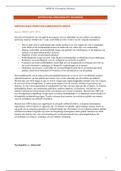
HISTRIONISCHE (THEATRALE) PERSOONLIJKHEIDSSTOORNIS
Source: DSM-V (APA, 2015)
Pervasief patroon van excessieve emotionaliteit en aandacht vragen, beginnend op jongvolwassen
leeftijd en aanwezig in uiteenlopende contexten, zoals blijkt uit vijf of meer van volgende kenmerken;
o Voelt zich niet op zijn of haar gemak in situaties waarin hij of zij niet in het centrum van de
aandacht staat.
o De interactie met anderen wordt vaak gekenmerkt door ongepast seksueel verleidelijk of
provocerend gedrag.
o Vertoont snel wisselende en oppervlakkige expressie van emoties.
o Maakt consistent gebruik van het eigen uiterlijk om de aandacht op zichzelf te vestigen.
o Heeft een stijl van spreken die excessief impressionistisch is, en waarbij details ontbreken.
o Toont zelfdramatisering, theatraliteit en overdreven expressie van emoties.
o Is suggestibel (gemakkelijk beïnvloedbaar door anderen of door omstandigheden).
o Beschouwt relaties met anderen als intiemer dan ze in werkelijkheid zijn.
-Zelfbeeld: aantrekkelijk, minderwaardig
-Beeld anderen: bewonderaars, verleidbaar
-Kernopvatting: “ik moet indruk maken om geaccepteerd te worden”
-strategie: overdrijven, charmeren, opvallen, aandacht zoeken
-Emoties: trots, jaloezie, woede (erg emotioneel en oppervlakkig)
-Opvoeding: genegeerd worden, verlating, bewondering, accent op uiterlijk
Clinical description
Individuals with histrionic personality disorder are attention-seeking and uncomfortable or unhappy
when they are not the centre of attention. Their behavior is often dramatic and their language theatrical
and exaggerated. E.g., pts always seek to be the centre of attention at a party and will make
extravagant expressions of emotion towards friend and colleagues and have a style of speech that is
excessively impressionistic but lacking in detail.
Pts are often viewed as shallow, self-dramatizing and easily influenced. They will draw attention to
themselves by exaggerating their illnesses or dressing provocatively or seductively. Pts find it difficult
to make lasting relationships, and this is frequently a main reason why such individuals seek therapy
1
, IMPLICIT AND SELF-ATTRIBUTED DEPENDENCY NEEDS IN HISTRIONIC PD
Source: Bornstein (1998)
Theorists speculate that dependent personality disorder (DPD) and histrionic personality disorder
(HPD) are both associated with high levels of implicit (unconscious) dependency needs but
speculate that only DPD is associated with high levels of self-attributed (conscious) dependency
needs. To test this hypothesis, 444 undergraduates completed the Personality Diagnostic
Questionnaire-Revised (PDQ-R), along with measures of implicit dependency needs (ROD) and self-
attributed dependency needs (IDI). Correlational analyses and comparison of IDI and ROD scores in
participants scoring above and below the PDQ-R DPD and HPD threshold supported theorists’
speculations regarding implicit and self-attributed dependency needs in DPD and HPD.
Introduction
For many years, dependency needs and motives have been thought to play a prominent role in both
DPD and HPD. On the surface, however, DPD and HPD are not all alike. Whereas the essential
feature of DPD is ‘a pervasive and excessive need to be taken care of that leads to submissive and
clinging behavior and fears of separation’, the essential feature of HPD is ‘pervasive and excessive
emotionality and attention-seeking behavior’.
It is generally assumed that although DPD and HPD are both linked with high levels of underlying
dependency needs, DPD- and HPD-diagnosed persons differ with respect to the degree of insight
they have in this domain. Typically, the individual with DPD has at least some awareness of the ways
that underlying dependency needs affect his or her behavior, whereas the person with HPD has little
insight in this area.
A number of researchers have argued that DPD is associated with high levels of self-attributed
(conscious) dependency needs, as well as high levels of implicit (unconscious) dependency needs. In
contrast, HPD appears to be associated with high levels of implicit dependency needs but low levels
of self-attributed dependency needs.
It was hypothesized that relative to participants with other forms of personality pathology, or no
personality pathology, DPD participants would show high levels of implicit and self-attributed
dependency needs. It is further hypothesized that relative to control participants, HPD participants
would show high levels of implicit – but not self-attributed – dependency needs (i.e., elevated ROD
scores only). When participants arrived at the laboratory, they were told they were taking part in a
study of personality and self-perception. Two months after completing the dependency measures,
participants were contacted by phone and asked to take part in a follow-up session in which PDQ-R
scores were obtained.
Method
The measure of self-attributed dependency needs in this study was the IDI. It is a 48-item
questionnaire consisting of a series of dependency-related self-statements, each of which is rated on a
4-point scale ranging from disagree to agree. There are three subscales; emotional reliance on others
(ER), lack of social self-confidence and assertion of autonomy (AA).
The measure of implicit dependency needs was the ROD scale.
ROD scores are derived from Rorschach protocols that may be
administered individually or in groups. In the group-administration,
participants are shown slides of standard Rorschach inkblots
projected onto a screen.
2
HISTRIONISCHE (THEATRALE) PERSOONLIJKHEIDSSTOORNIS
Source: DSM-V (APA, 2015)
Pervasief patroon van excessieve emotionaliteit en aandacht vragen, beginnend op jongvolwassen
leeftijd en aanwezig in uiteenlopende contexten, zoals blijkt uit vijf of meer van volgende kenmerken;
o Voelt zich niet op zijn of haar gemak in situaties waarin hij of zij niet in het centrum van de
aandacht staat.
o De interactie met anderen wordt vaak gekenmerkt door ongepast seksueel verleidelijk of
provocerend gedrag.
o Vertoont snel wisselende en oppervlakkige expressie van emoties.
o Maakt consistent gebruik van het eigen uiterlijk om de aandacht op zichzelf te vestigen.
o Heeft een stijl van spreken die excessief impressionistisch is, en waarbij details ontbreken.
o Toont zelfdramatisering, theatraliteit en overdreven expressie van emoties.
o Is suggestibel (gemakkelijk beïnvloedbaar door anderen of door omstandigheden).
o Beschouwt relaties met anderen als intiemer dan ze in werkelijkheid zijn.
-Zelfbeeld: aantrekkelijk, minderwaardig
-Beeld anderen: bewonderaars, verleidbaar
-Kernopvatting: “ik moet indruk maken om geaccepteerd te worden”
-strategie: overdrijven, charmeren, opvallen, aandacht zoeken
-Emoties: trots, jaloezie, woede (erg emotioneel en oppervlakkig)
-Opvoeding: genegeerd worden, verlating, bewondering, accent op uiterlijk
Clinical description
Individuals with histrionic personality disorder are attention-seeking and uncomfortable or unhappy
when they are not the centre of attention. Their behavior is often dramatic and their language theatrical
and exaggerated. E.g., pts always seek to be the centre of attention at a party and will make
extravagant expressions of emotion towards friend and colleagues and have a style of speech that is
excessively impressionistic but lacking in detail.
Pts are often viewed as shallow, self-dramatizing and easily influenced. They will draw attention to
themselves by exaggerating their illnesses or dressing provocatively or seductively. Pts find it difficult
to make lasting relationships, and this is frequently a main reason why such individuals seek therapy
1
, IMPLICIT AND SELF-ATTRIBUTED DEPENDENCY NEEDS IN HISTRIONIC PD
Source: Bornstein (1998)
Theorists speculate that dependent personality disorder (DPD) and histrionic personality disorder
(HPD) are both associated with high levels of implicit (unconscious) dependency needs but
speculate that only DPD is associated with high levels of self-attributed (conscious) dependency
needs. To test this hypothesis, 444 undergraduates completed the Personality Diagnostic
Questionnaire-Revised (PDQ-R), along with measures of implicit dependency needs (ROD) and self-
attributed dependency needs (IDI). Correlational analyses and comparison of IDI and ROD scores in
participants scoring above and below the PDQ-R DPD and HPD threshold supported theorists’
speculations regarding implicit and self-attributed dependency needs in DPD and HPD.
Introduction
For many years, dependency needs and motives have been thought to play a prominent role in both
DPD and HPD. On the surface, however, DPD and HPD are not all alike. Whereas the essential
feature of DPD is ‘a pervasive and excessive need to be taken care of that leads to submissive and
clinging behavior and fears of separation’, the essential feature of HPD is ‘pervasive and excessive
emotionality and attention-seeking behavior’.
It is generally assumed that although DPD and HPD are both linked with high levels of underlying
dependency needs, DPD- and HPD-diagnosed persons differ with respect to the degree of insight
they have in this domain. Typically, the individual with DPD has at least some awareness of the ways
that underlying dependency needs affect his or her behavior, whereas the person with HPD has little
insight in this area.
A number of researchers have argued that DPD is associated with high levels of self-attributed
(conscious) dependency needs, as well as high levels of implicit (unconscious) dependency needs. In
contrast, HPD appears to be associated with high levels of implicit dependency needs but low levels
of self-attributed dependency needs.
It was hypothesized that relative to participants with other forms of personality pathology, or no
personality pathology, DPD participants would show high levels of implicit and self-attributed
dependency needs. It is further hypothesized that relative to control participants, HPD participants
would show high levels of implicit – but not self-attributed – dependency needs (i.e., elevated ROD
scores only). When participants arrived at the laboratory, they were told they were taking part in a
study of personality and self-perception. Two months after completing the dependency measures,
participants were contacted by phone and asked to take part in a follow-up session in which PDQ-R
scores were obtained.
Method
The measure of self-attributed dependency needs in this study was the IDI. It is a 48-item
questionnaire consisting of a series of dependency-related self-statements, each of which is rated on a
4-point scale ranging from disagree to agree. There are three subscales; emotional reliance on others
(ER), lack of social self-confidence and assertion of autonomy (AA).
The measure of implicit dependency needs was the ROD scale.
ROD scores are derived from Rorschach protocols that may be
administered individually or in groups. In the group-administration,
participants are shown slides of standard Rorschach inkblots
projected onto a screen.
2