Biopsychology Summary (Chapter 4)
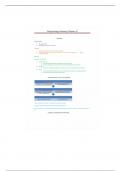
NEURONS
What are they?
Specialised cells
Building blocks of nervous system
Functions
generate electricity which makes nerve impulses
release chemicals allowing communication with other neurons, muscles and glands
(neurotransmitters)
Structure
They have 3 main parts
1. Cell body (soma)
Has biochemical structures essential for neuron’s survival.
Nucleus carries gene info determining the cell’s development and functions
2. Dendrites
“antennae” collecting messages from nearby neurons and transfer them to cell body.
3. Axon
Conducts electrical impulses away from cell body to other neurons, muscles or glands.
Has axon terminals connecting to dendrites
THE ELECTRICAL ACTIVITY OF NEURONS
NEURON
Neuron has electrical resting potential due IS AT REST
Resting potential= internal differnce of
to distribution of +vely and -vely charged
around 70 millivlolts (mV)
chemical ions in & outside of neuron
Action potential is made when positively
UPON STIMULATION
cahrged sodium ions flow in & out through Action potential a.k.a nerve impulses=
cellmembrane, reversing the electrical electrical shift lasting a millisecond
charge of resting potential.
BACK TO REST
Original ionic balance is restored neuron goes back to rest
*positive voltage shift results in excitatory postsynaptic potential
*negative voltage shift results in inhibitory postsynaptic potential
All-or-nothing law: - action potentials must happen at the same and maximum intensity, or they do not happen at
all.
CHEMICAL COMMUNICATION PROCESS
, Biopsychology Summary (Chapter 4)
SYNTHESIS STORAGE STAGE RELEASE STAGE BINDING STAGE DEACTIVATION
STAGE STAGE
Transmitter The molecules When action Molecules bind Molecules are
molecules are are then stored potential comes to receptor site deactivated
made inside in synaptic down the axon, receptor site= through
neuron vesicles, which molecules are large protein reuptake or
are chambers in released into molecules lying breakdown,
the axon synaptic space inthe receiving where they are
terminals synaptic space= neuron's cell taken back to
space between membrane sending neuron
axon terminal &
the next neuron
NEUROTRANSMITTERS AND THEIR ROLES
ACETYLCHOLINE NORADRENALINE
Function: -excitatory @ synapses Function:- excitatory &
- muscle activity inhibitory @
- memory various sites.
- neural circuits
Disorders:- Alzheimer’s disease controlling learning
(lacking)
- memory
- Paralysis (not there) - wakefulness
- Cramps ( excess) - eating
Disorders:- Depression (lack)
SEROTONIN
- stress & panic
Function:- Inhibitory/ excitatory disorder (too active
- mood, sleep, eating DOPAMINE
arousal
pleasure and pain Function:- excitatory
- voluntary
Disorders:- Depression, sleeping motion - emotional
& eating disorders arousal
(lack) -learning,
- OCD (too active) memory -
pleasure/ pain
ENDORPHIN Disorders:- Parkinson’s
disease &
Function:- Inhibits pain
depression
impulses transmission
(lack) -Schizophrenia
Disorders:-Insensitivity to pain (too active)
(excess)
-pain hypersensitivity
immuneproblems
NEURONS
What are they?
Specialised cells
Building blocks of nervous system
Functions
generate electricity which makes nerve impulses
release chemicals allowing communication with other neurons, muscles and glands
(neurotransmitters)
Structure
They have 3 main parts
1. Cell body (soma)
Has biochemical structures essential for neuron’s survival.
Nucleus carries gene info determining the cell’s development and functions
2. Dendrites
“antennae” collecting messages from nearby neurons and transfer them to cell body.
3. Axon
Conducts electrical impulses away from cell body to other neurons, muscles or glands.
Has axon terminals connecting to dendrites
THE ELECTRICAL ACTIVITY OF NEURONS
NEURON
Neuron has electrical resting potential due IS AT REST
Resting potential= internal differnce of
to distribution of +vely and -vely charged
around 70 millivlolts (mV)
chemical ions in & outside of neuron
Action potential is made when positively
UPON STIMULATION
cahrged sodium ions flow in & out through Action potential a.k.a nerve impulses=
cellmembrane, reversing the electrical electrical shift lasting a millisecond
charge of resting potential.
BACK TO REST
Original ionic balance is restored neuron goes back to rest
*positive voltage shift results in excitatory postsynaptic potential
*negative voltage shift results in inhibitory postsynaptic potential
All-or-nothing law: - action potentials must happen at the same and maximum intensity, or they do not happen at
all.
CHEMICAL COMMUNICATION PROCESS
, Biopsychology Summary (Chapter 4)
SYNTHESIS STORAGE STAGE RELEASE STAGE BINDING STAGE DEACTIVATION
STAGE STAGE
Transmitter The molecules When action Molecules bind Molecules are
molecules are are then stored potential comes to receptor site deactivated
made inside in synaptic down the axon, receptor site= through
neuron vesicles, which molecules are large protein reuptake or
are chambers in released into molecules lying breakdown,
the axon synaptic space inthe receiving where they are
terminals synaptic space= neuron's cell taken back to
space between membrane sending neuron
axon terminal &
the next neuron
NEUROTRANSMITTERS AND THEIR ROLES
ACETYLCHOLINE NORADRENALINE
Function: -excitatory @ synapses Function:- excitatory &
- muscle activity inhibitory @
- memory various sites.
- neural circuits
Disorders:- Alzheimer’s disease controlling learning
(lacking)
- memory
- Paralysis (not there) - wakefulness
- Cramps ( excess) - eating
Disorders:- Depression (lack)
SEROTONIN
- stress & panic
Function:- Inhibitory/ excitatory disorder (too active
- mood, sleep, eating DOPAMINE
arousal
pleasure and pain Function:- excitatory
- voluntary
Disorders:- Depression, sleeping motion - emotional
& eating disorders arousal
(lack) -learning,
- OCD (too active) memory -
pleasure/ pain
ENDORPHIN Disorders:- Parkinson’s
disease &
Function:- Inhibits pain
depression
impulses transmission
(lack) -Schizophrenia
Disorders:-Insensitivity to pain (too active)
(excess)
-pain hypersensitivity
immuneproblems